
Eagle Beach
Aruba's widest beach: soft white sand, calm west-coast water, public palapas, the famous fofoti trees and most of the island's turtle nests.
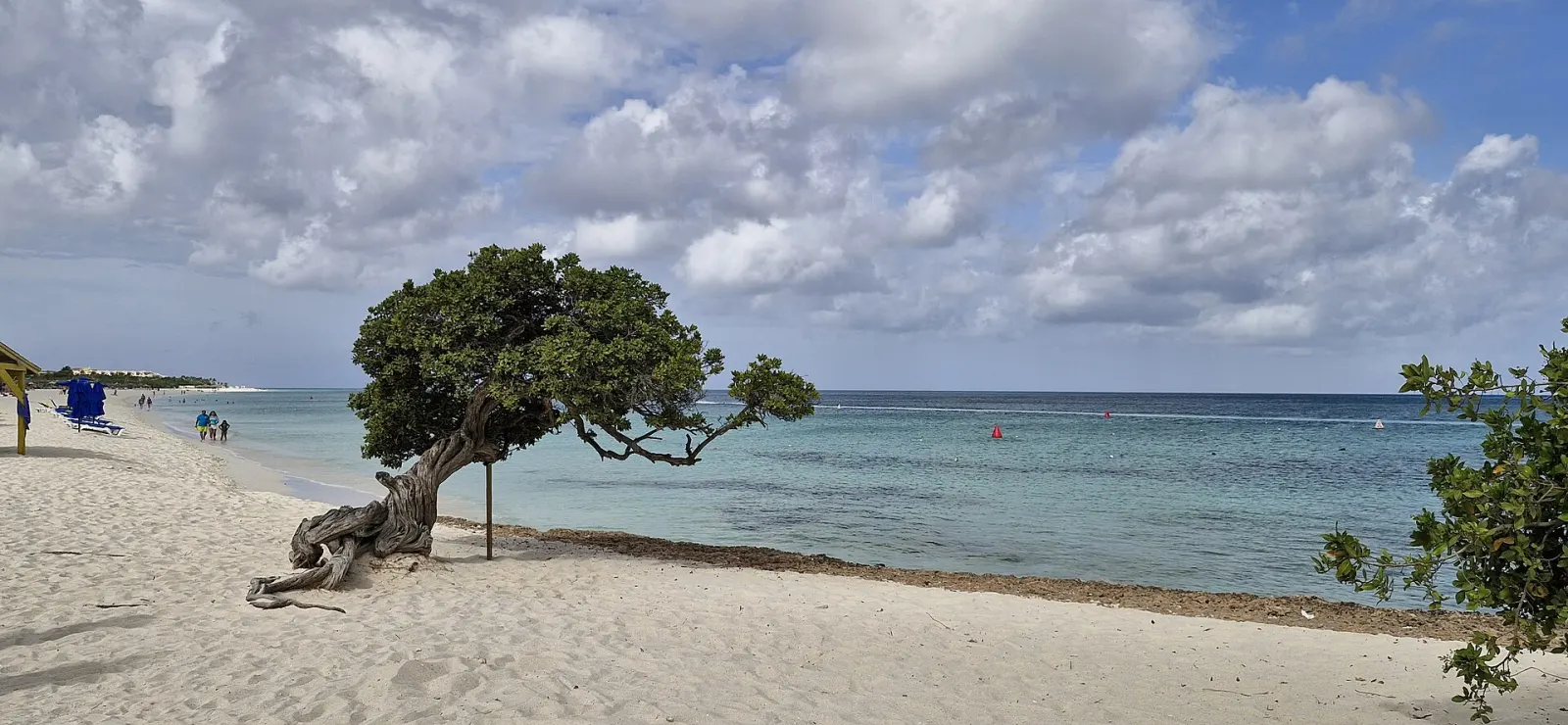
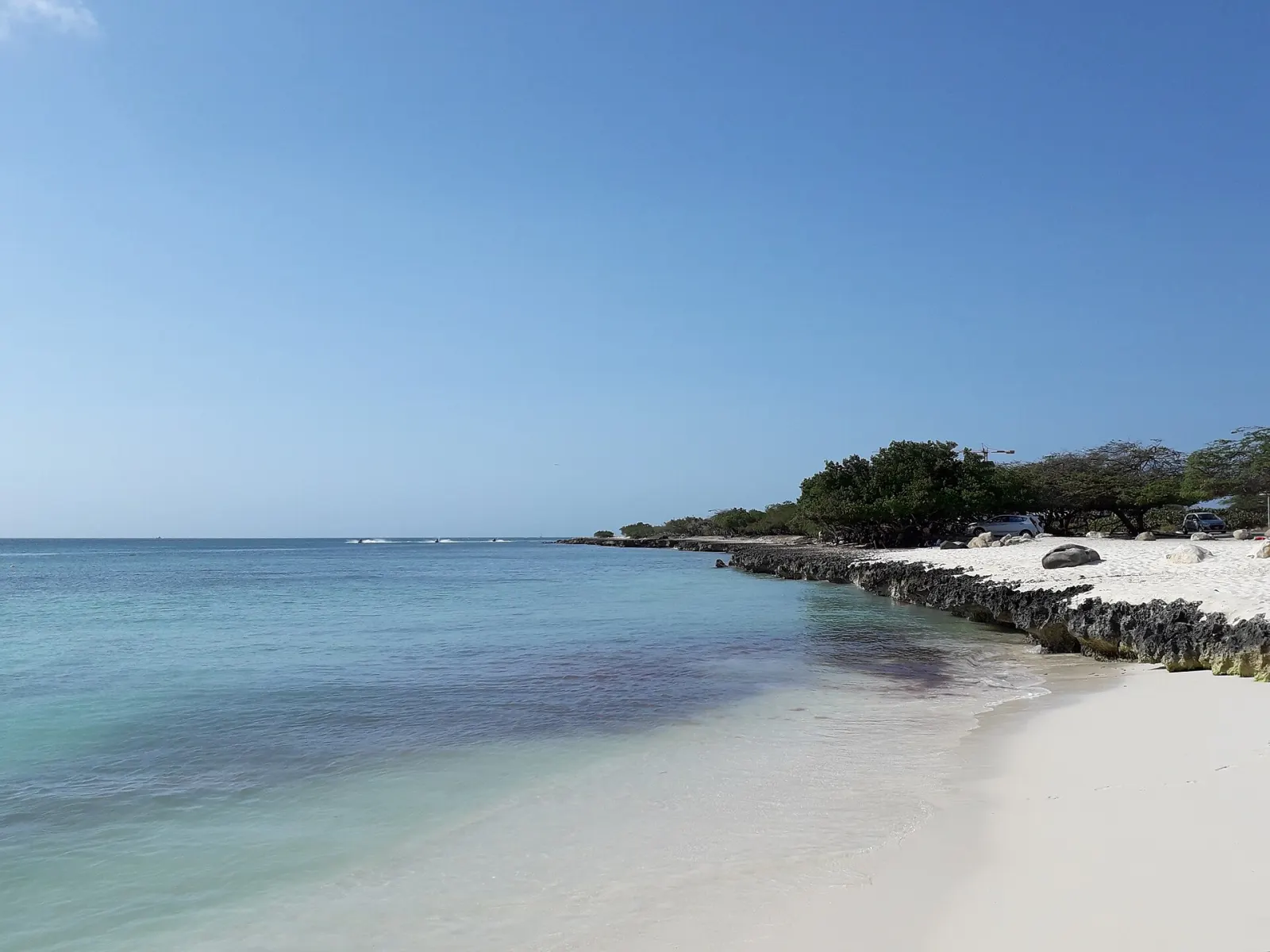
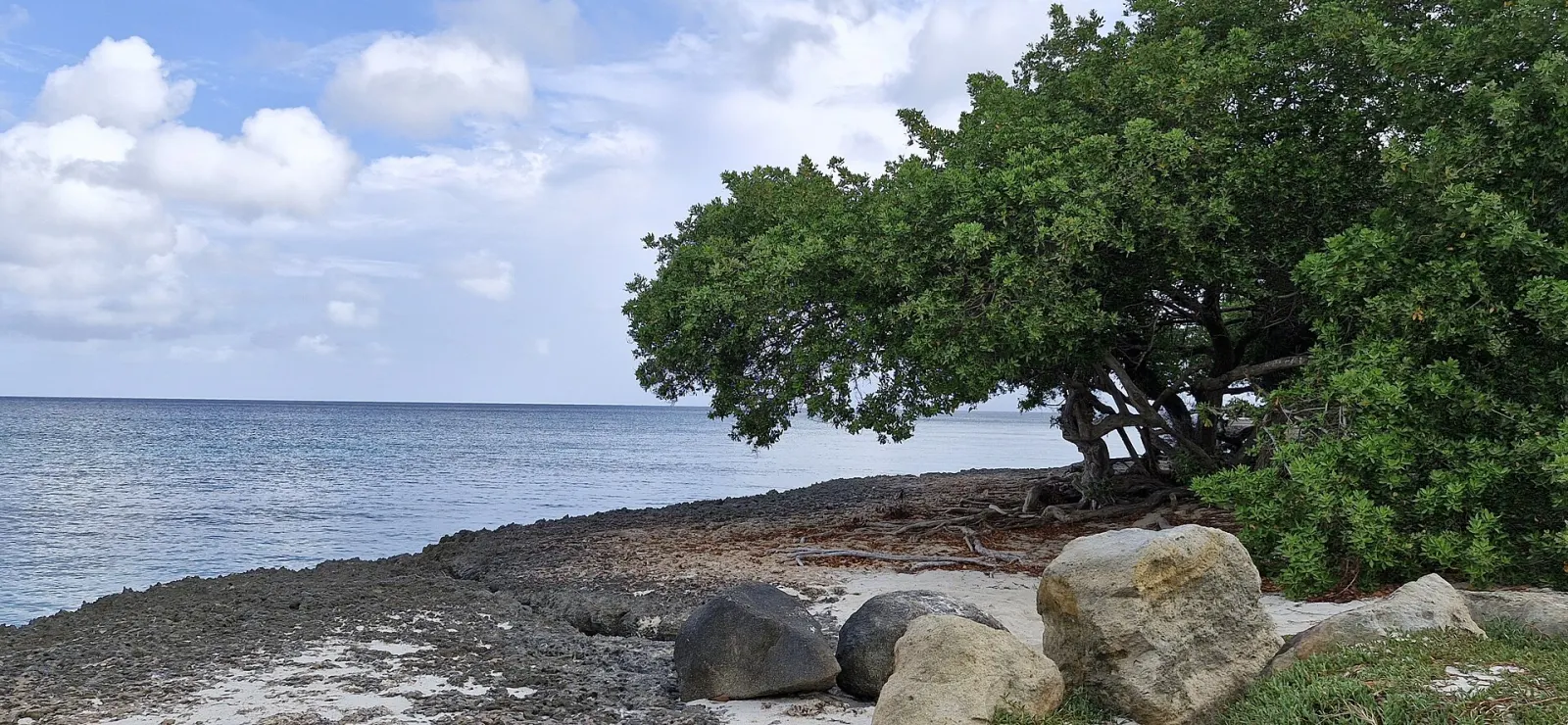
Eagle Beach is a long public beach on Aruba's west coast, between Oranjestad and Palm Beach, backed by the island's low-rise hotels rather than towers. The Aruba Tourism Authority describes it as the widest beach on the island, with soft white sand, shaded areas and some beach huts. It is also where most of Aruba's sea turtle nests are found, and where the two famous wind-bent fofoti trees stand.
Is Eagle Beach good for swimming?
Usually, yes. The west coast faces away from the trade wind, so the sea here is generally far calmer than on the north and east coasts, where swimming is often dangerous. The beach shelves gently, but it is open sea: swim within your depth, keep an eye on children and do not swim at night, when you also risk disturbing nesting turtles.
Where are the fofoti trees?
The fofoti is a salt-tolerant coastal tree, identified locally as the buttonwood mangrove (Conocarpus erectus). Two of them on Eagle Beach have appeared in so many Aruba campaigns that the Aruba Tourism Authority calls them the island's most photographed fofoti trees; their trunks lean south-west, shaped by the constant trade wind. The best-known one stands in front of the Amsterdam Manor Beach Resort. At the tourism authority's initiative, climbing it or hanging things from it is not allowed, because broken branches could kill the tree. Photograph it from the sand and leave it alone.
Is there shade on Eagle Beach?
There is some public shade: thatched palapas are spread along the sand, but they are shared by everyone and fill early, especially at weekends. Many of the lounge areas and cabanas you will see belong to the hotels across the road and are for their guests. If you are not staying there, bring your own umbrella or arrive early.
When do sea turtles nest on Eagle Beach?
Four species of sea turtle nest on Aruba, and according to the tourism authority most nests are found on Eagle Beach, mainly leatherbacks. Fundashon Turtugaruba, the island's sea turtle foundation, gives the season as March to December. Nests are marked by volunteers; never step inside a marked area. At night keep lights and camera flashes off, do not leave holes or furniture on the sand, and watch nesting or hatching turtles only from a distance. If you see a turtle or hatchlings in trouble, call the Turtugaruba hotline on +297 592 9393.
When is the best time to go?
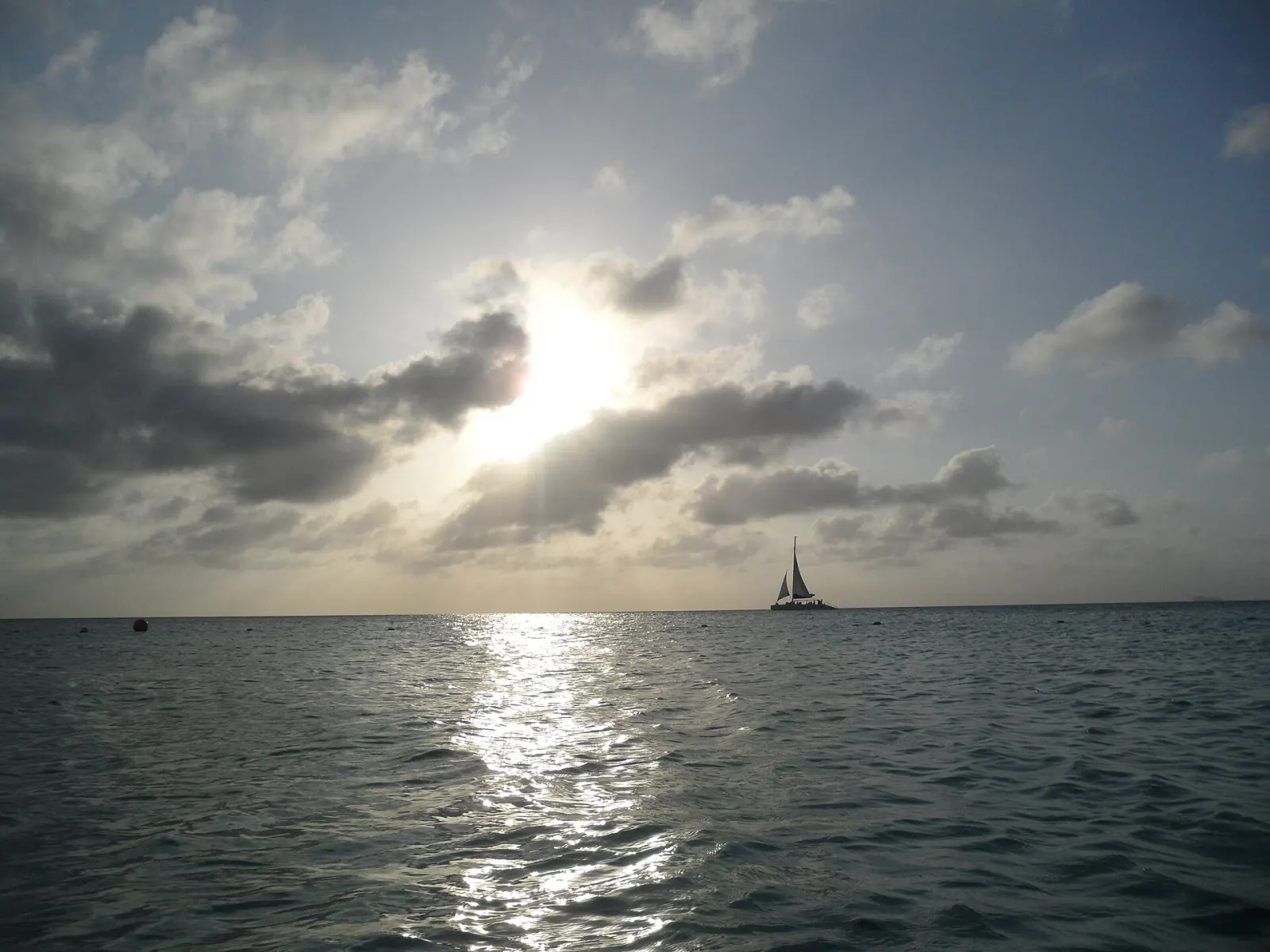
Late afternoon is the classic time: the beach faces west, so the sun sets over the sea. Weekday mornings are the quietest. During Easter week, local families traditionally camp on the beach, so expect a busy, festive atmosphere then.
For a busier strip with piers and water sports, continue north to Palm Beach; for calm snorkelling, head to Arashi Beach or Boca Catalina. More on the area in Eagle Beach & Druif.
What to do here
Getting there
Eagle Beach runs along J.E. Irausquin Boulevard north of Oranjestad, a short drive from town on the main coast road towards Palm Beach. By bus, Arubus says to take an L10 line from the Oranjestad bus station towards the hotel area; check current stops and times on arubus.com.
Local tips
- Arrive early for a palapa. Public palapas are first come, first served and fill fast at weekends; hotel cabanas are for guests.
- Keep the night dark. In turtle season avoid torches and flash on the sand, and fill in any holes you dig.
- Do not climb the fofoti. Climbing or hanging items on the famous tree is prohibited; photos from the sand are fine.
- Respect the sun. The wide beach has little natural shade and the breeze hides how strong the sun is.
Things to do here
Nearby
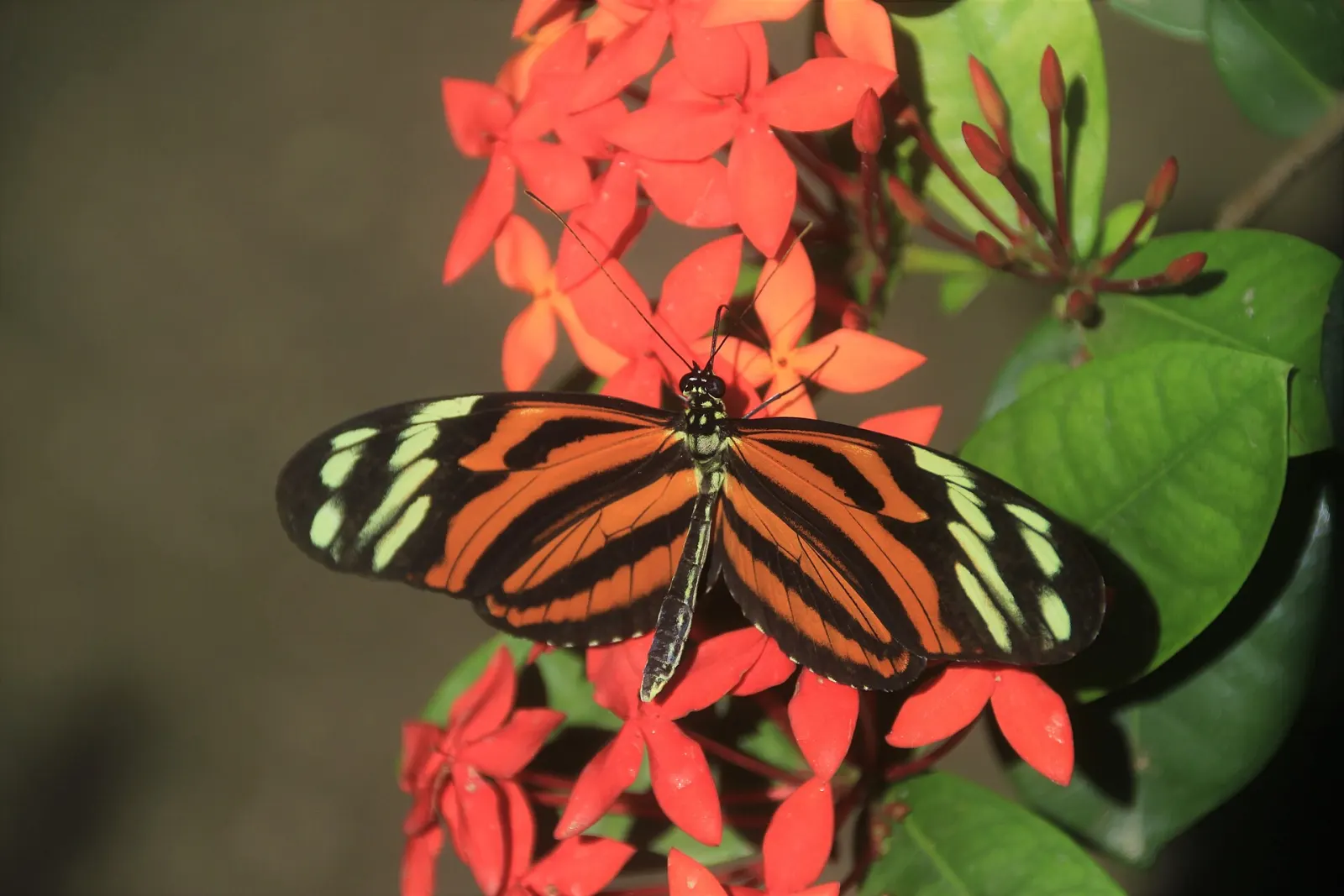
The Butterfly Farm
A walk-through tropical garden full of butterflies on the Palm Beach strip, with guided talks on metamorphosis; tickets allow return visits during your stay.
Gasparito Restaurant & Art Gallery
Traditional Aruban dishes such as goat stew, pan bati and funchi, served among local art on an 1807 estate in Noord; open since 1989.
The Old Cunucu House
Home-style Aruban cooking — keshi yena, stobas, pan bati and funchi — in a cunucu house over 150 years old near Palm Beach.
More beaches like this
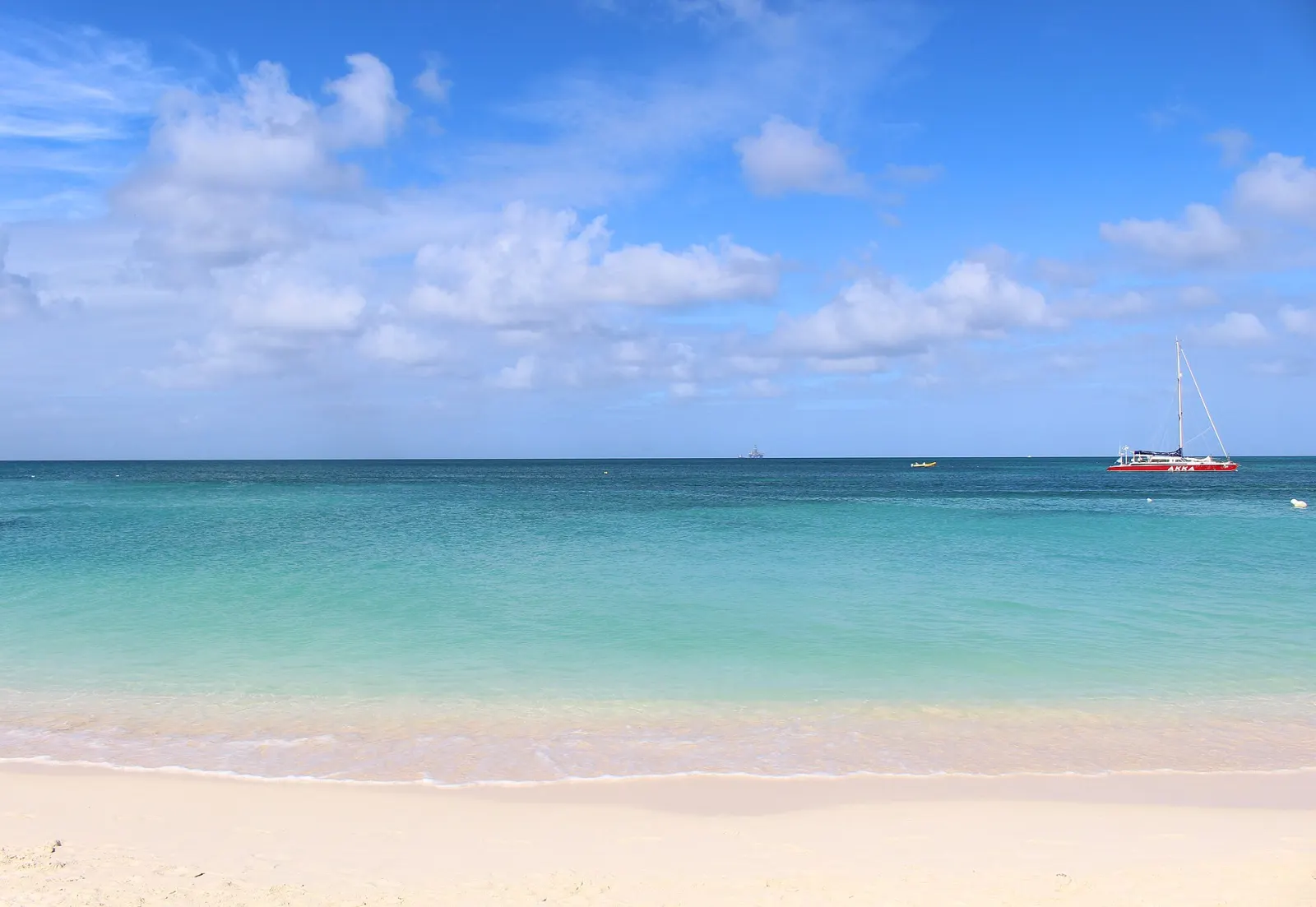 Calm water
Palm Beach
Aruba's liveliest beach: 3.2 km of white sand in front of the high-rise hotels, calm water, piers, beach bars and most of the island's water sports.
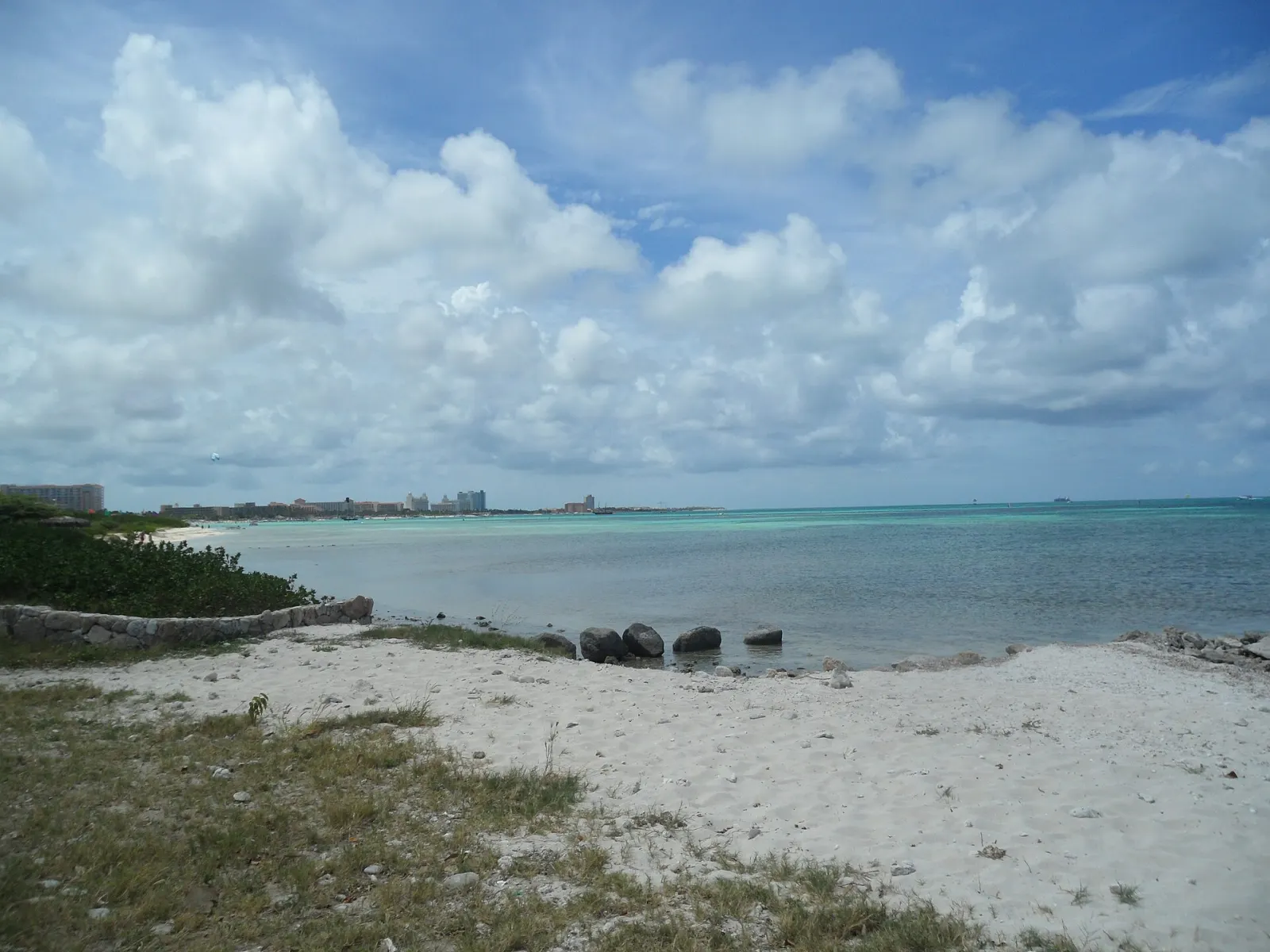 Swim with care
Hadicurari Beach (Fisherman's Huts)
Aruba's windsurf and kitesurf hub just north of Palm Beach: shallow, calm water for learners, schools on the beach and the Hi-Winds each June or July.
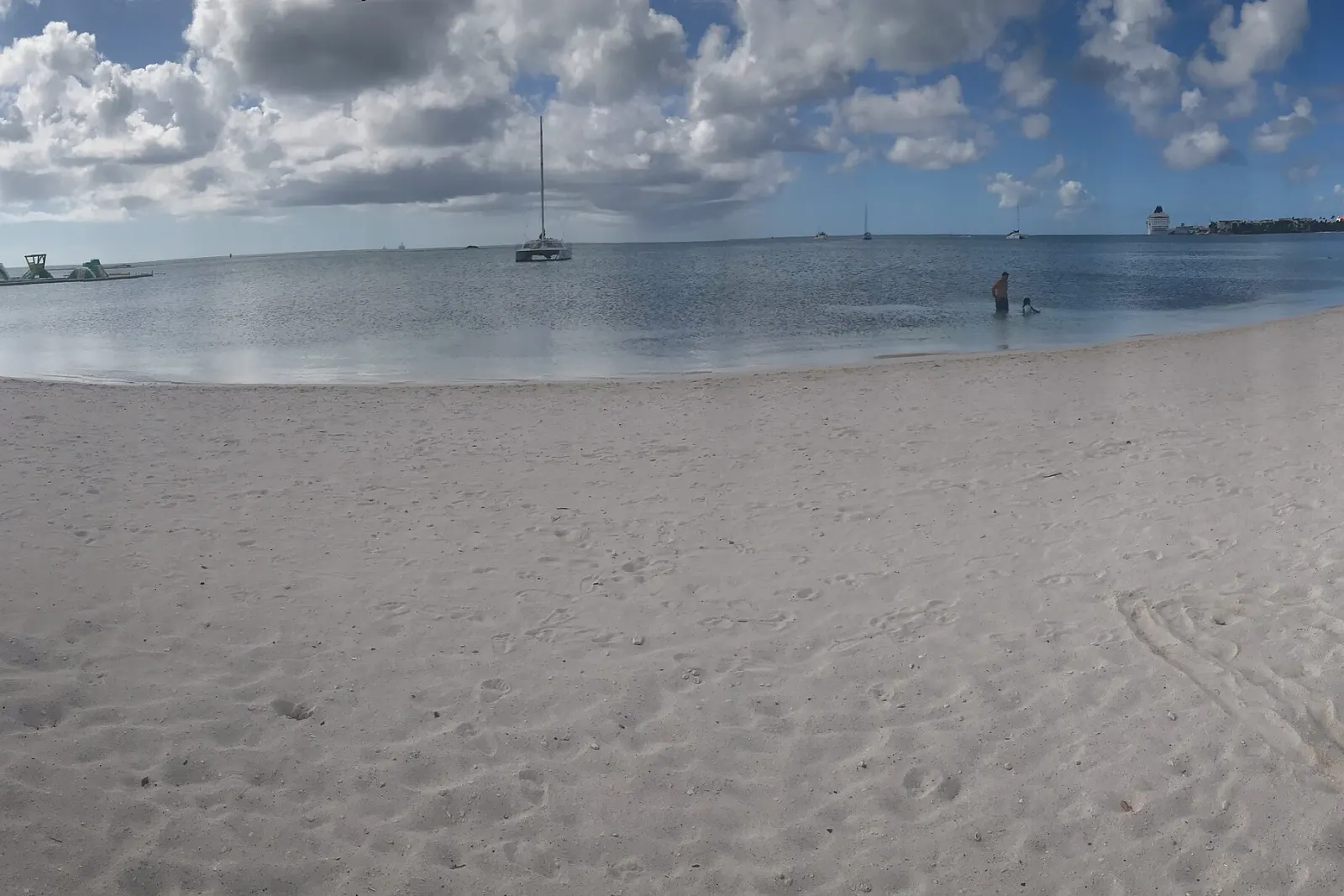 Calm water
Surfside Beach
Oranjestad's town beach, two minutes from the airport: shallow, almost flat water for families, beach bars and planes passing low overhead.