
Ayo Rock Formations
Piles of giant diorite boulders near Ayo village where Aruba's Amerindian inhabitants left rock paintings — quieter than Casibari, with short walking paths.
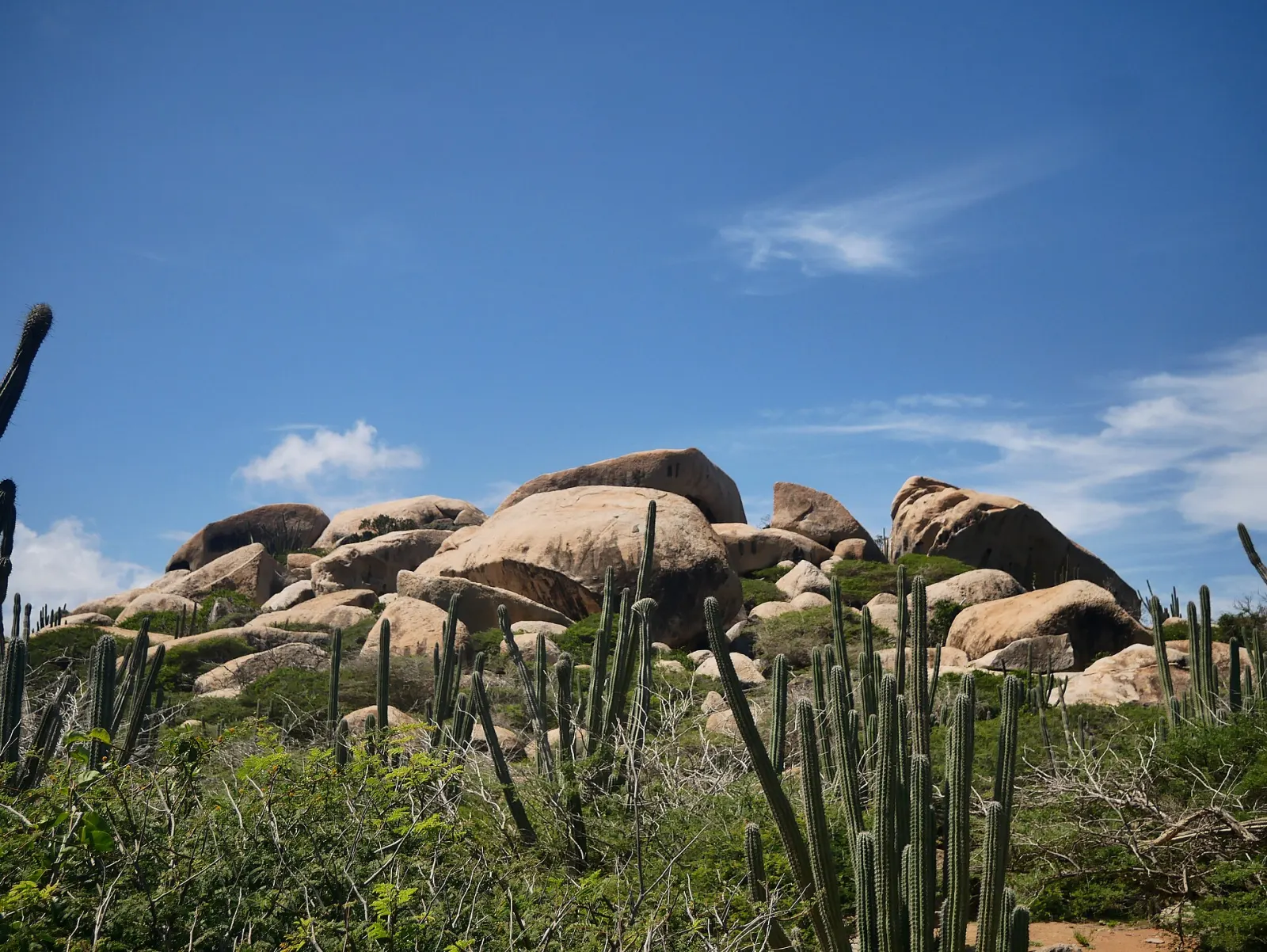
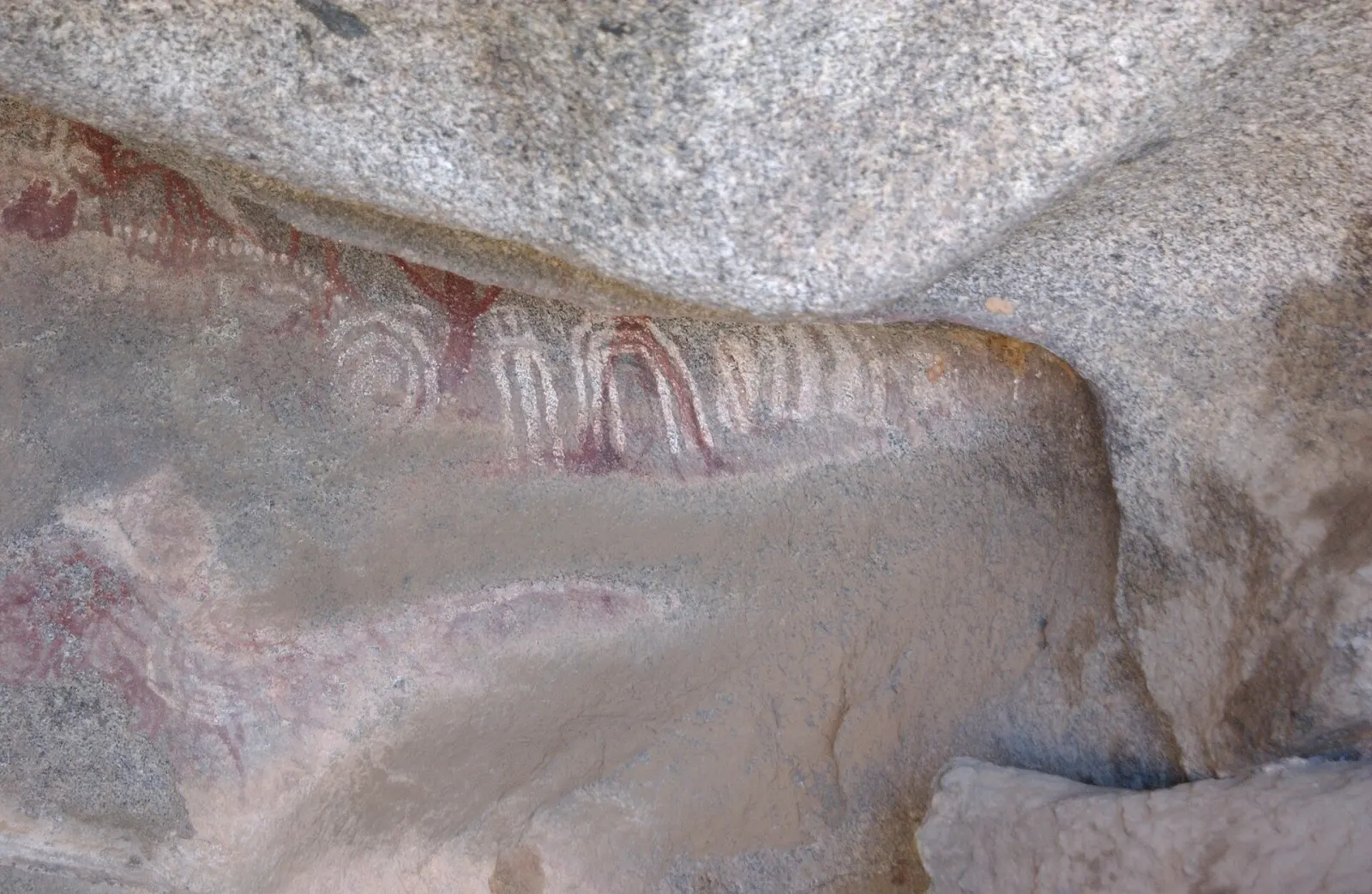
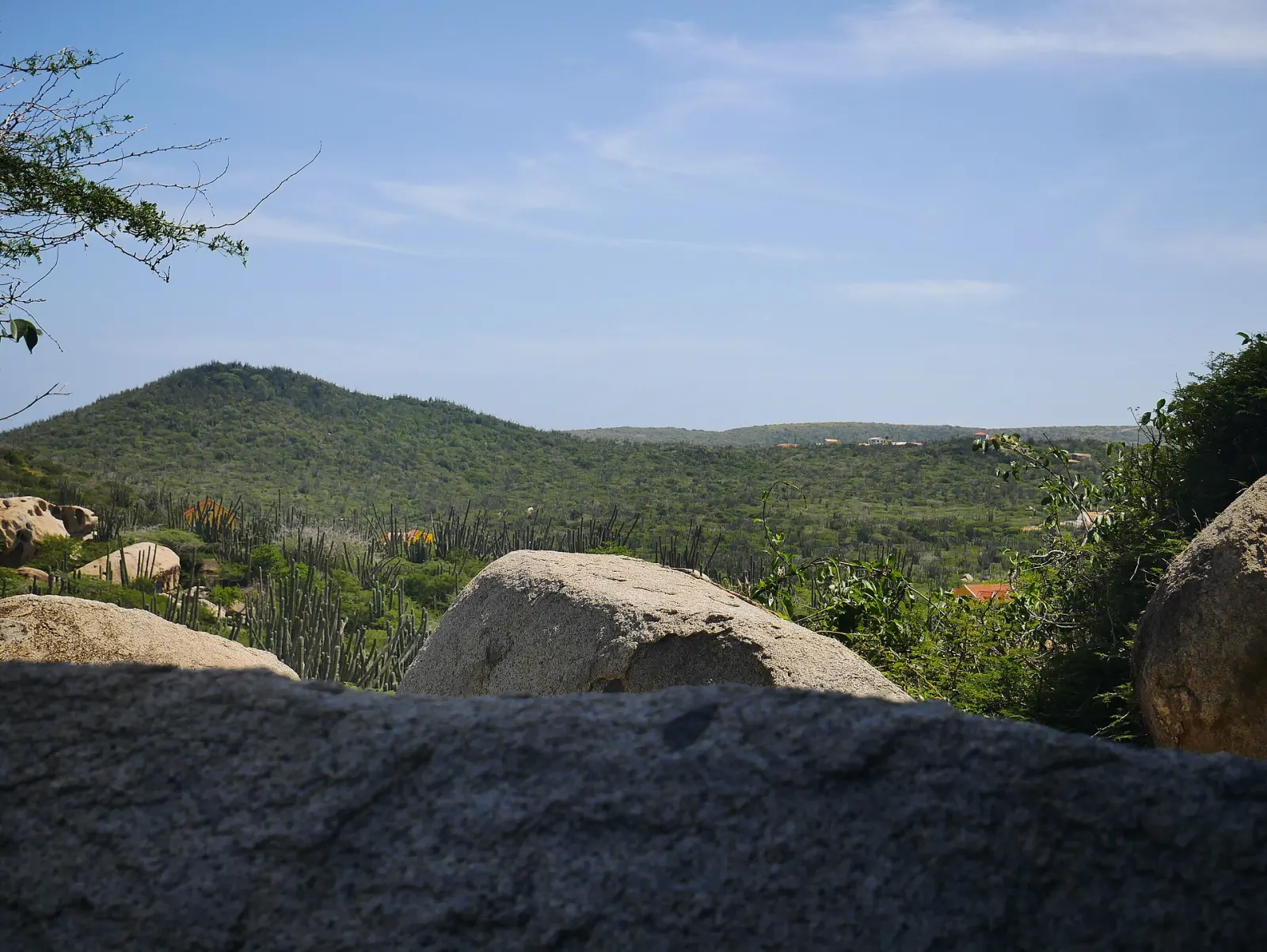
The Ayo Rock Formations are heaps of monolithic diorite boulders near the village of Ayo in Aruba's interior, a few minutes east of Casibari and about 3 km inland from the north coast. Among the rocks, Aruba's Amerindian inhabitants left painted symbols that are still visible in sheltered spots. It is a smaller, calmer site than Casibari, with walking paths around the boulders rather than a climb to a summit.
What makes Ayo different from Casibari?
Both are clusters of rounded igneous blocks left standing on the eroded plain of the Aruba batholith. At Casibari, steps take you to the top; at Ayo, the interest is at ground level — the shapes of the boulders, the shaded overhangs, and the rock art. Paths with steps loop around the formation and pass through a few narrow gaps. From the higher points you look across the cunucu (countryside) towards Hooiberg and the north coast.
What are the Ayo rock drawings?
The drawings are pictographs: geometric and figurative symbols painted mainly in reddish-brown pigment on the undersides of boulders, where they were protected from sun and rain. They are attributed to the Arawak-speaking people who lived on Aruba before European contact; Wikipedia's account notes the Arawak used the site during religious practices. Several of Aruba's rock-art sites — like the Fontein Cave drawings — have been damaged by graffiti, which is why some are now fenced, gated or only shown with a guide.
How should you visit the rock art?
- Look, don't touch. Skin oils, sunscreen and water speed up the fading of pigment that has lasted centuries.
- No chalk, no tracing, no wetting the paintings to "bring out" the colour for photographs.
- Stay on the paths and respect any barriers or bars in front of painted surfaces.
- No climbing on the painted boulders and no rock stacking.
When is the best time to visit?
Morning, before the heat builds on the stone and when the low light makes the boulder shapes stand out. Ayo usually sees fewer tour groups than Casibari, so it is a good choice if you want a quiet stop. No official opening hours or entrance fee are published; follow the signs at the entrance.
Good to know
- Wear closed shoes with grip; the paths are uneven and partly rocky.
- There is little shade between the boulders — carry water and a hat.
- The ruins of Bushiribana are a short drive north on the coast, so Ayo works well as part of an island highlights drive through the interior.
Don't miss
Getting there
From Casibari, continue a few minutes east towards Ayo village and follow the signs to the rock formation; the roads are paved and any car will do. From the north coast, the site is about 3 km inland from the Bushiribana area.
Local tips
- Don't touch the paintings. Skin, sunscreen and water damage centuries-old pigment. Photograph without flash and keep your hands off.
- Visit with Casibari. Casibari has the summit view, Ayo the rock art and the quiet — together they take a relaxed morning.
- Bring water and shoes with grip. Shade is scarce and the rock is smooth and uneven underfoot.
Things to do here
Nearby
Huchada Bakery & Lunchroom
Local bakery in a cunucu house near Santa Cruz, known for pastechi, goat soup and cashew cake; opens at 6 a.m. Monday to Saturday.
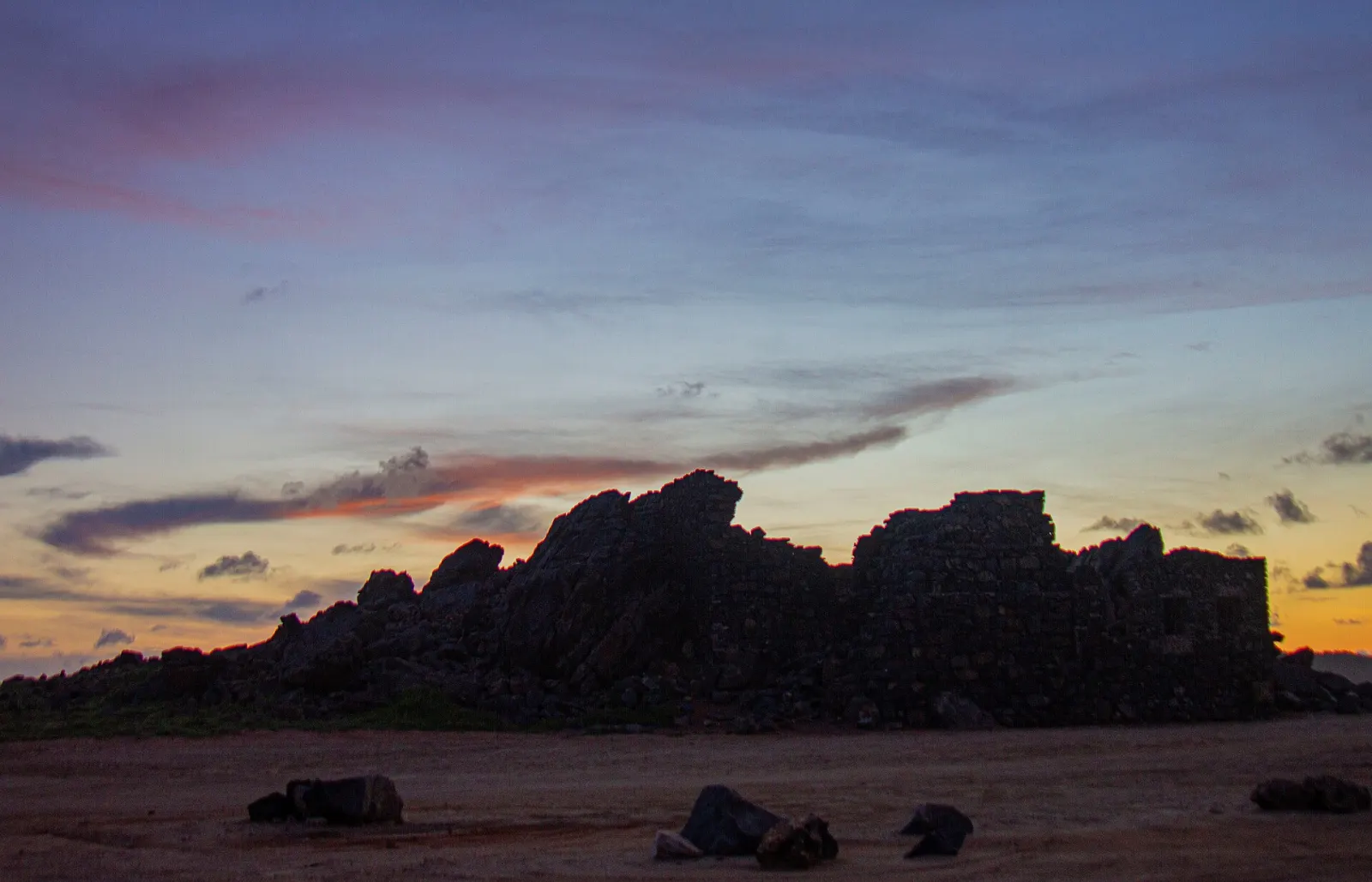
Bushiribana Gold Mill Ruins
Stone ruins of an 1870s gold-processing mill on Aruba's wild north coast — open ground, free, and fragile: walls are partly collapsed.
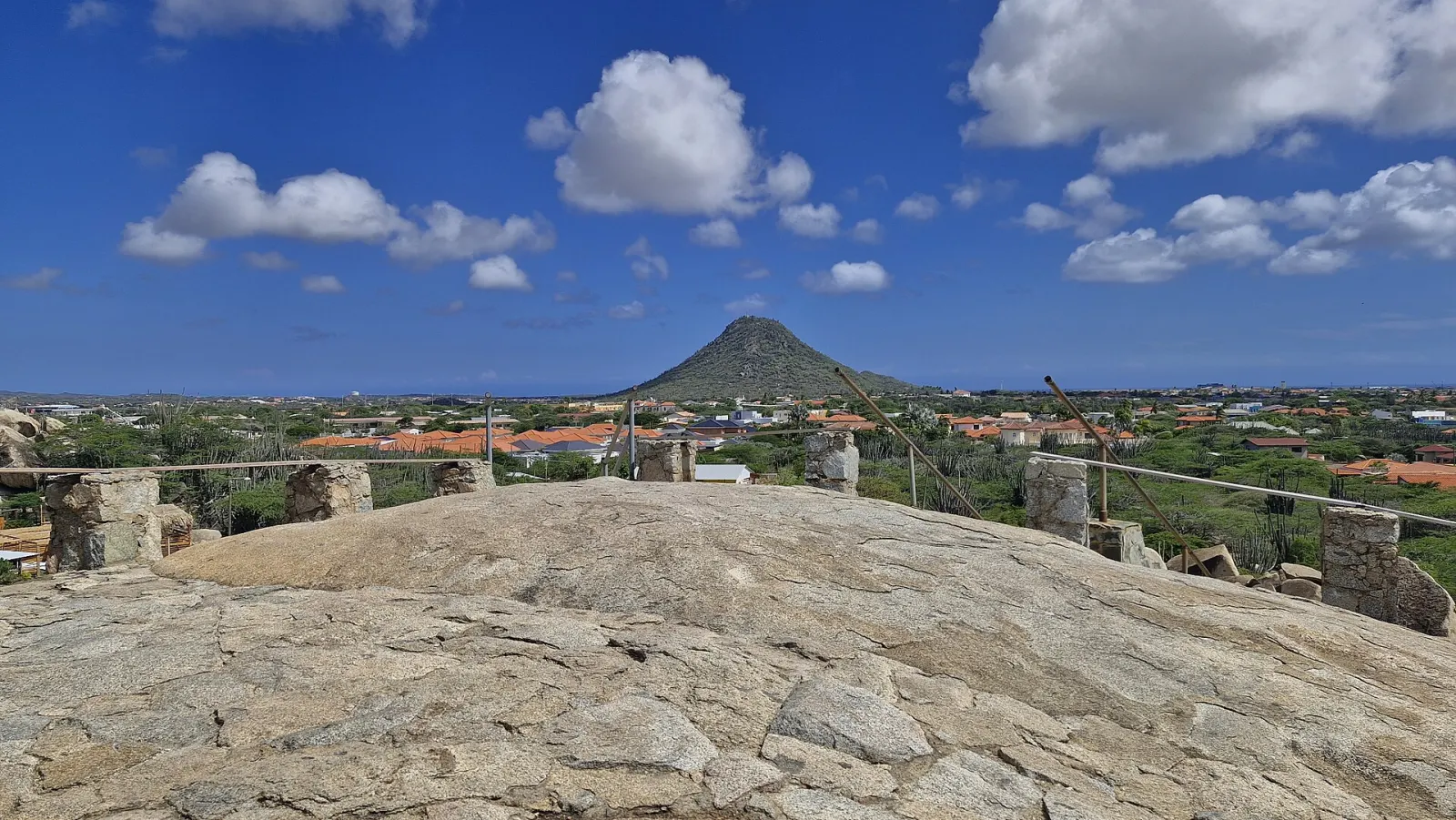
Casibari Rock Formations
Giant tonalite boulders in Aruba's interior, north of Hooiberg, with steps and narrow passages up to a 360° lookout over the island.
More sights
Bushiribana Gold Mill Ruins
Stone ruins of an 1870s gold-processing mill on Aruba's wild north coast — open ground, free, and fragile: walls are partly collapsed.
Casibari Rock Formations
Giant tonalite boulders in Aruba's interior, north of Hooiberg, with steps and narrow passages up to a 360° lookout over the island.
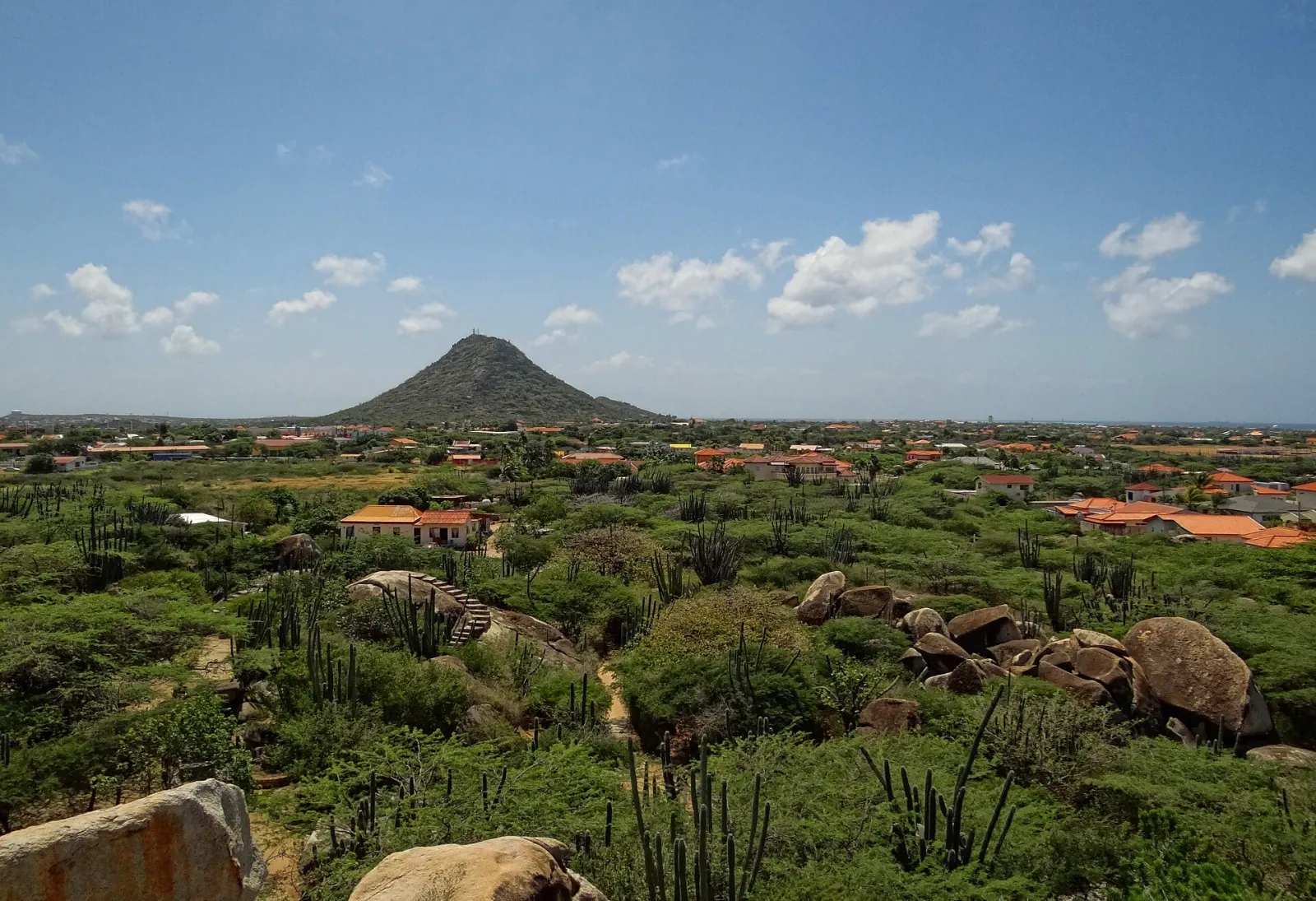
Hooiberg
Aruba's cone-shaped 165 m 'haystack' hill in the middle of the island, climbed by a stairway of roughly 600 steps to a panoramic summit.