
Bushiribana Gold Mill Ruins
Stone ruins of an 1870s gold-processing mill on Aruba's wild north coast — open ground, free, and fragile: walls are partly collapsed.
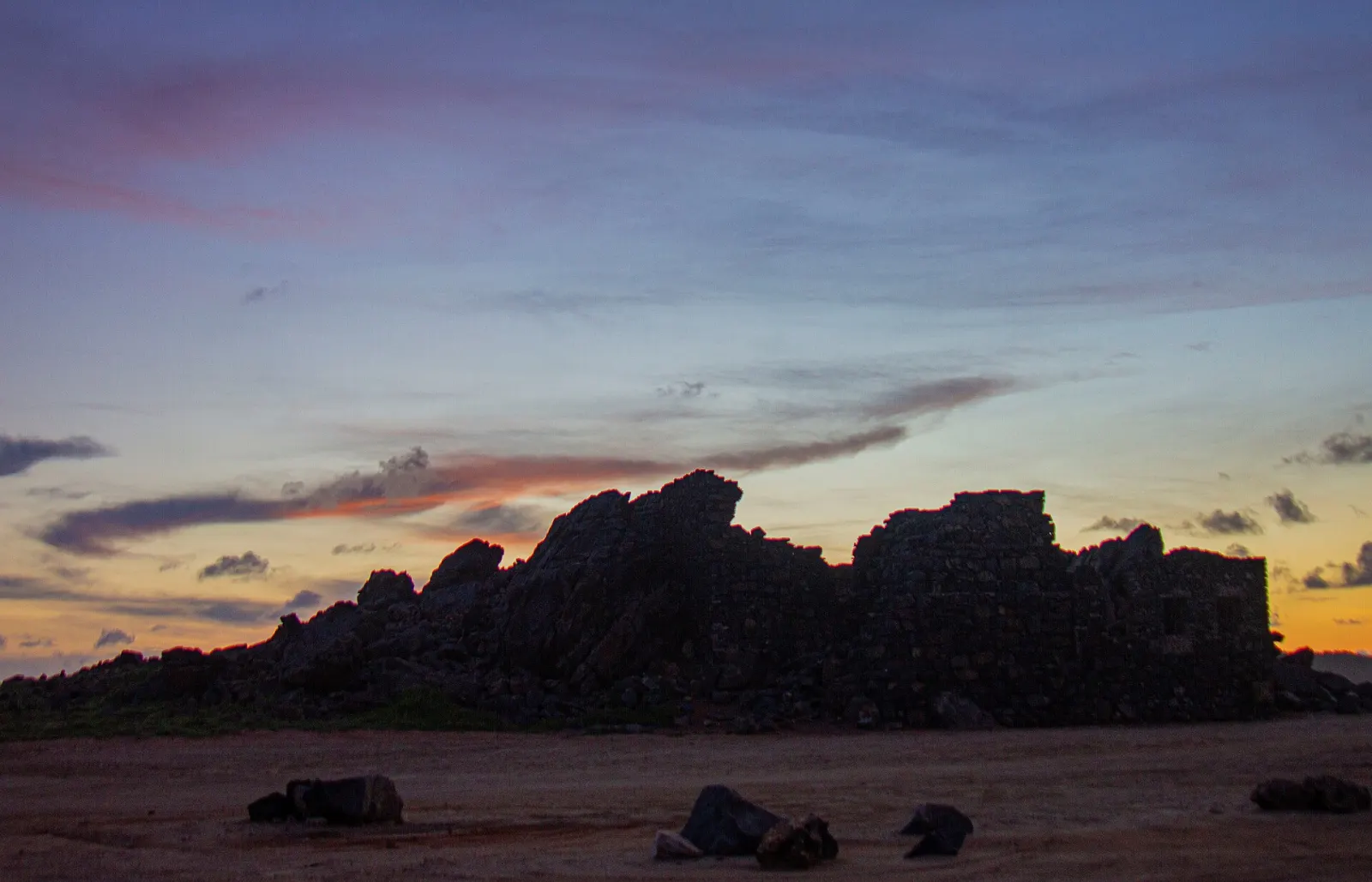
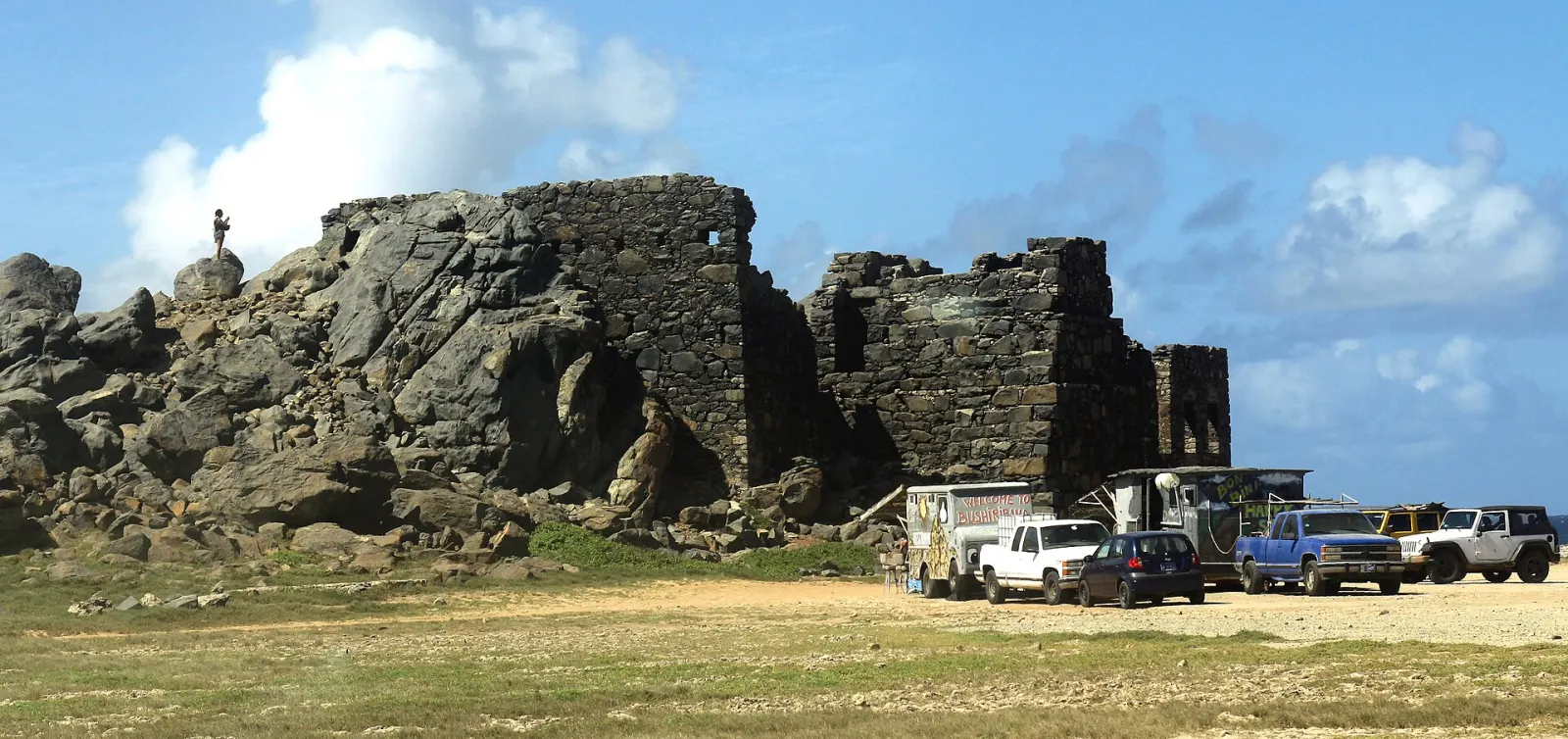
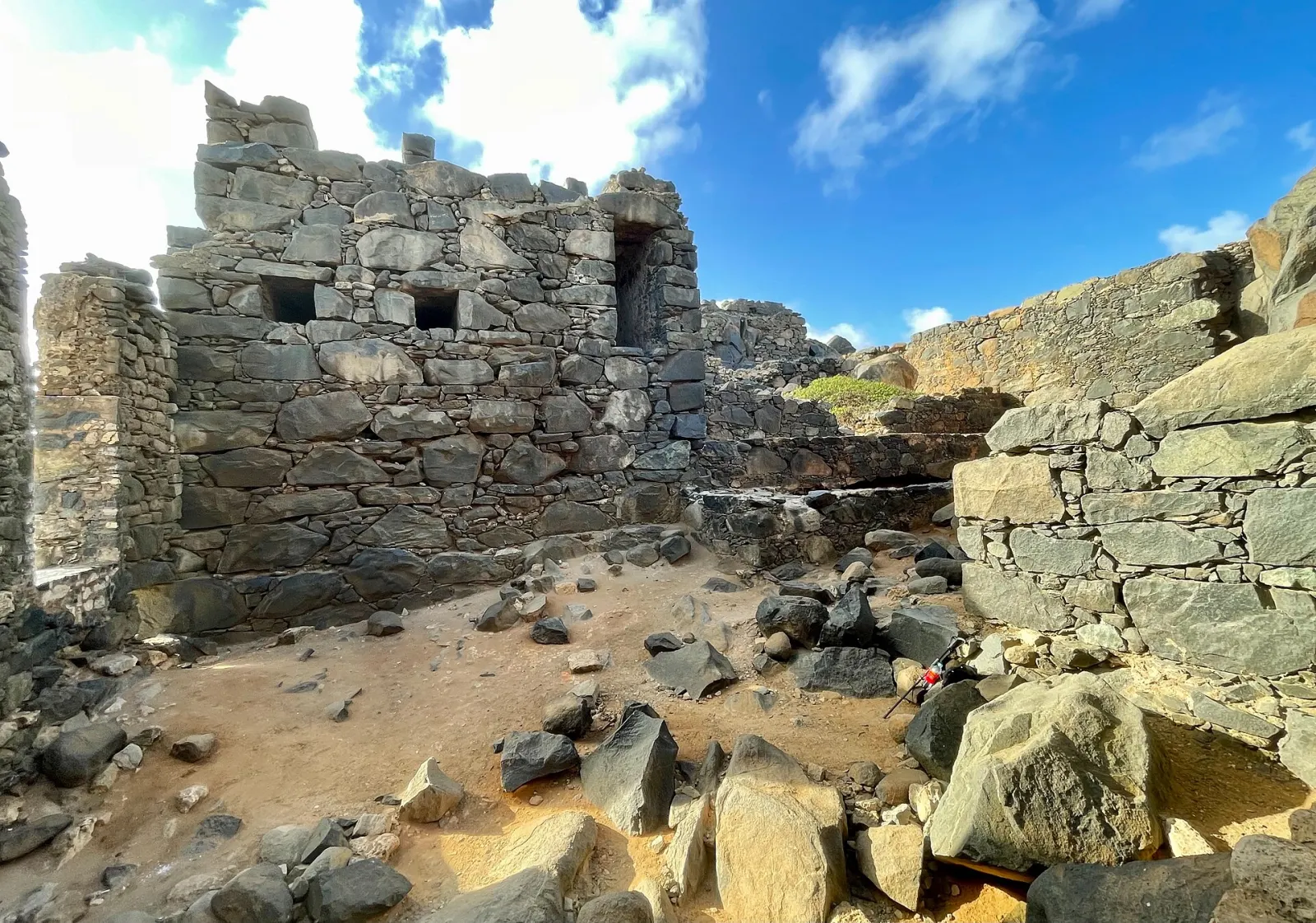
The Bushiribana ruins are the stone shell of a gold mill built in the 1870s on the bare, windswept north coast of Aruba, about 3 km north of the Ayo Rock Formations. Built against natural rock and looking like a small fortress, it is the most visible relic of the island's gold era. There is no gate or ticket; you walk around and partly into the ruin on open ground.
What was the Bushiribana mill?
Aruba had a gold rush in 1824–1829, when alluvial gold was washed out of the hills. When those deposits ran out, companies went after the source: quartz veins along the north coast. In 1872 the Aruba Island Gold Mining Company built a smelter with a stamp mill at Bushiribana, in the heart of the quartz area, using dark gabbro stone quarried nearby at Matividiri. The company also laid a road of about 10 km and the first pier in the harbour to bring in the machinery. The mill had steam engines, stamp mills, freshwater reservoirs and furnaces, but for about twenty years it ran at a loss — extraction with mercury lost roughly half of the gold. From 1897 the waste heaps were reworked with the new cyanide process, and in 1899 a mill at Balashi took over. Gold was mined on Aruba until 1915–1916.
Dates differ between sources: the English Wikipedia entry gives 1825 for the mill, while Dutch sources and the Aruba Tourism Authority tie it to the later quartz-mining period. The building you see fits the 1872 company mill.
Is Bushiribana open and safe to visit?
Yes, it is open ground, and no closure has been announced. But it is a ruin, not a restored monument: parts of the walls have already fallen into lines of rubble, the upper stonework is loose and there are no railings. Stay off the tops of walls, don't climb the broken stair remnants with children, and keep away from overhanging sections, especially in strong wind. Do not remove stones.
When is the best time to visit?
Early morning or late afternoon, when the low sun turns the stone warm and the light is softer on the coast. Off-road tours stop here in the middle of the day and park right next to the ruin. The sea below is rough and the coast has strong currents — this is a viewpoint, not a swimming spot.
Good to know
- Free; no published hours. There are no facilities on site.
- Access: the last part is along an unpaved north-coast track; a normal car can manage in dry weather if driven slowly, but a high-clearance vehicle is more comfortable.
- Bring water, sun protection and closed shoes.
Bushiribana fits naturally into an island highlights drive with Ayo, Casibari and Alto Vista Chapel further west along the coast.
Don't miss
Getting there
From the Ayo area, follow the road north towards the coast; the ruin stands just inland of the shoreline at Bushiribana, reached by an unpaved track. In dry weather a normal car can make it slowly; after rain or for the coastal track west towards Alto Vista, a high-clearance vehicle is better.
Local tips
- Stay off the walls. Parts of the ruin have already collapsed and the upper stones are loose; there are no railings.
- Beat the tour convoys. Off-road tours stop here around midday; mornings and late afternoons are quieter and the light is better.
- Don't swim here. The north coast below the ruin has rough surf and strong currents.
Things to do here
Horseback riding
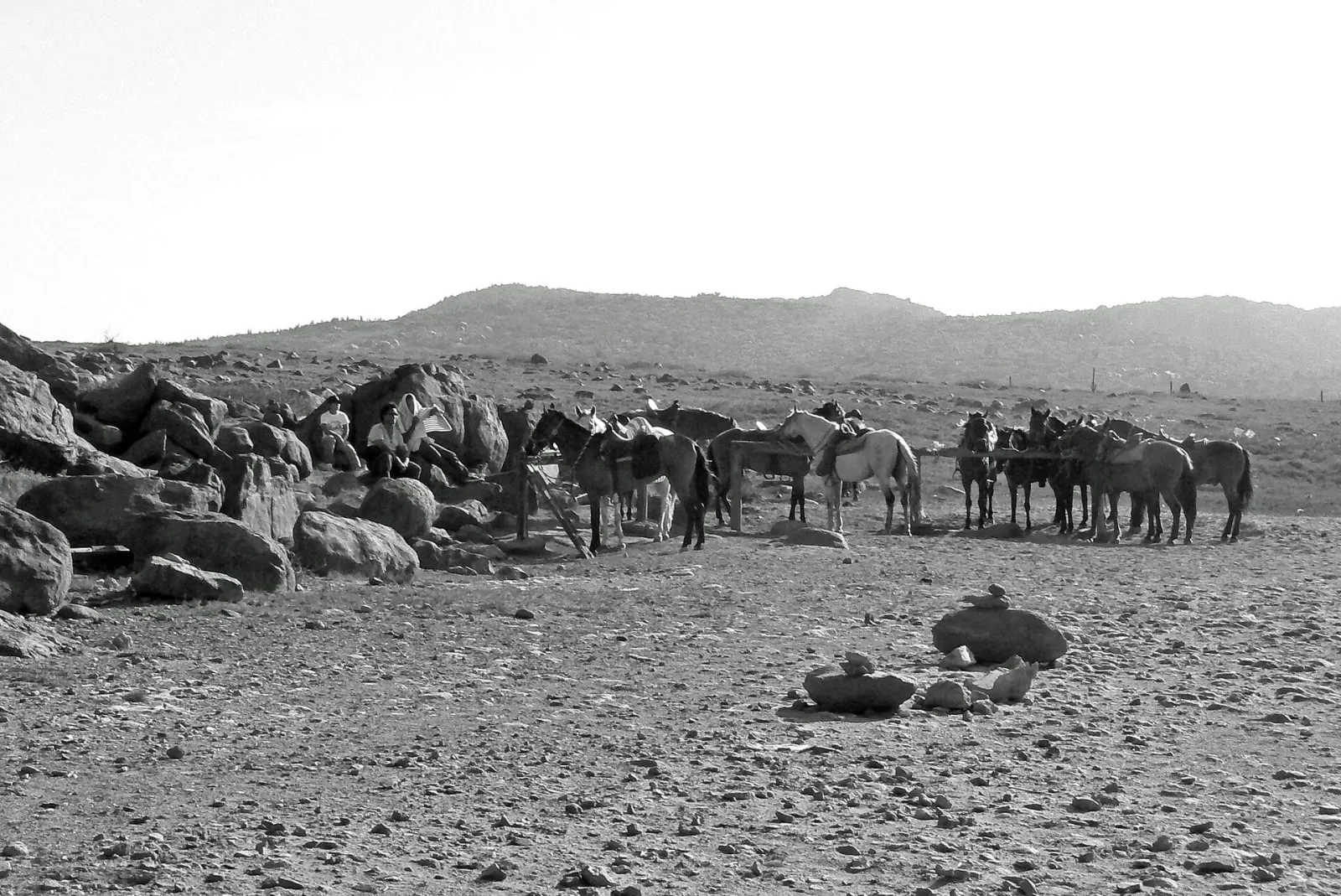
Guided rides through Aruba's cactus country and along the rugged north coast, including routes to the Natural Pool in Arikok, mostly on gaited Paso Fino horses.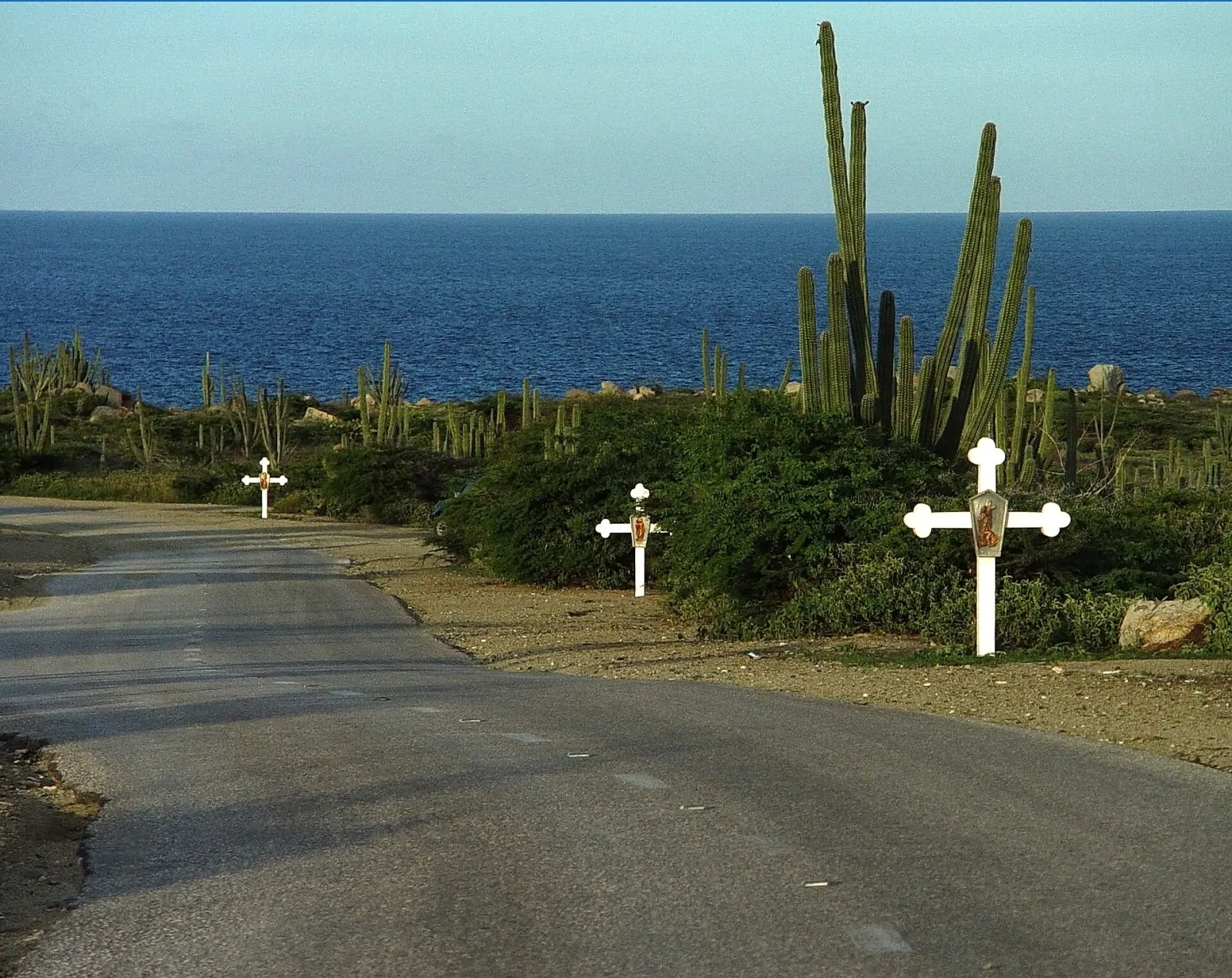
Island highlights drive
A self-drive day loop around Aruba: California Lighthouse, Alto Vista Chapel, the Bushiribana gold mill, Ayo and Casibari rocks, Hooiberg, Arikok and Baby Beach.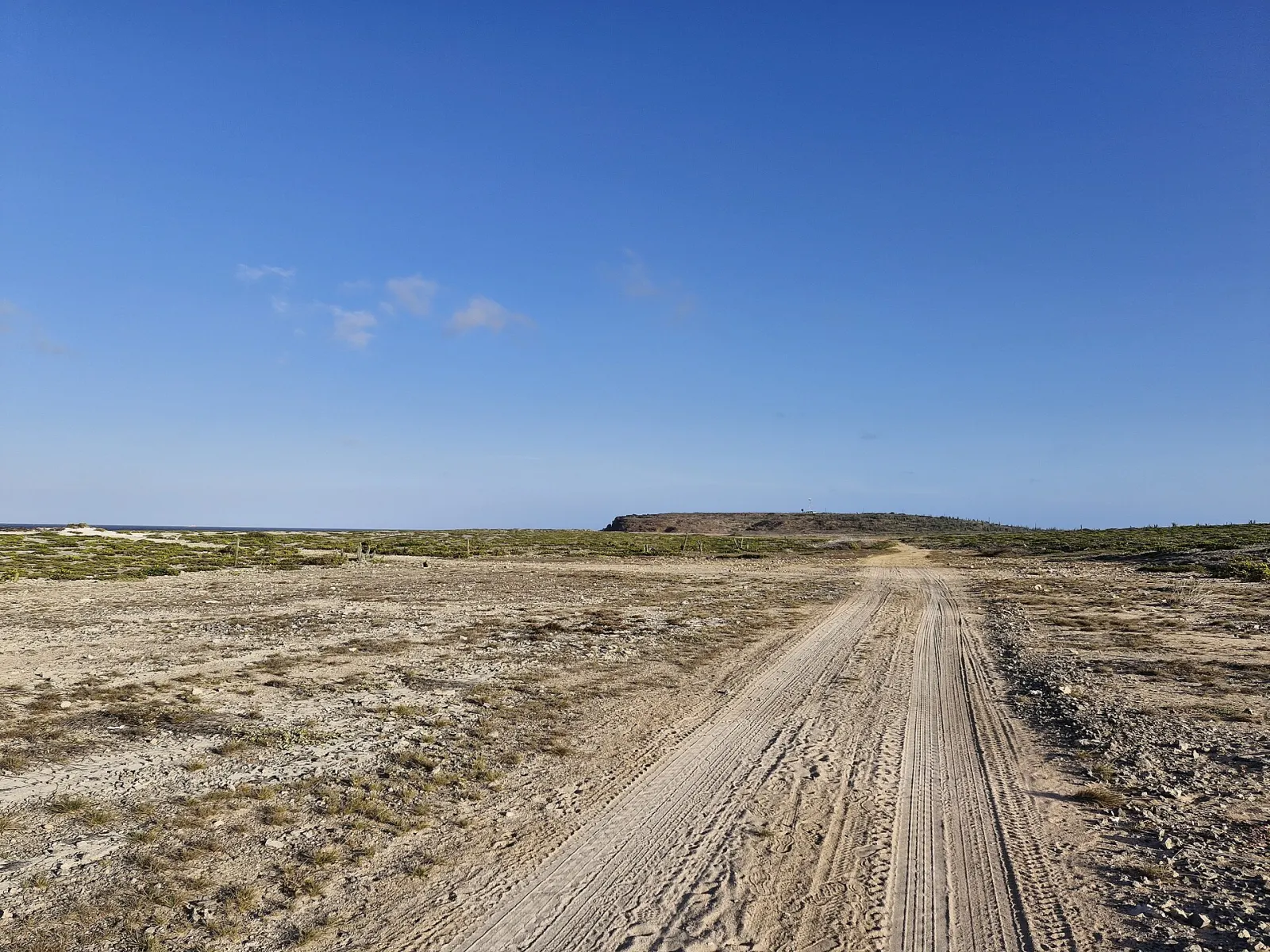
Jeep & UTV tours
Exploring Aruba's rugged north and east coasts by 4×4: where jeeps may drive, why ATVs and UTVs are banned from protected nature areas, and the Arikok park rules.Nearby
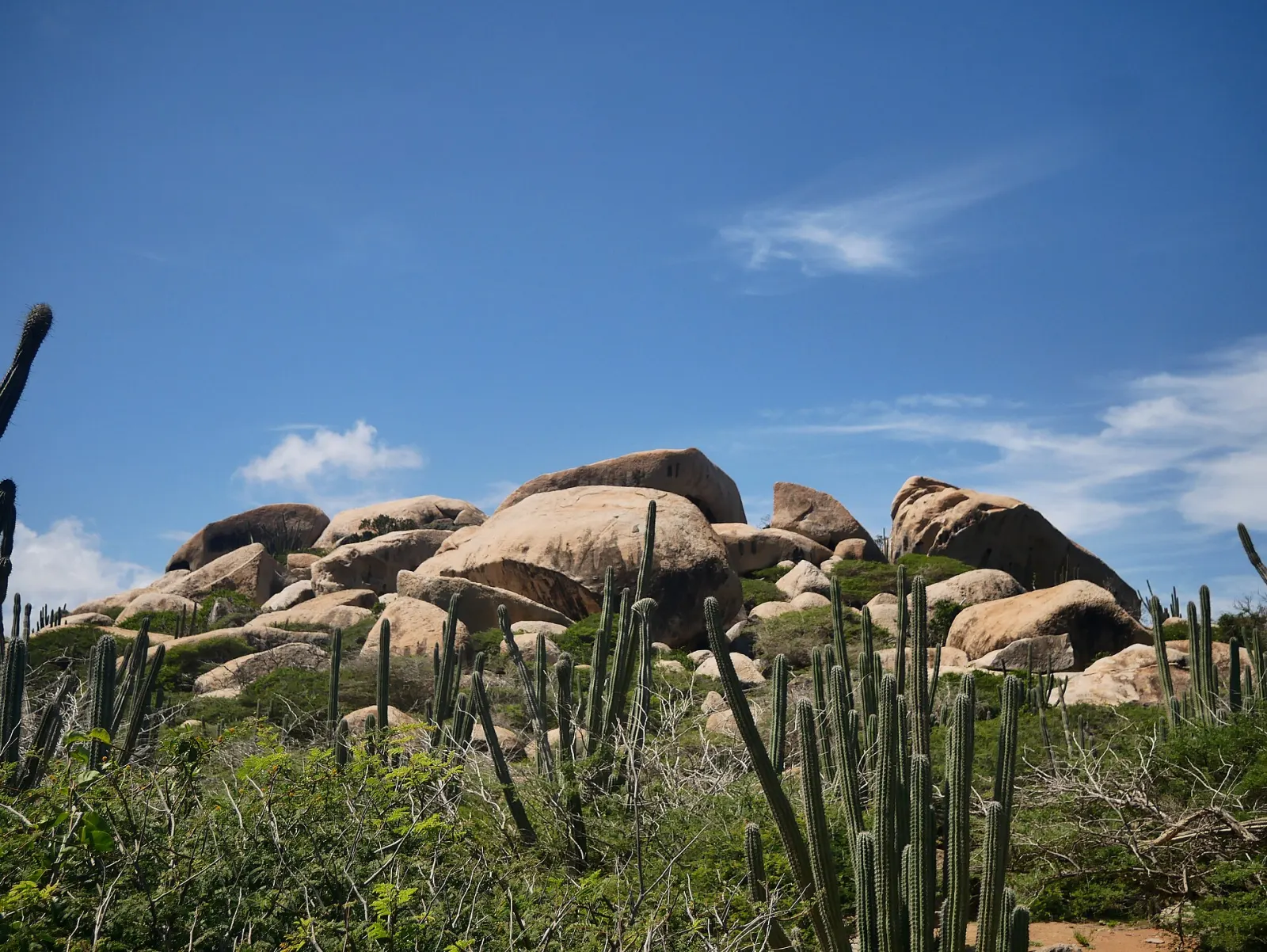
Ayo Rock Formations
Piles of giant diorite boulders near Ayo village where Aruba's Amerindian inhabitants left rock paintings — quieter than Casibari, with short walking paths.
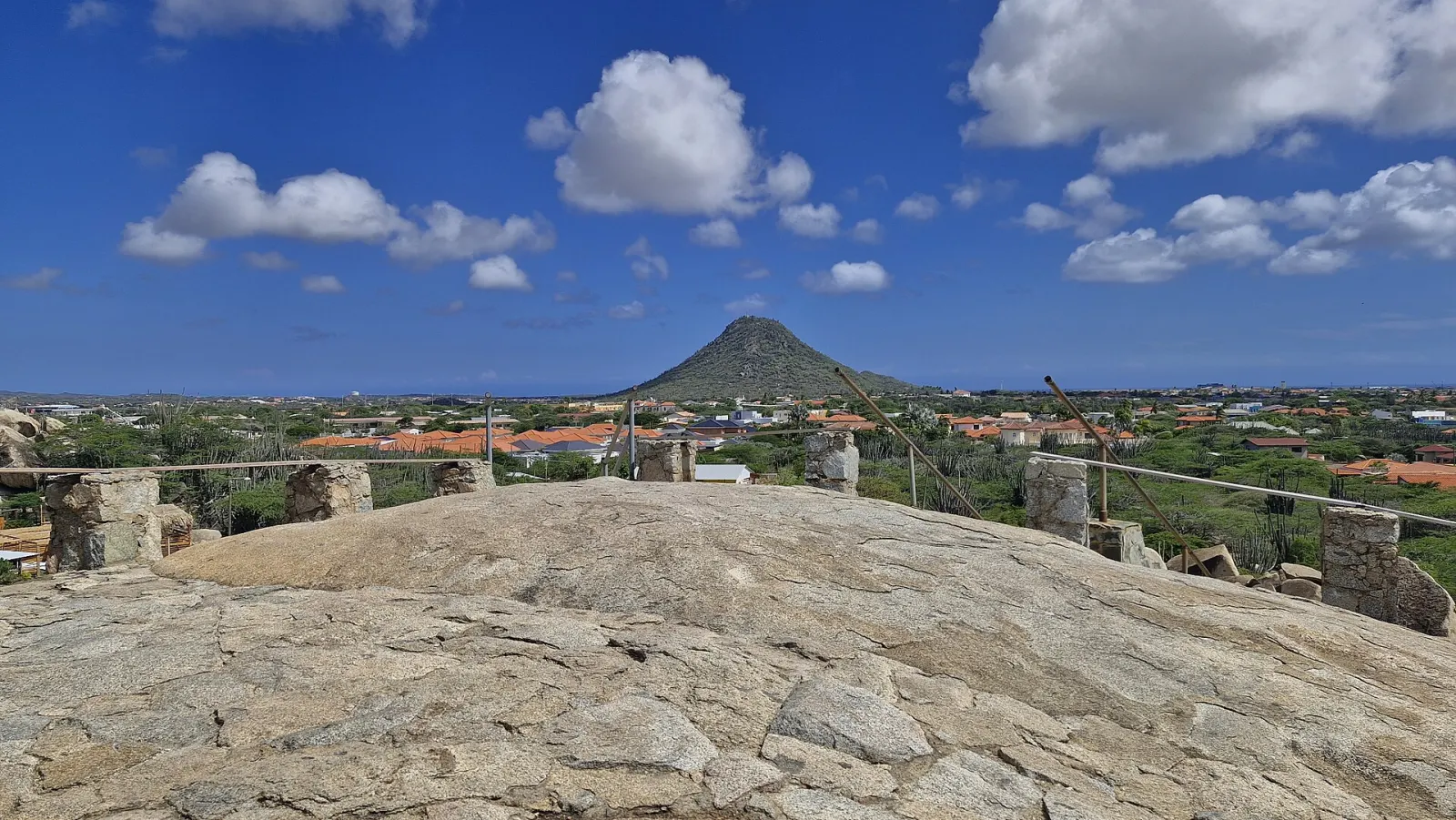
Casibari Rock Formations
Giant tonalite boulders in Aruba's interior, north of Hooiberg, with steps and narrow passages up to a 360° lookout over the island.
Huchada Bakery & Lunchroom
Local bakery in a cunucu house near Santa Cruz, known for pastechi, goat soup and cashew cake; opens at 6 a.m. Monday to Saturday.
More sights
Ayo Rock Formations
Piles of giant diorite boulders near Ayo village where Aruba's Amerindian inhabitants left rock paintings — quieter than Casibari, with short walking paths.
Casibari Rock Formations
Giant tonalite boulders in Aruba's interior, north of Hooiberg, with steps and narrow passages up to a 360° lookout over the island.
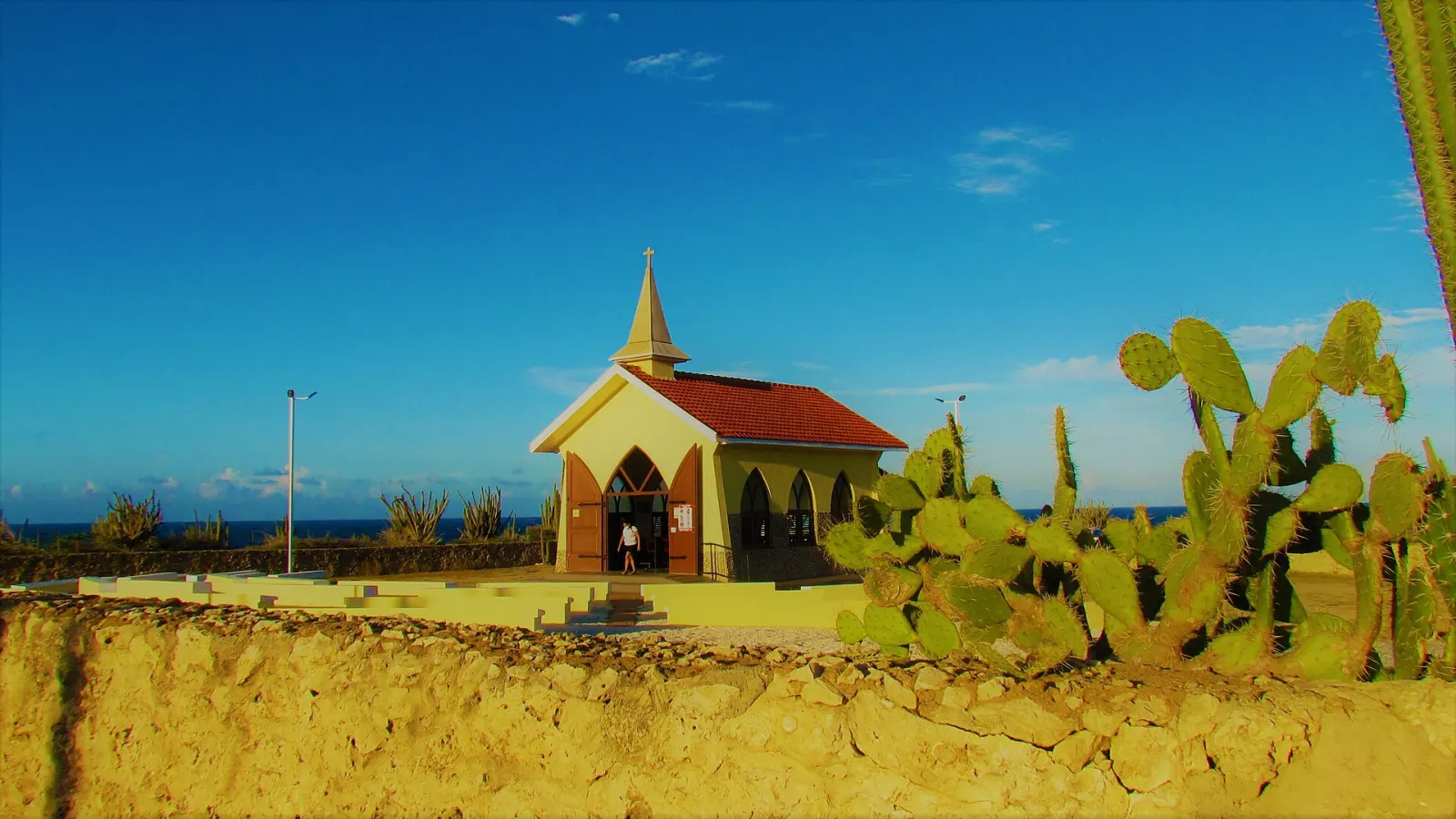
Alto Vista Chapel
A small yellow Catholic chapel on a hill above Aruba's north coast, rebuilt in 1952 on the site of the island's first church, founded in 1750.