
Hooiberg
Aruba's cone-shaped 165 m 'haystack' hill in the middle of the island, climbed by a stairway of roughly 600 steps to a panoramic summit.
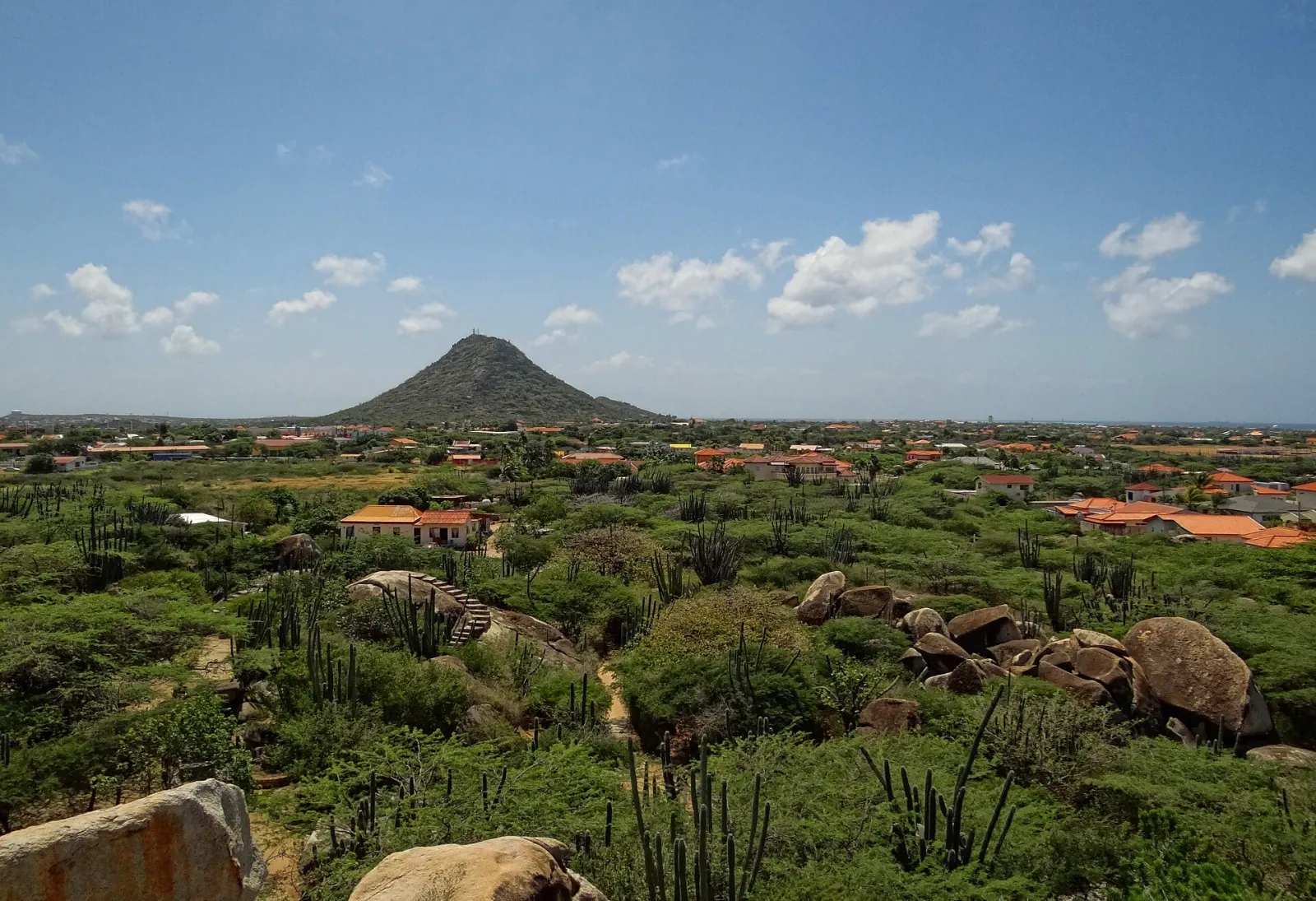
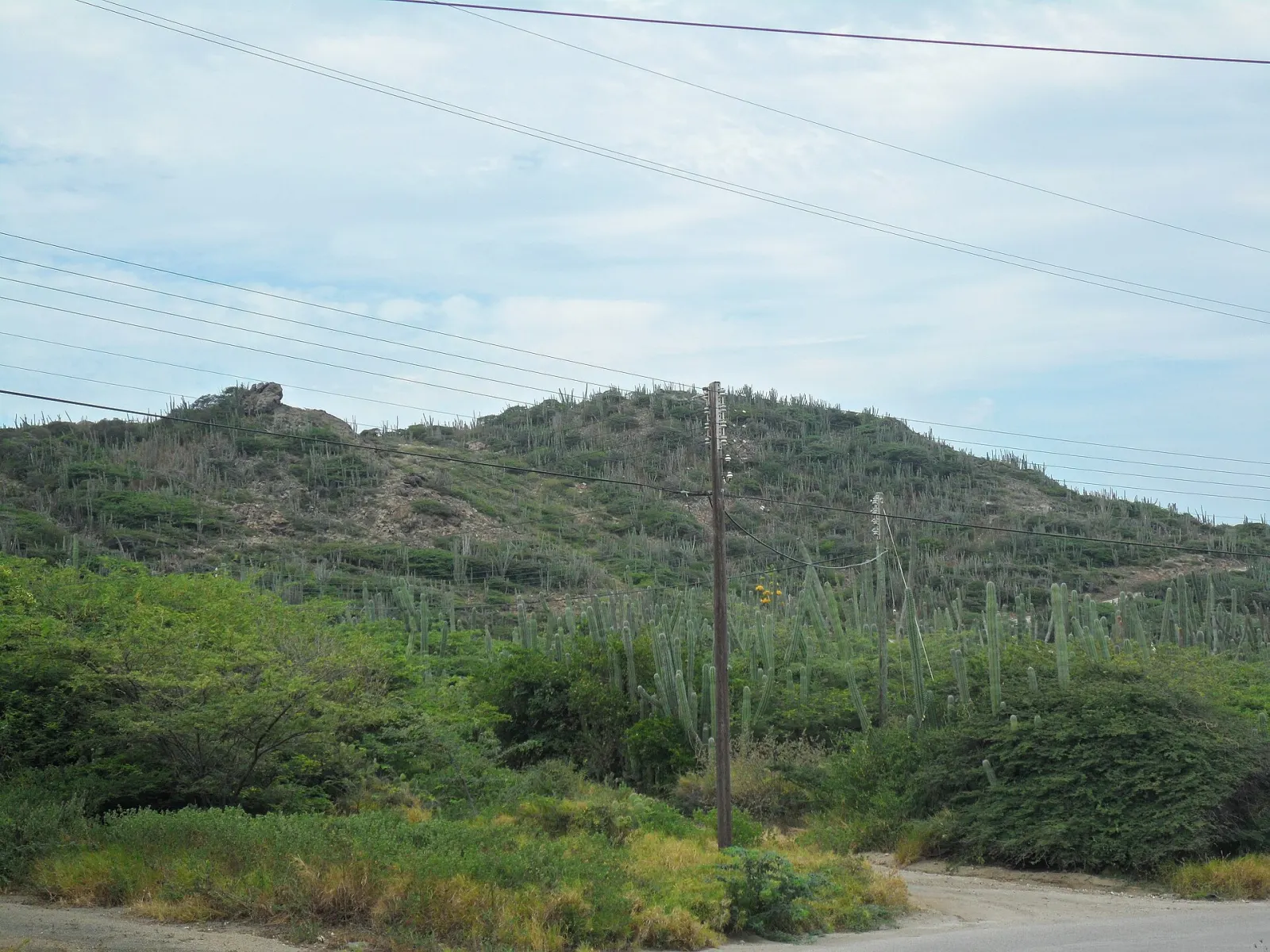
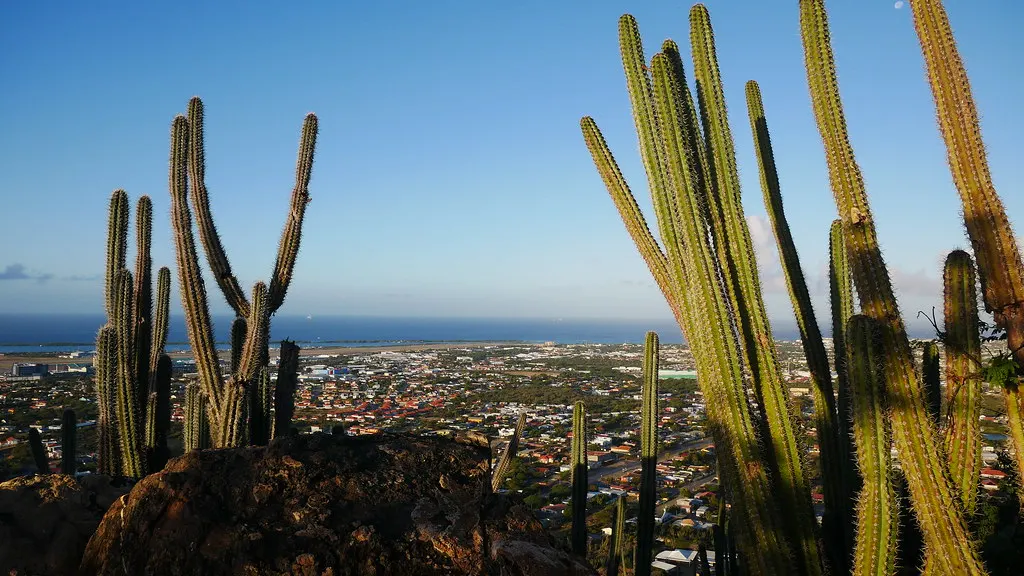
Hooiberg — Dutch for "haystack" — is the steep, cone-shaped hill that rises 165 m from the flat centre of Aruba and is visible from almost everywhere on the island. A stairway of about 600 steps (Aruba Tourism Authority figure) climbs to the top, where the view takes in Oranjestad, the hotel coast and the interior. It is a short, sweaty workout with one of the best panoramas on the island.
Is Hooiberg the highest point on Aruba?
No — that is a common misconception. The highest point is Jamanota (188 m) inside Arikok National Park. Hooiberg stands out because it rises alone from a plain that averages only about 40 m above sea level, which is why sailors used it as a landmark: the Dutch privateer Pieter Schouten, who probably sighted Aruba in 1624, noted the island's mountain. Its older names include the Indigenous Orcuyo and the Spanish Cerro de Paja or Pan de Azúcar ("sugarloaf").
What is the climb like?
Steep and continuous. The steps start at a small parking area at the foot of the hill and go more or less straight up the flank. There is little shade, the trade wind is your only cooling, and the steps vary in height. Fit walkers reach the top without difficulty; take breaks if you need them and let faster climbers pass. On the way the Aruba Tourism Authority mentions goats, parakeets and lizards. Coming down is harder on the knees than going up — go slowly.
When should you climb Hooiberg?
As early as possible. Morning air is clearer and cooler, and the low sun lights the west coast from behind you. Avoid the middle of the day: the dark rock and the steps hold the heat. Late afternoon is the other option, but leave enough daylight for the descent.
What will you see from the top?
A 360° panorama over the cunucu (countryside), the boulders of Casibari about 1.5 km to the north, the capital Oranjestad and the line of hotels along the west coast.
Good to know
- Bring water and wear shoes with grip; sandals are a bad idea on the steps.
- No fee or official hours are published; the stairway is not staffed.
- Geology: Hooiberg is part of the Cretaceous tonalite batholith; it even lends its name to a rock type, hooibergite.
- Combine it with Casibari and Ayo for a half-day in the interior, or with an island highlights drive.
Don't miss
Getting there
Hooiberg sits in the centre of the island, inland from Oranjestad on the way to Santa Cruz; the hill is unmistakable and signposted from the main road. A paved access road leads to a small parking area at the foot of the stairway, suitable for any car. Casibari is about 1.5 km to the north.
Local tips
- Climb at first light. Cooler air, clearer views and the sun behind you over the west coast.
- Go down slowly. Step heights vary and the descent is tough on knees; use the handrail where there is one.
- Skip it in the midday heat. There is almost no shade on the stairway. Bring water and a hat even for a quick climb.
Things to do here
Nearby
Huchada Bakery & Lunchroom
Local bakery in a cunucu house near Santa Cruz, known for pastechi, goat soup and cashew cake; opens at 6 a.m. Monday to Saturday.
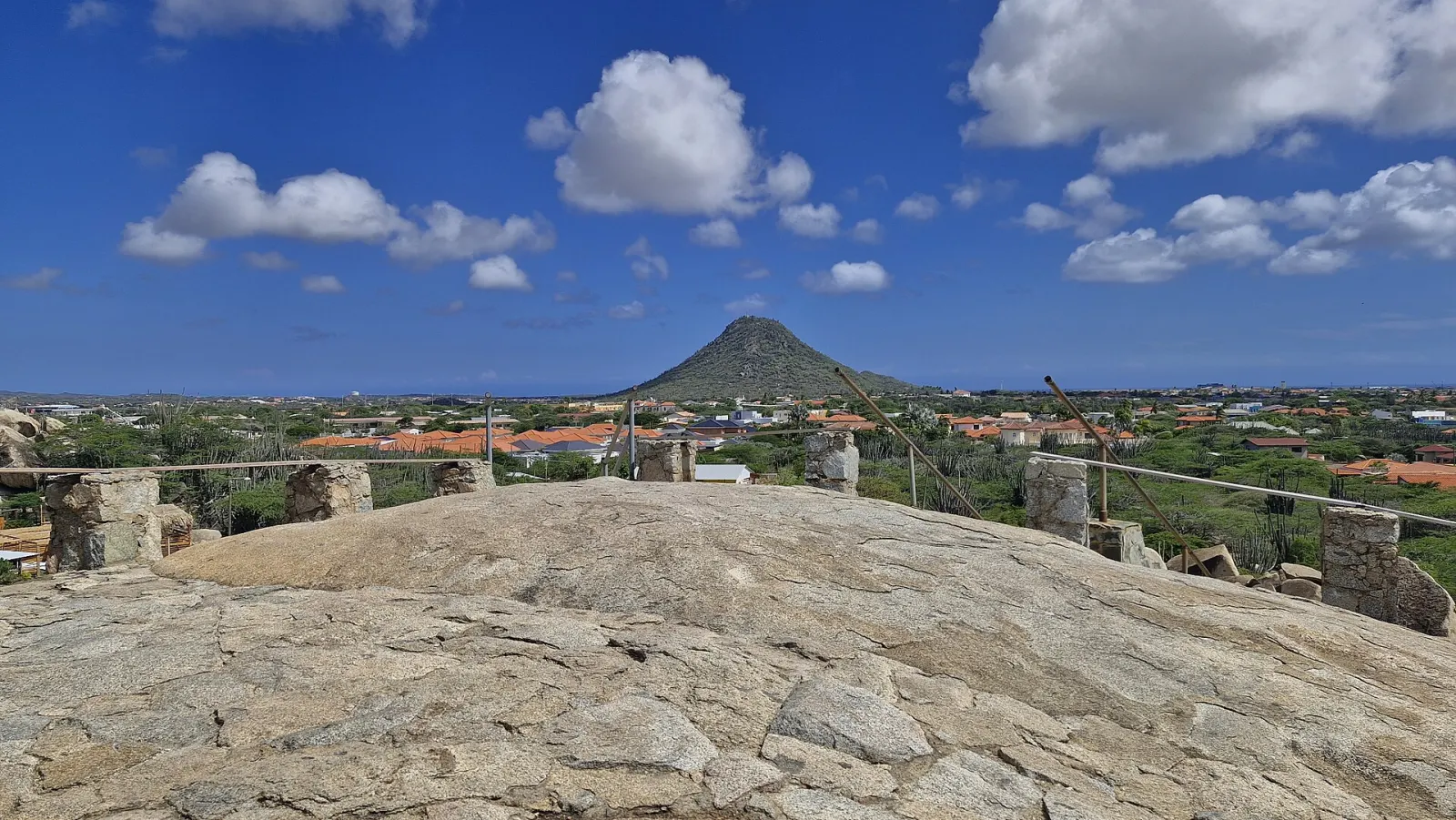
Casibari Rock Formations
Giant tonalite boulders in Aruba's interior, north of Hooiberg, with steps and narrow passages up to a 360° lookout over the island.
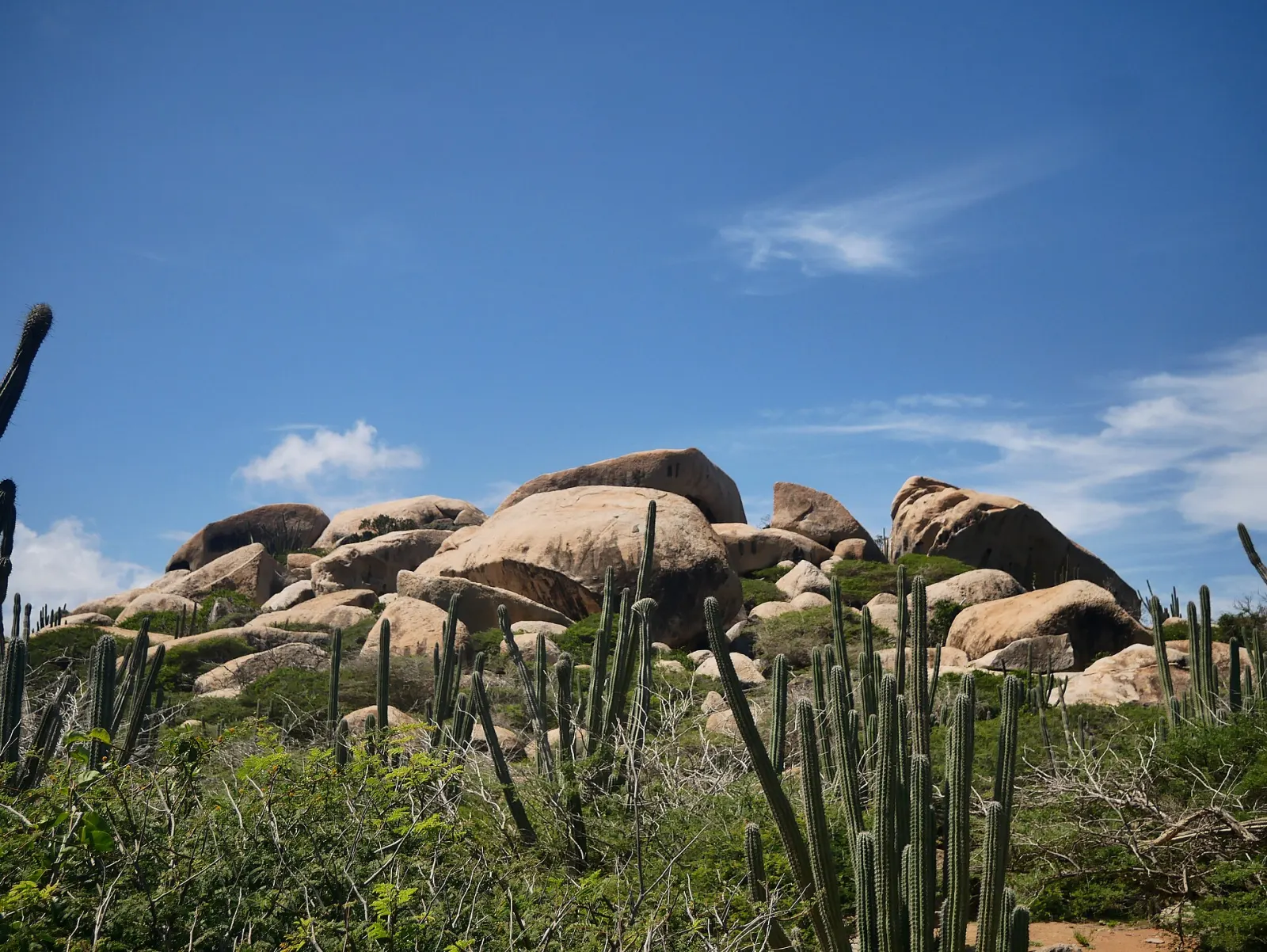
Ayo Rock Formations
Piles of giant diorite boulders near Ayo village where Aruba's Amerindian inhabitants left rock paintings — quieter than Casibari, with short walking paths.
More sights
Casibari Rock Formations
Giant tonalite boulders in Aruba's interior, north of Hooiberg, with steps and narrow passages up to a 360° lookout over the island.
Ayo Rock Formations
Piles of giant diorite boulders near Ayo village where Aruba's Amerindian inhabitants left rock paintings — quieter than Casibari, with short walking paths.
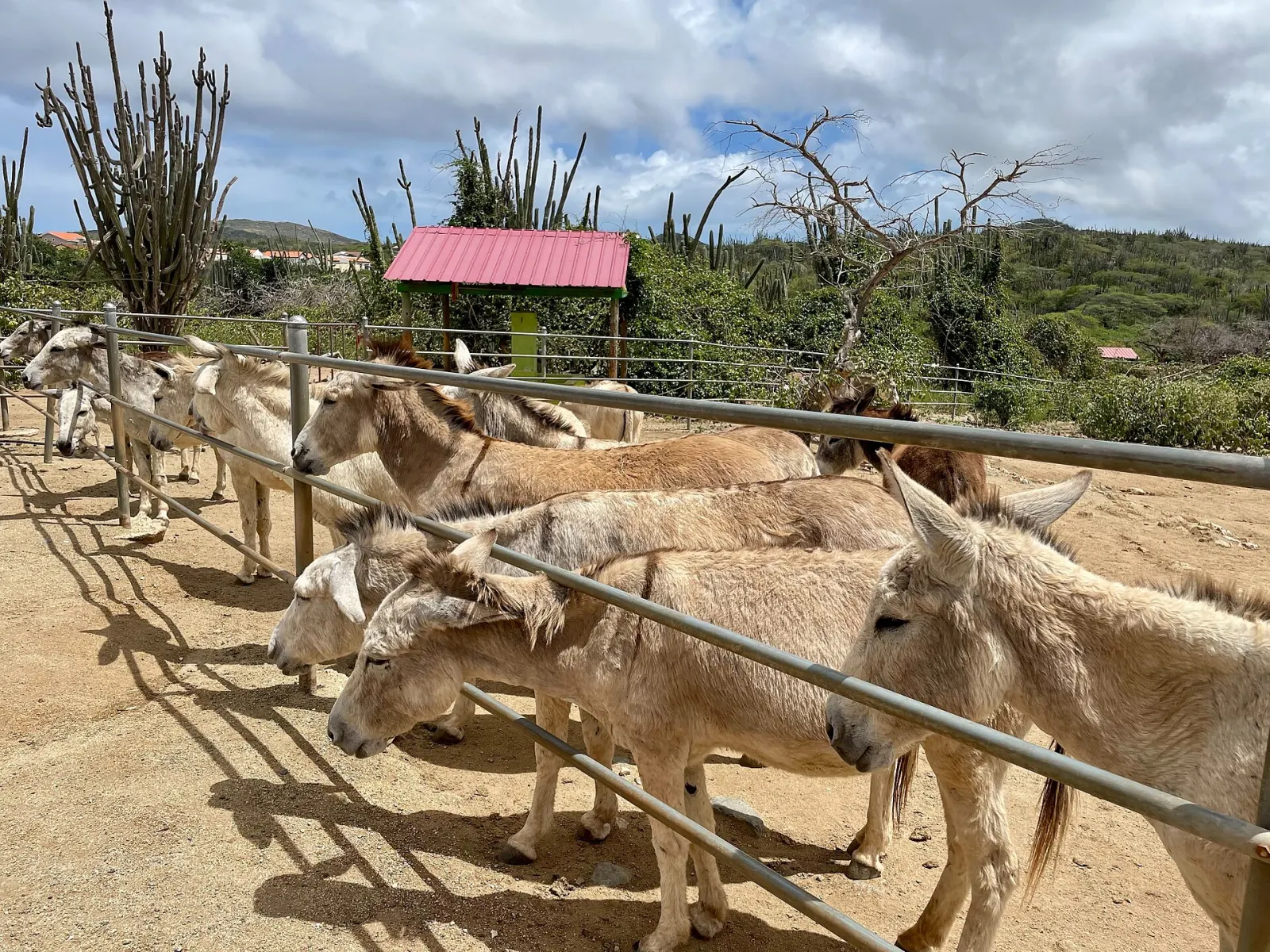
Donkey Sanctuary Aruba
A volunteer-run refuge for 130+ Aruban donkeys at Bringamosa. Open daily 9:00–16:00 except 1 January; no admission fee, donations welcome.