
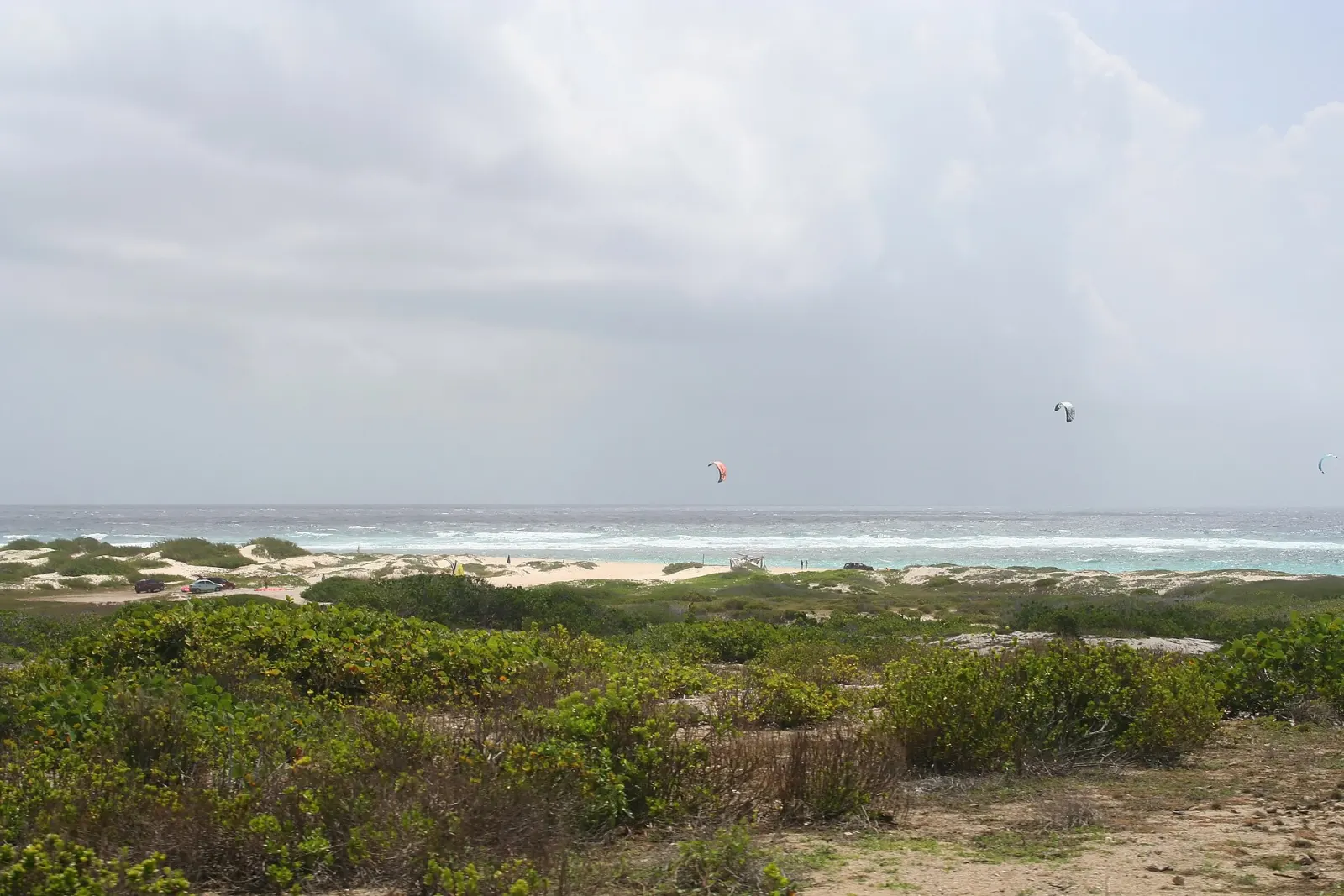
Kitesurfing
Kitesurfing on Aruba's steady easterly trade wind: learn in the shallows at Hadicurari (Fisherman's Huts), then move on to the waves of Boca Grandi in the south-east.
Aruba's trade wind blows from the east in every month of the year, which makes the island a reliable kite destination. Beginners learn at Hadicurari Beach, also called Fisherman's Huts, just north of the Palm Beach hotels, where the water is shallow and calm; experienced riders head to Boca Grandi near San Nicolas for waves and stronger conditions.
How windy is Aruba, month by month?
Mean wind speed from the Departamento Meteorologico Aruba's 1991–2020 climate normals (1 m/s ≈ 1.94 knots):
| Months | Mean wind | Approx. knots |
|---|---|---|
| January–February | 7.2–7.7 m/s | 14–15 |
| March–May | 7.9–8.3 m/s | 15–16 |
| June–July | 8.8 / 8.2 m/s | 17 / 16 |
| August–September | 7.9 / 6.8 m/s | 15 / 13 |
| October–December | 6.0 / 5.6 / 6.6 m/s | 12 / 11 / 13 |
The direction stays between 80° and 90° — easterly — all year, and the annual mean is 7.4 m/s (about 14 knots). In practice March to August is the most consistent period, with June the peak; October and November are the lightest months, and also the wettest.
Where should you kite?
- Hadicurari (Fisherman's Huts) – the Aruba Tourism Authority calls it the most popular spot on the island to learn and practise wind- and kitesurfing. Several schools operate on the beach. It is also the main venue of the Aruba Hi-Winds, held each year in June or July; kitesurfing was added to the event in 2002.
- Boca Grandi – a long beach about five minutes' drive from downtown San Nicolas, marked by a large red anchor at the entrance. Steady wind and challenging waves draw advanced riders; the current is strong and swimming is strongly discouraged. Hi-Winds kite competitions have been held here, and schools take students here once they are confident.
What rules should you know?
Kitesurfing is strictly prohibited inside Aruba's four marine protected areas, according to the Aruba Conservation Foundation. One of them covers the coastal waters around the eastern cape of Seroe Colorado, close to Boca Grandi, so ask locally where the boundary runs before you launch. Give swimmers and other water users a wide berth, and do not ride near turtle-nesting beaches.
How long does it take to learn?
The tourism authority's guide to lessons describes an introductory class followed by four to six consecutive lessons, after which most students ride independently in both directions. It recommends choosing a school with IKO-certified instructors, which you can check on the IKO website, and notes that you need basic swimming skills.
What do people commonly misjudge?
Sun and dehydration on a windy beach, where you do not feel the heat; gusts (the strongest recorded gust in the 1991–2020 normals is 20.3 m/s); and the reef and rocks at the edges of both spots. If you are not yet self-rescuing, stay at Hadicurari and see windsurfing for the other wind sport on the same beach.
Where to go
Know before you go
- Learn at Hadicurari first. Shallow, calm water and several schools on the beach make it the island's standard learning spot; Boca Grandi is for confident riders.
- Check the school's certification. The tourism authority advises IKO-certified instructors, which you can verify on the IKO website.
- Stay out of marine protected areas. Kitesurfing is strictly prohibited in Aruba's four MPAs, including the waters around Seroe Colorado near Boca Grandi.
- Don't swim at Boca Grandi. The current is strong and swimming is strongly discouraged; companions who are not riding should stay on the beach.
FAQ
What is the best month for kitesurfing in Aruba?
June has the highest mean wind (8.8 m/s, about 17 knots); March to August is consistently windy. October and November are the lightest months.
Is Aruba good for beginner kitesurfers?
Yes. Hadicurari has shallow, calm water and several schools; the tourism authority describes four to six lessons after an introduction as typical before riding independently.
Where can't you kitesurf in Aruba?
Inside the four marine protected areas managed by the Aruba Conservation Foundation: the Arikok coast, Seroe Colorado, Mangel Halto and the Oranjestad reef islands.
More things to do
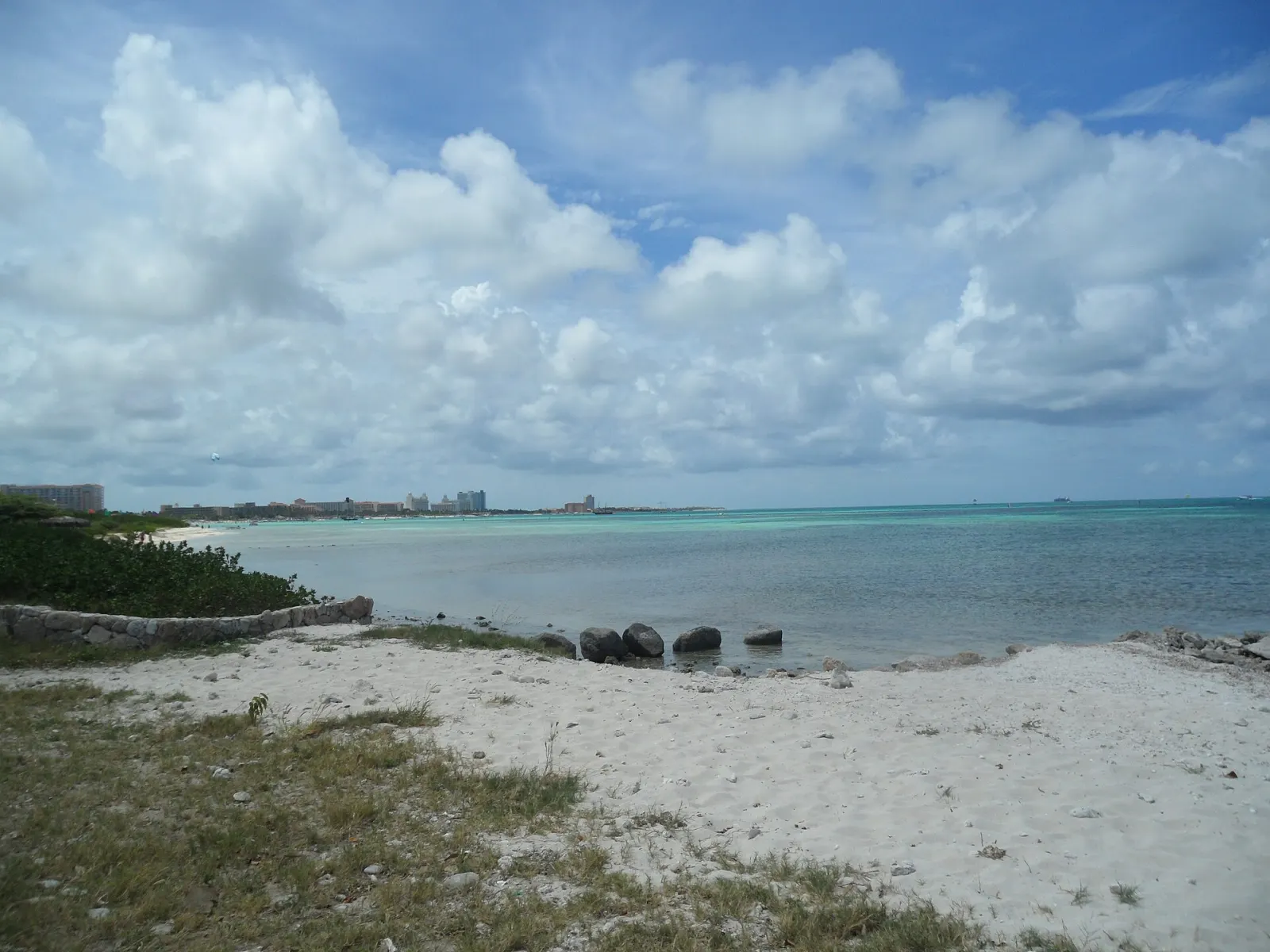
Windsurfing
Windsurfing at Hadicurari (Fisherman's Huts), home of the Aruba Hi-Winds since the 1980s: shallow flat water, a steady easterly trade wind and schools on the beach.
1–3 h
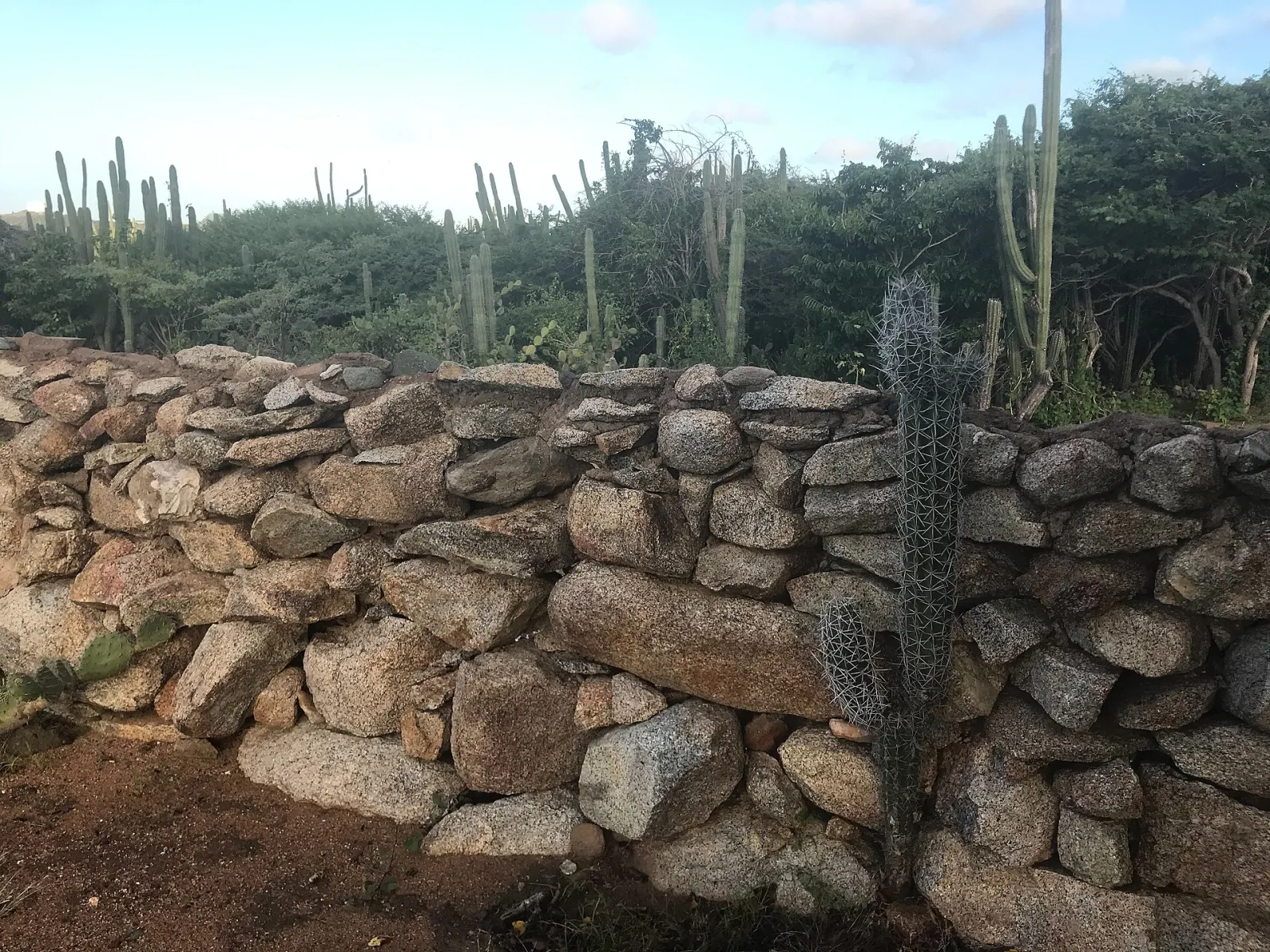
Hiking in Arikok
Trails through Arikok National Park, from the easy Cunucu Arikok loop to Jamanota, Aruba's 188 m high point, with ranger-led hikes, the park pass and heat advice.
1.5–3.5 h
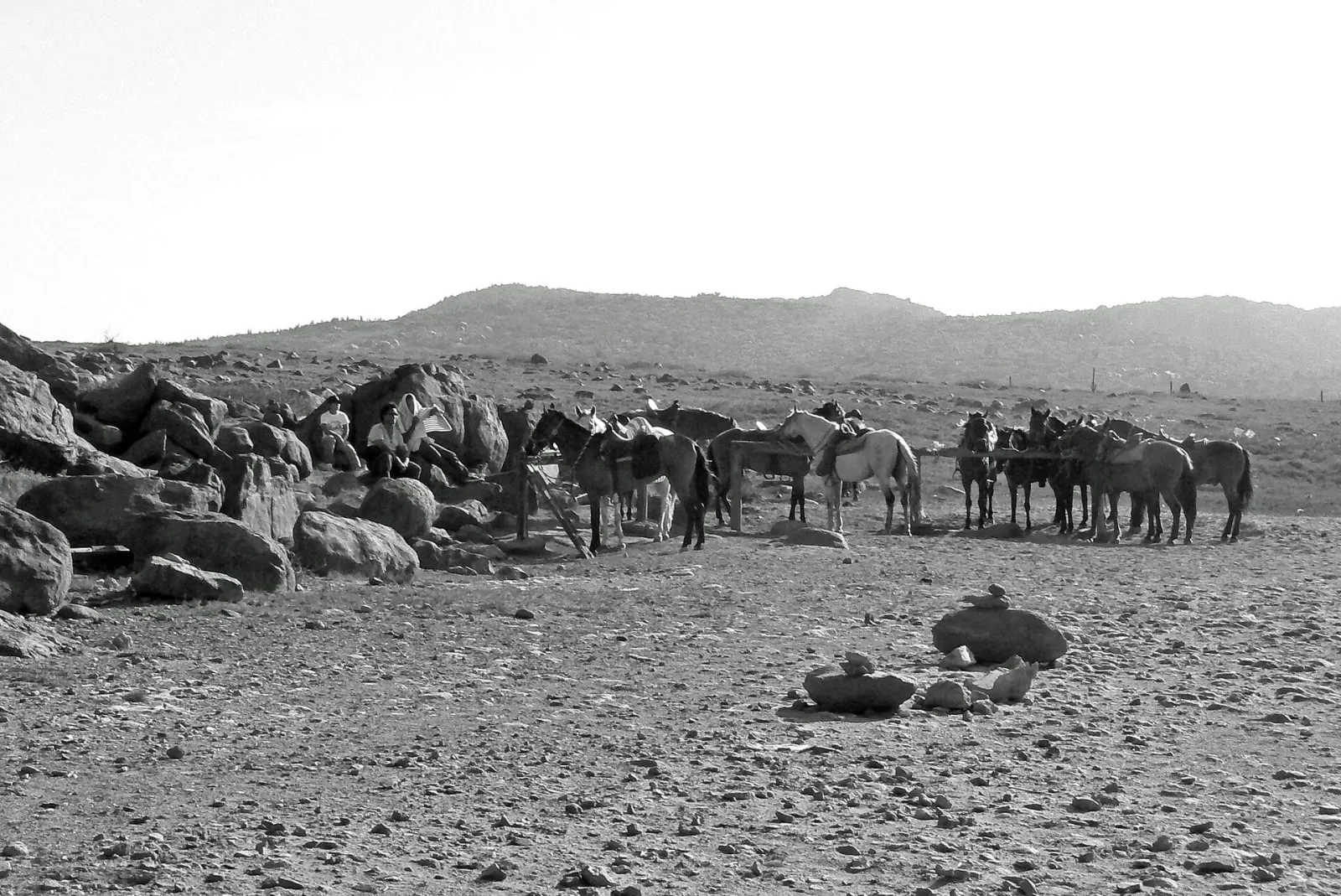
Horseback riding
Guided rides through Aruba's cactus country and along the rugged north coast, including routes to the Natural Pool in Arikok, mostly on gaited Paso Fino horses.
1–3 h