
Druif Beach
A long, oval stretch of ivory sand beside Eagle Beach, with calm, clear water, beach huts, a volleyball court and pelicans on poles offshore.
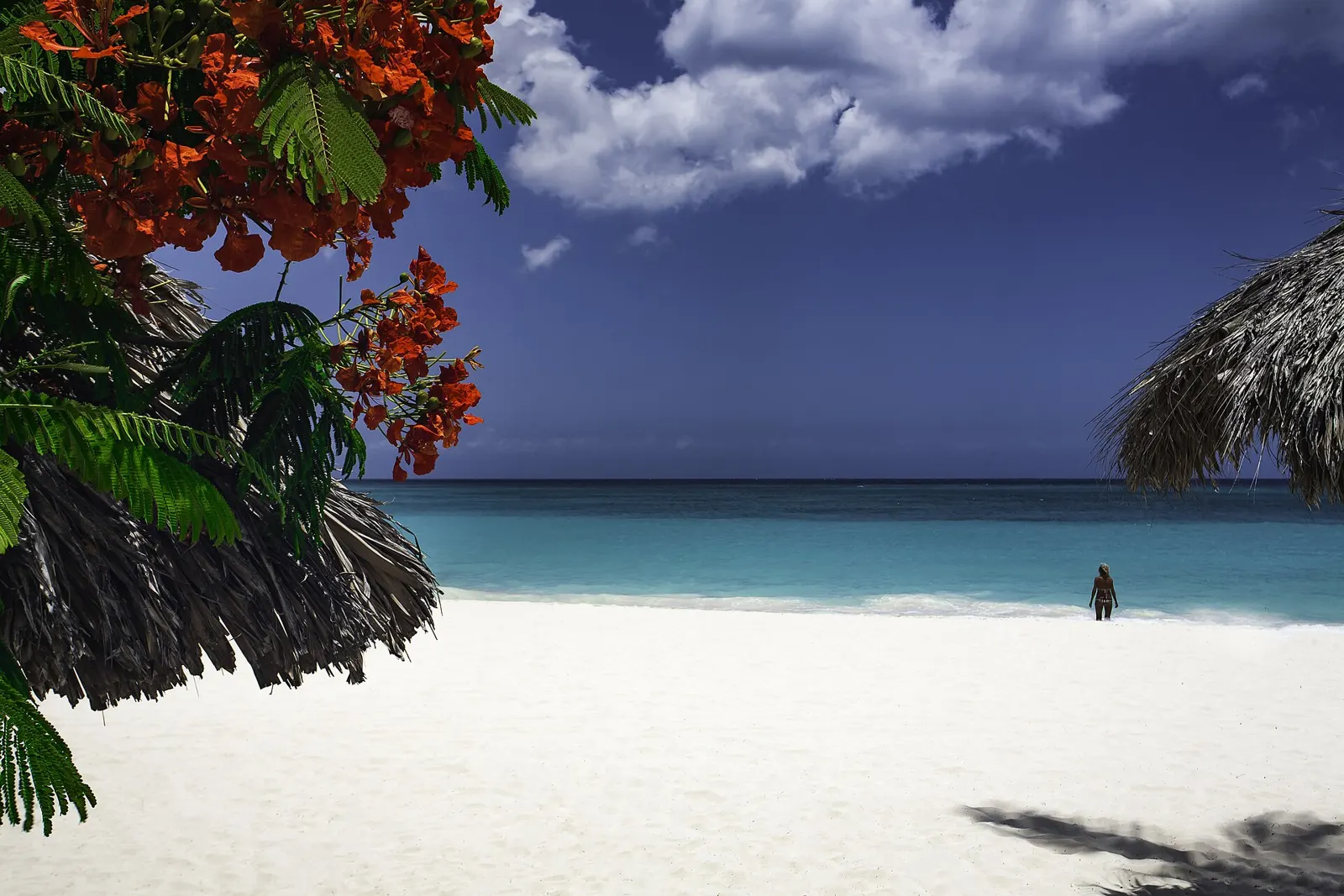
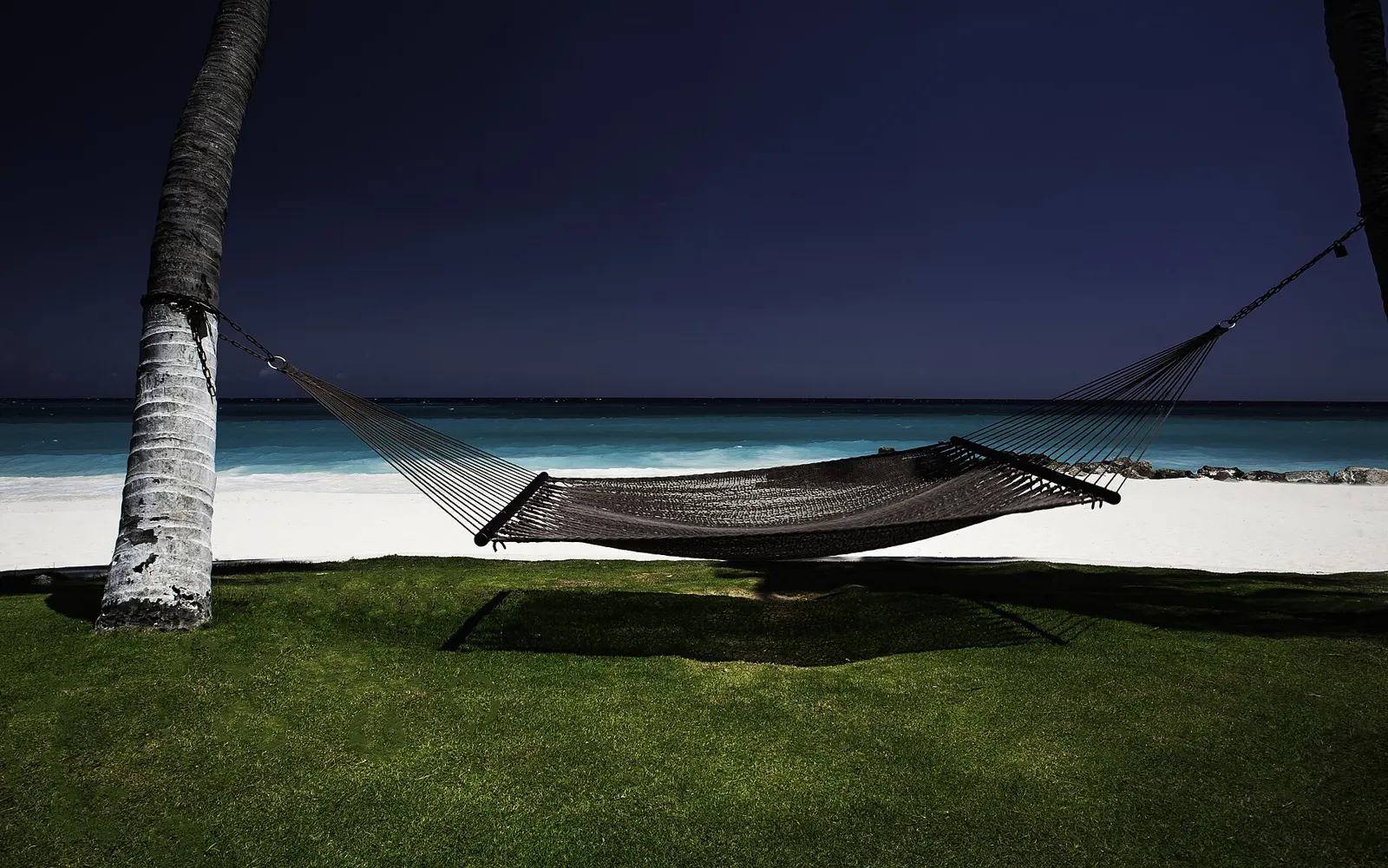
Druif Beach is a long, oval-shaped stretch of ivory sand on Aruba's west coast, on the Oranjestad side of the Eagle Beach stretch and in front of casual low-rise resorts. The Aruba Tourism Authority describes the water as relatively calm and clear and the beach as quiet despite being close to downtown; Wikipedia gives its length as about 300 metres. It suits swimmers, families and anyone who wants Eagle Beach's setting with a little less going on.
Where is Druif Beach?
It lies on the west coast, a short drive from downtown Oranjestad and continuing into Eagle Beach. One travel magazine says the two are separated by the small Punto Brabo peninsula, and the tourism authority notes that Druif connects directly to the neighbouring sands, so in practice you can walk from one to the other along the shore. The name comes from the sea grape trees (druif is Dutch for grape) that once grew there. Coordinates from OpenStreetMap: 12.5340, -70.0574. The wider area is described in Eagle Beach & Druif.
Is Druif Beach good for swimming?
Usually yes. The Aruba Tourism Authority describes calm, clear water suitable for swimming and aqua jogging, and the west coast faces away from the trade wind, which is why it is far gentler than the north and east coasts. It is still open sea: swim within your depth and keep children within arm's reach. Water sports run in the area, both motorised and non-motorised; a travel article notes that motorised sports are banned in front of the beach bar, so look for where swimmers and boats are separated before you go in.
What facilities does Druif Beach have?
The tourism authority lists beach huts (palapas), beach chairs and a beach volleyball court, with resort rooms and restaurants a short walk from the sand. Public transport is listed as an amenity without details, and the page says nothing about parking, so do not assume there is a car park at the beach; the tourism authority's page for neighbouring Eagle Beach mentions ample public parking. Within about a mile there are beach and baby-equipment rentals, a fitness club, a car rental agency, a yoga and Pilates studio and a restaurant and bar.
What is there to see and do?
- Swimming and aqua jogging in the calm water.
- Pelicans. The tourism authority mentions pelicans roosting on poles in the water, a regular sight for anyone looking out from the beach.
- Beach volleyball on the court.
- A long walk along the sand towards Eagle Beach, where most of the island's sea turtle nests are found; keep clear of any marked nest.
- Sunsets, because this coast faces west.
Who is Druif Beach best for?
The tourism authority recommends it for day-long beach outings, water sports and swimming, for active sun-lovers and for visitors who want a quiet, relaxing spot; the nearby rental of baby equipment also makes it practical for families. For more space and public palapas, head along the coast to Eagle Beach; for a town beach with shallow water close to the airport, see Surfside Beach. Families can find more ideas in Aruba with kids, and the best months for beach days are covered in Aruba in November and the best time to visit guide.
What do visitors misjudge?
- Shade and seats. Beach huts and chairs are listed, but there is no guarantee one will be free; carry an umbrella or hat.
- The sun. Aruba sits at about 12.5° north, and white sand reflects strong light; use sunscreen and water.
- Turtle nests next door. Never step inside a barricaded nest area, and keep lights off at night on the beach.
What to do here
Getting there
Druif Beach is a short drive from downtown Oranjestad, along the west-coast hotel strip that leads on to Eagle Beach. The Aruba Tourism Authority lists public transport as an amenity; Arubus runs lines from the Oranjestad station to the hotel area (L10A, L10B), but stops for Druif are not stated, so check timetables and stops on arubus.com.
Local tips
- Bring your own shade. Beach huts and chairs are listed, but availability is not guaranteed; an umbrella or hat is a safe backup.
- Check where boats run. Motorised and non-motorised water sports operate nearby; swim where swimmers and boats are kept apart.
- Don't count on parking. The tourism page for Druif does not mention parking; the one for Eagle Beach next door does. Plan to walk along the sand or check on site.
- Respect nests. Most of Aruba's sea turtle nests are on Eagle Beach, a short walk away: stay out of any barricaded area and keep lights off at night.
Nearby
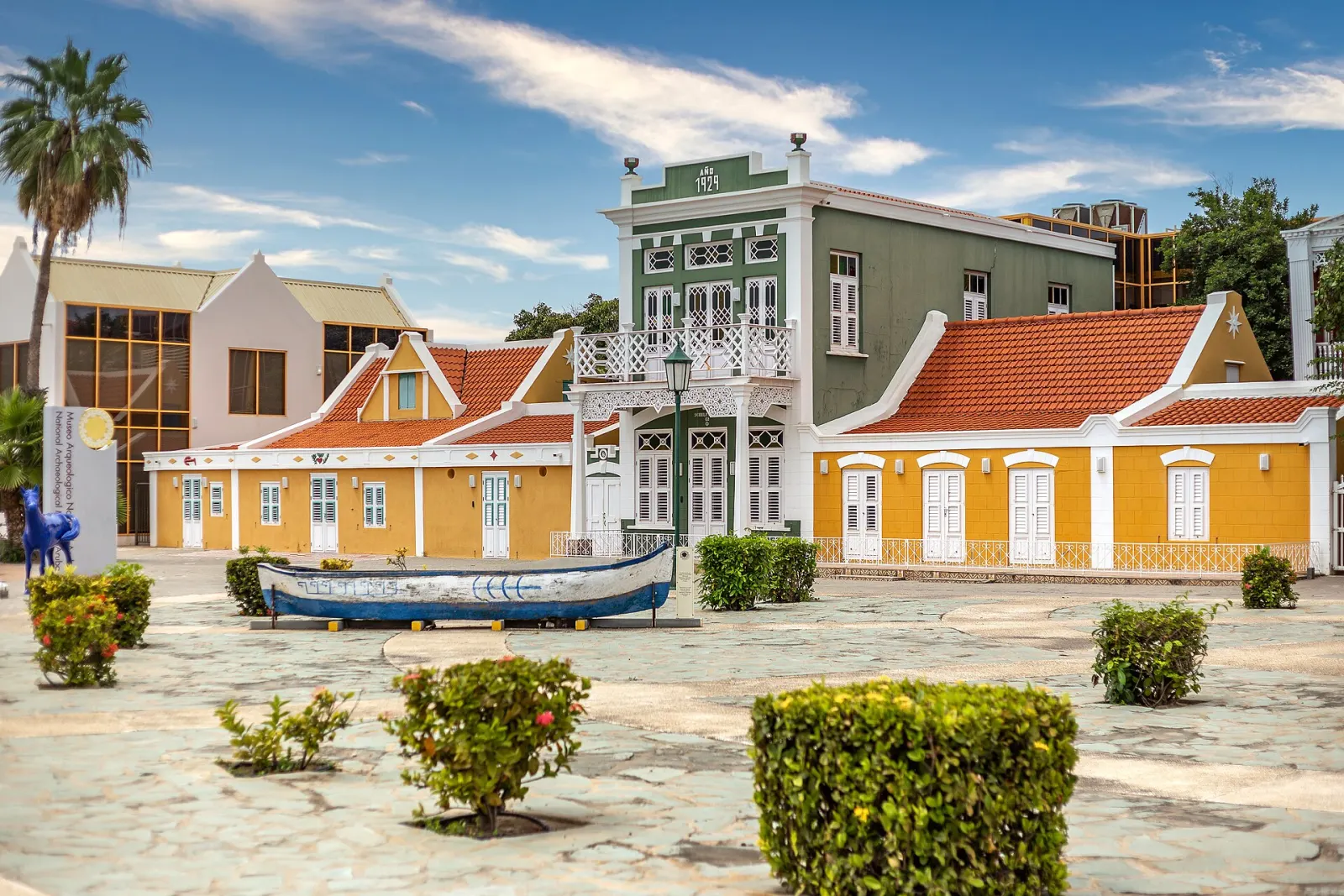
National Archaeological Museum Aruba
Downtown Oranjestad museum on Amerindian Aruba, from 2500 BCE onwards, in the restored Ecury family complex. Open Monday–Friday 9:00–17:00.
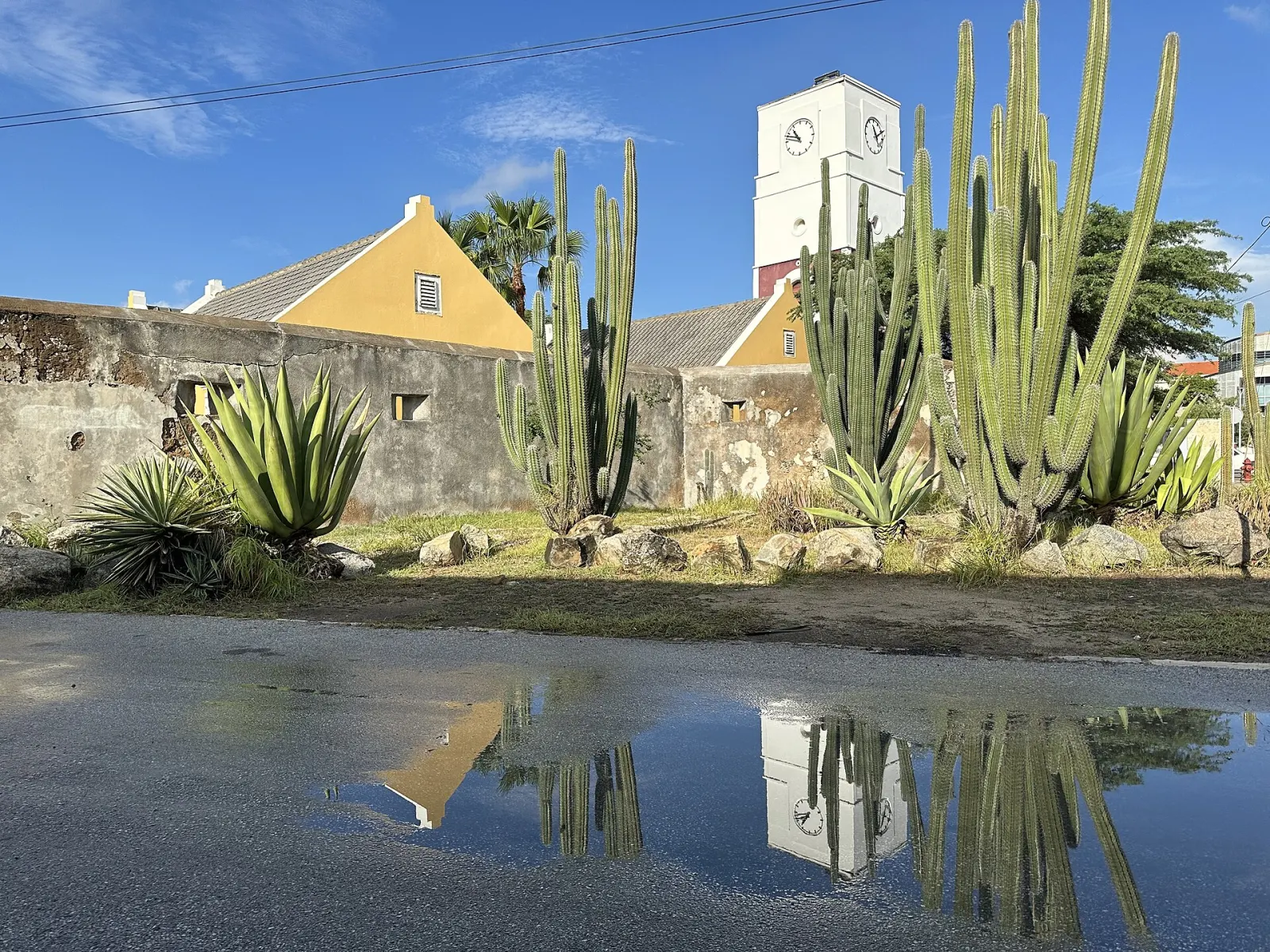
Fort Zoutman & Willem III Tower
Aruba's oldest building, a fort completed in 1798 in Oranjestad, with the 1868 Willem III Tower; today home to the Historical Museum of Aruba.
Wilhelmina
Downtown Oranjestad restaurant (est. 2015) with a tropical garden: seafood, Black Angus steaks and fresh pasta; dinner Tuesday to Sunday.
More beaches like this
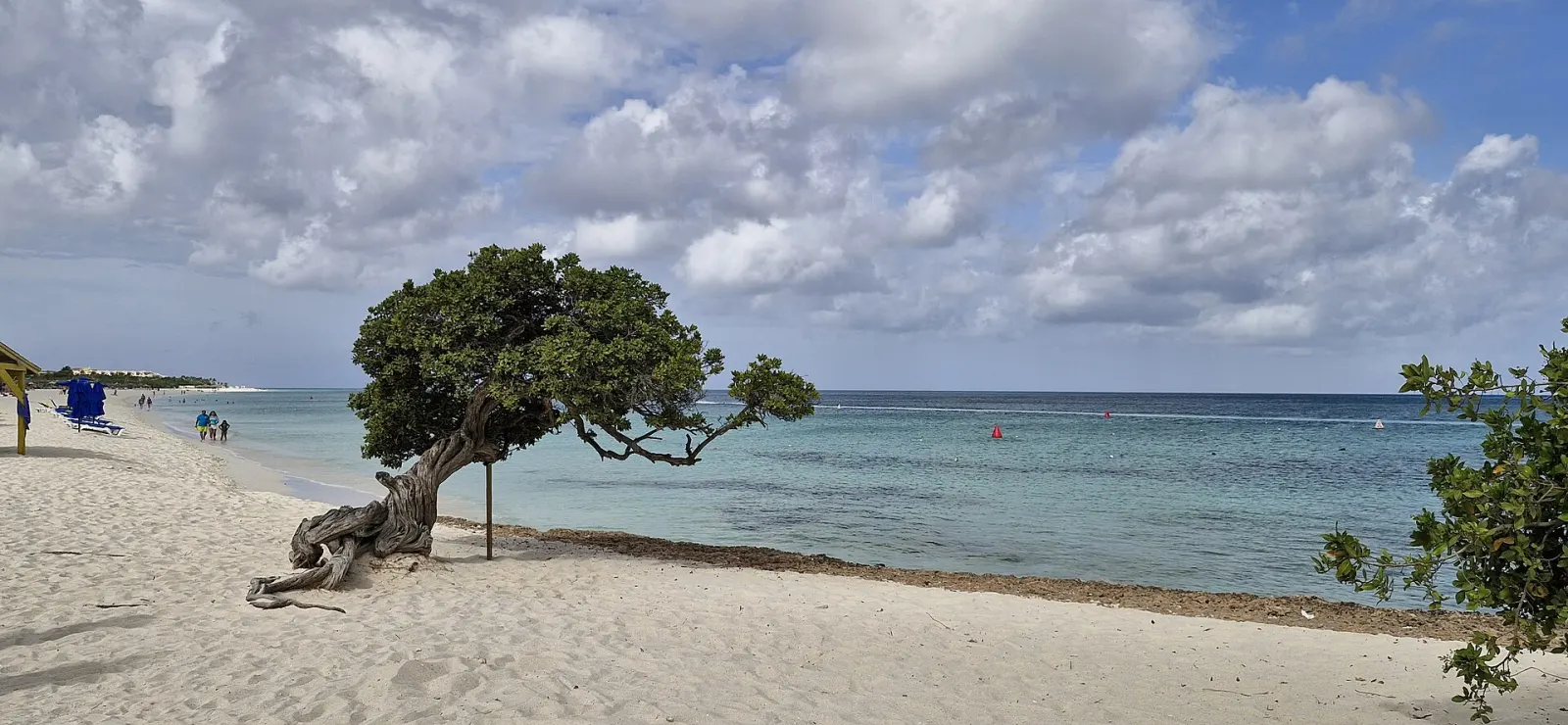 Calm water
Eagle Beach
Aruba's widest beach: soft white sand, calm west-coast water, public palapas, the famous fofoti trees and most of the island's turtle nests.
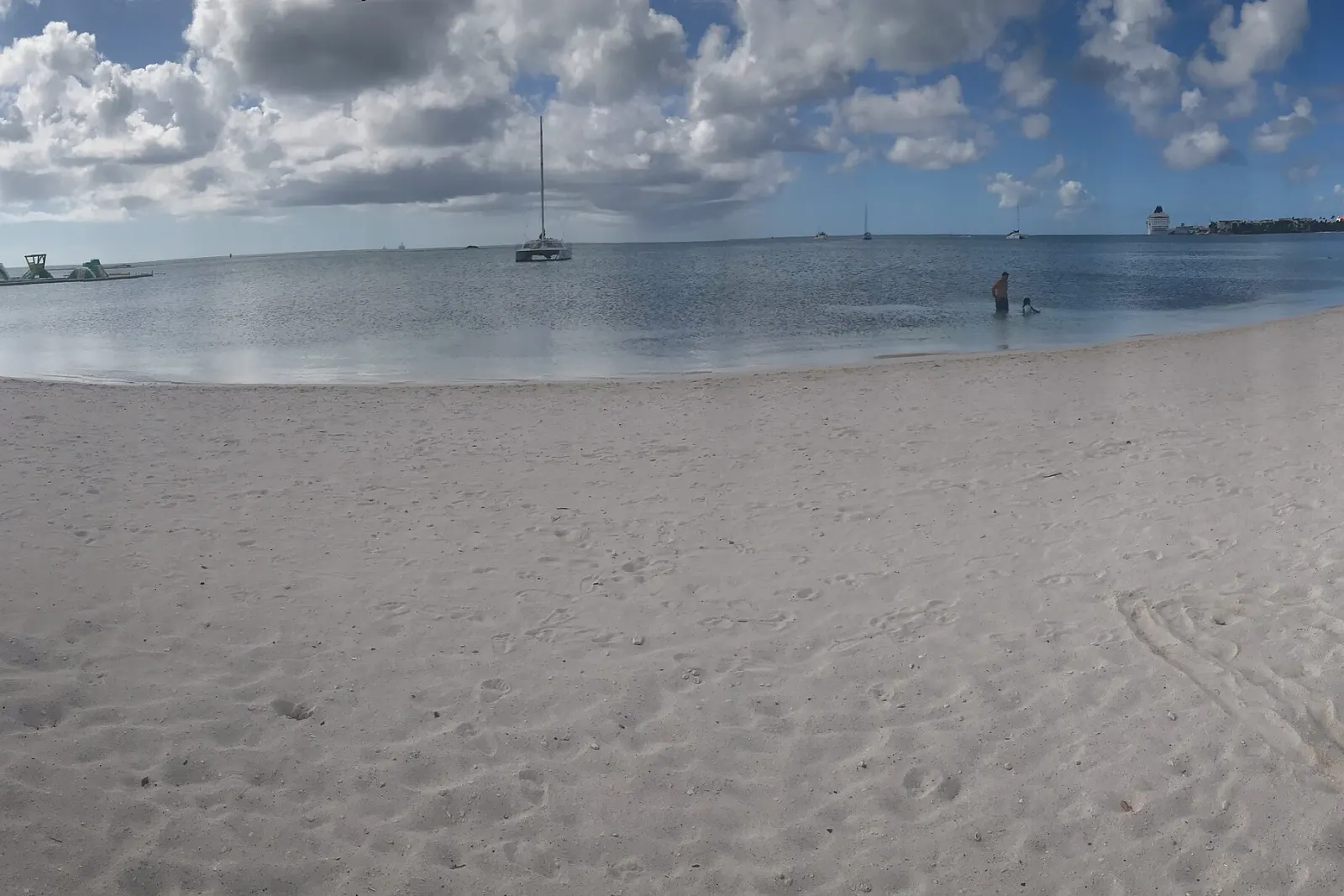 Calm water
Surfside Beach
Oranjestad's town beach, two minutes from the airport: shallow, almost flat water for families, beach bars and planes passing low overhead.
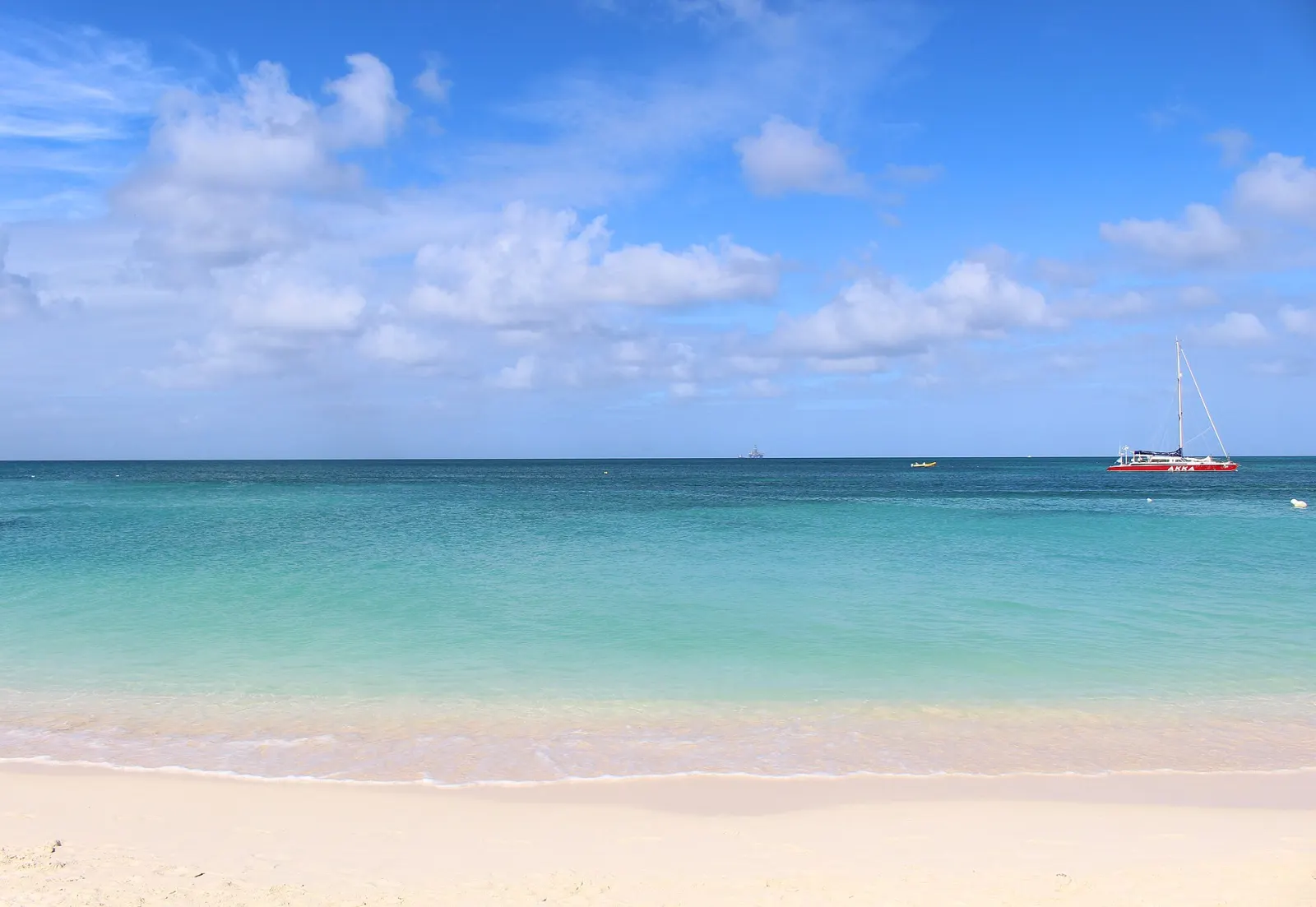 Calm water
Palm Beach
Aruba's liveliest beach: 3.2 km of white sand in front of the high-rise hotels, calm water, piers, beach bars and most of the island's water sports.