Capital & harbour
Oranjestad
Aruba's capital on the south-west coast, grown around Fort Zoutman (1798) and the old Paardenbaai harbour. Come for the museums, the Dutch-colonial streets and the cruise-port waterfront, all within walking distance.
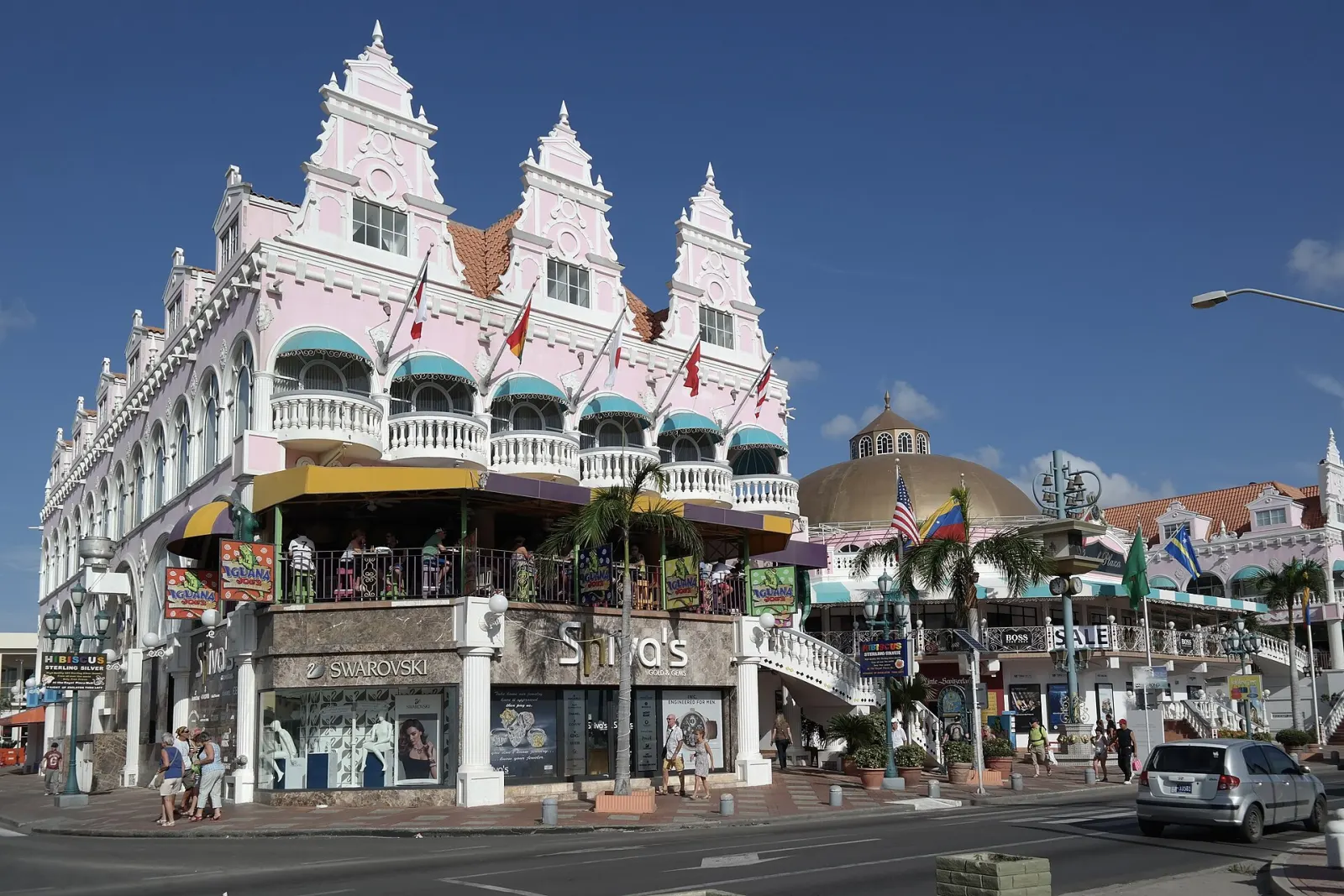
Oranjestad is Aruba's capital and its largest region by population: 28,658 people in 2020. It sits on the sheltered south-west coast, about 5 km by road from Queen Beatrix International Airport, and it is where most visitors first meet the island's history — the fort, the museums and the gabled Dutch-colonial façades along the harbour.
How did Oranjestad begin?
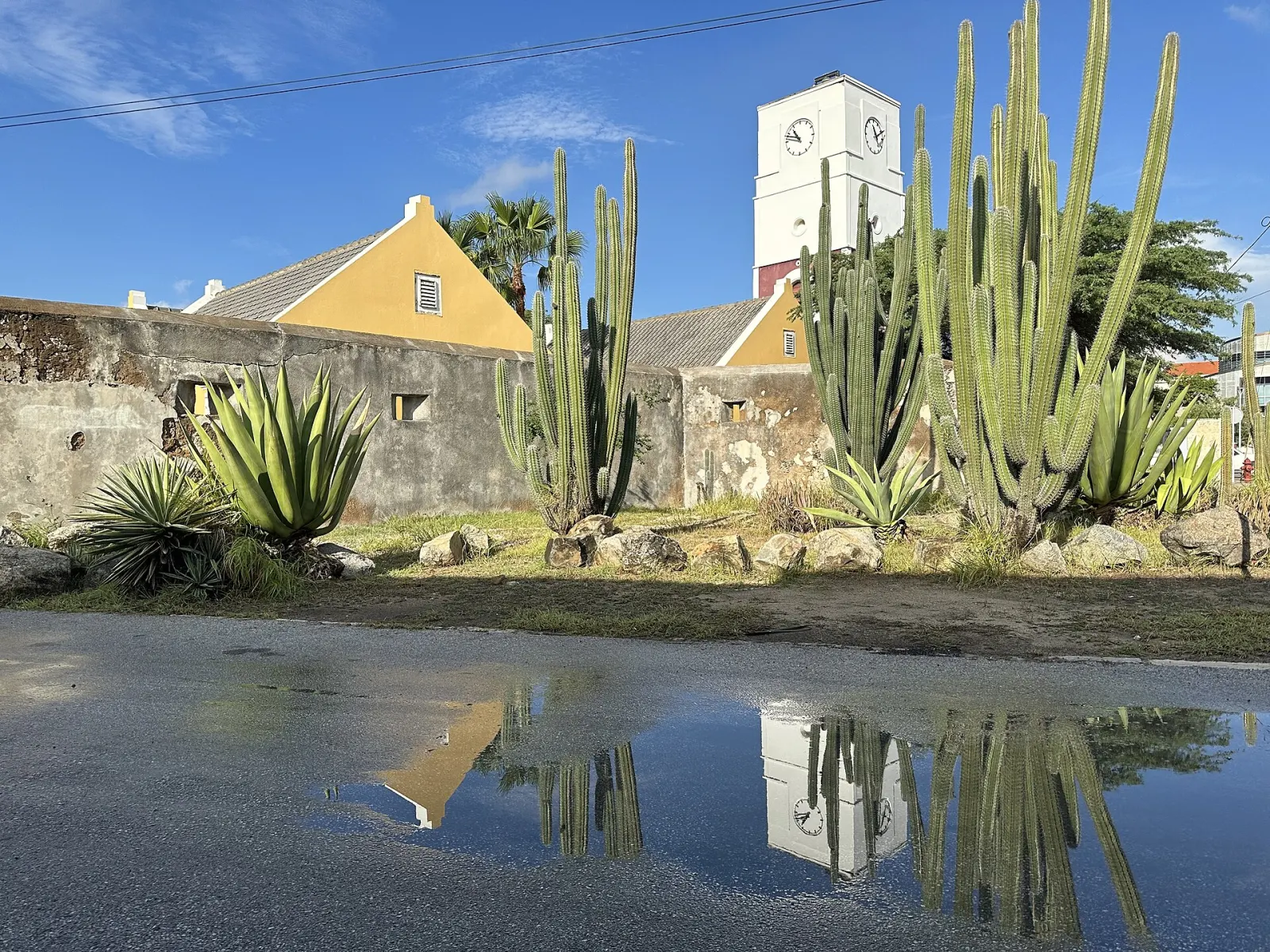
The town grew from a trading settlement on Paardenbaai (Bay of Horses) in the late 1790s, when merchants moved here from the older settlement near Savaneta. Fort Zoutman was completed in 1798 to defend the bay and is the oldest building on Aruba; the Willem III Tower beside it was added in 1868 as a lighthouse and town clock. The village received the name Oranjestad in 1824, after King William I of the Netherlands. In Papiamento locals still often call it Playa.
What is there to see in the centre?
- Fort Zoutman and the Historical Museum — the fort and tower were restored and reopened as the Historical Museum of Aruba in 1983. The courtyard has traditionally hosted the weekly Bon Bini Festival, a folklore evening with music, dance and local food, which was reported on pause in 2026 — check aruba.com or ask locally before planning around it.
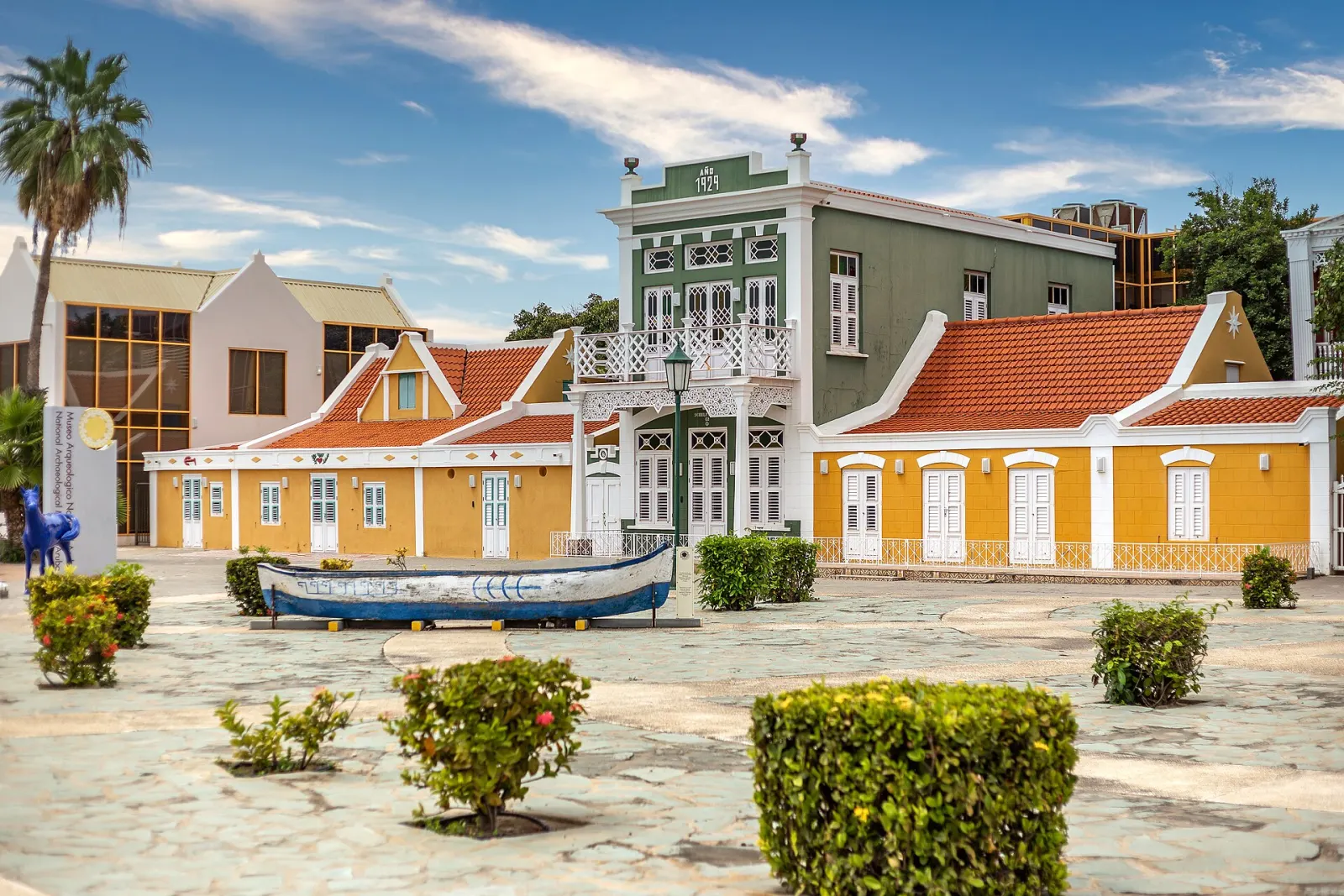
- The National Archaeological Museum Aruba — housed in the restored Ecury family home, it presents the island's Amerindian heritage and archaeological finds.
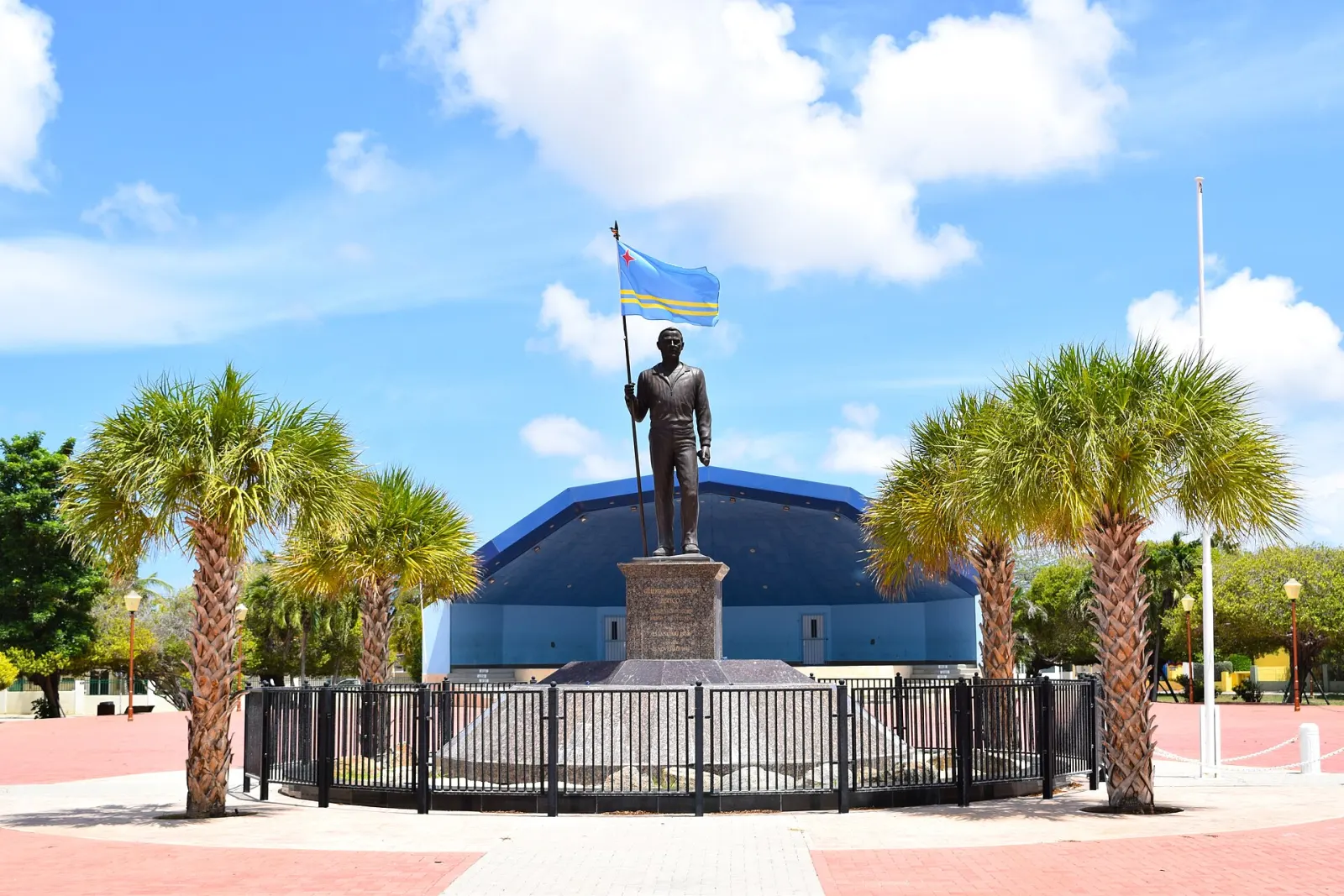
- Monuments and squares — statues of political leaders, including Betico Croes and Henny Eman, stand near the Parliament building, and Wilhelmina Park holds a statue of Queen Wilhelmina.
- Paardenbaai blue horses — since 2015, eight blue horse sculptures around downtown recall the bay's original name.
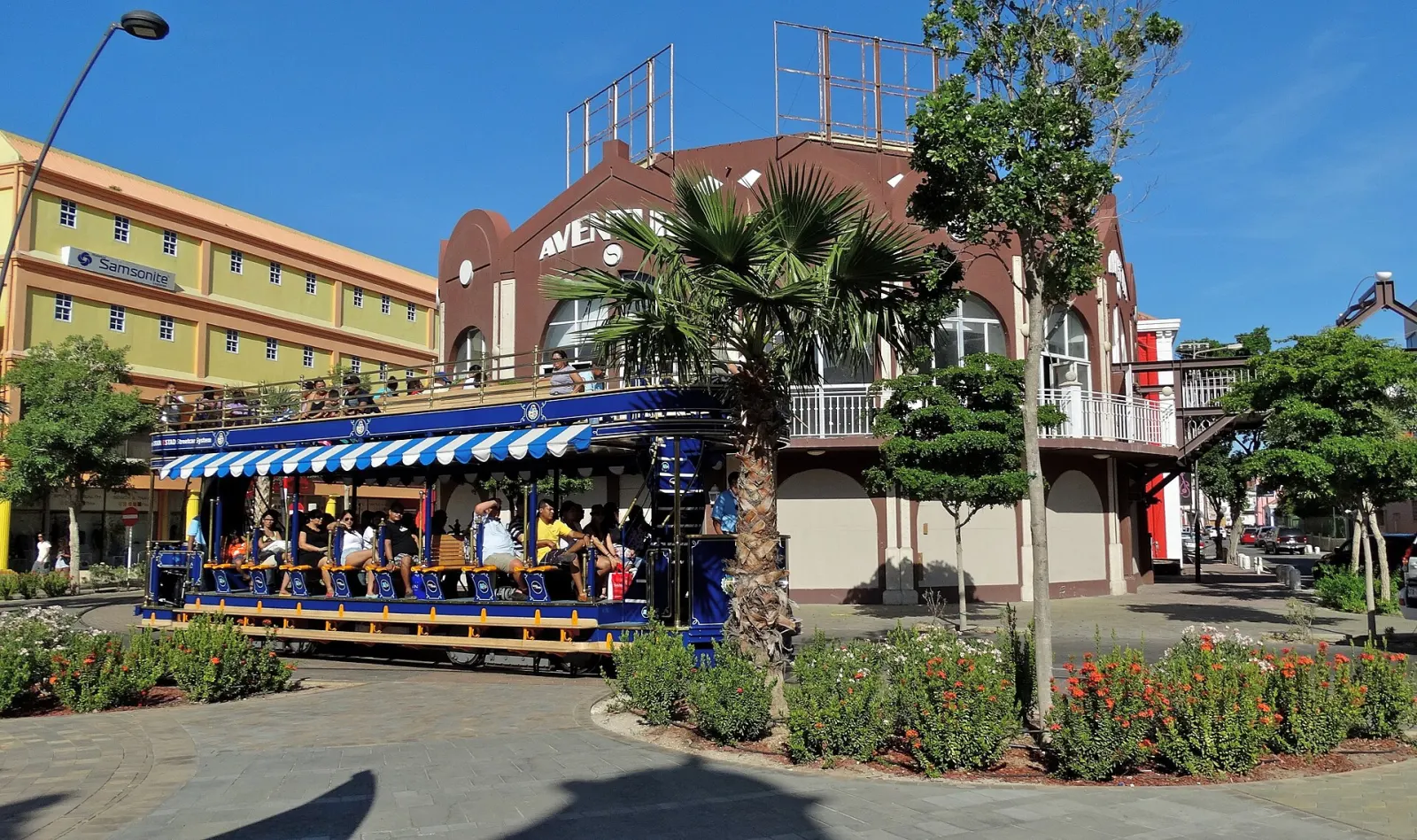
An easy way to connect the sights is the downtown streetcar, which links the cruise terminal with Main Street and stops near monuments, museums and shopping streets. Our Oranjestad walking tour strings the main stops into one route.
Is Oranjestad worth a day if I'm staying on the beach?
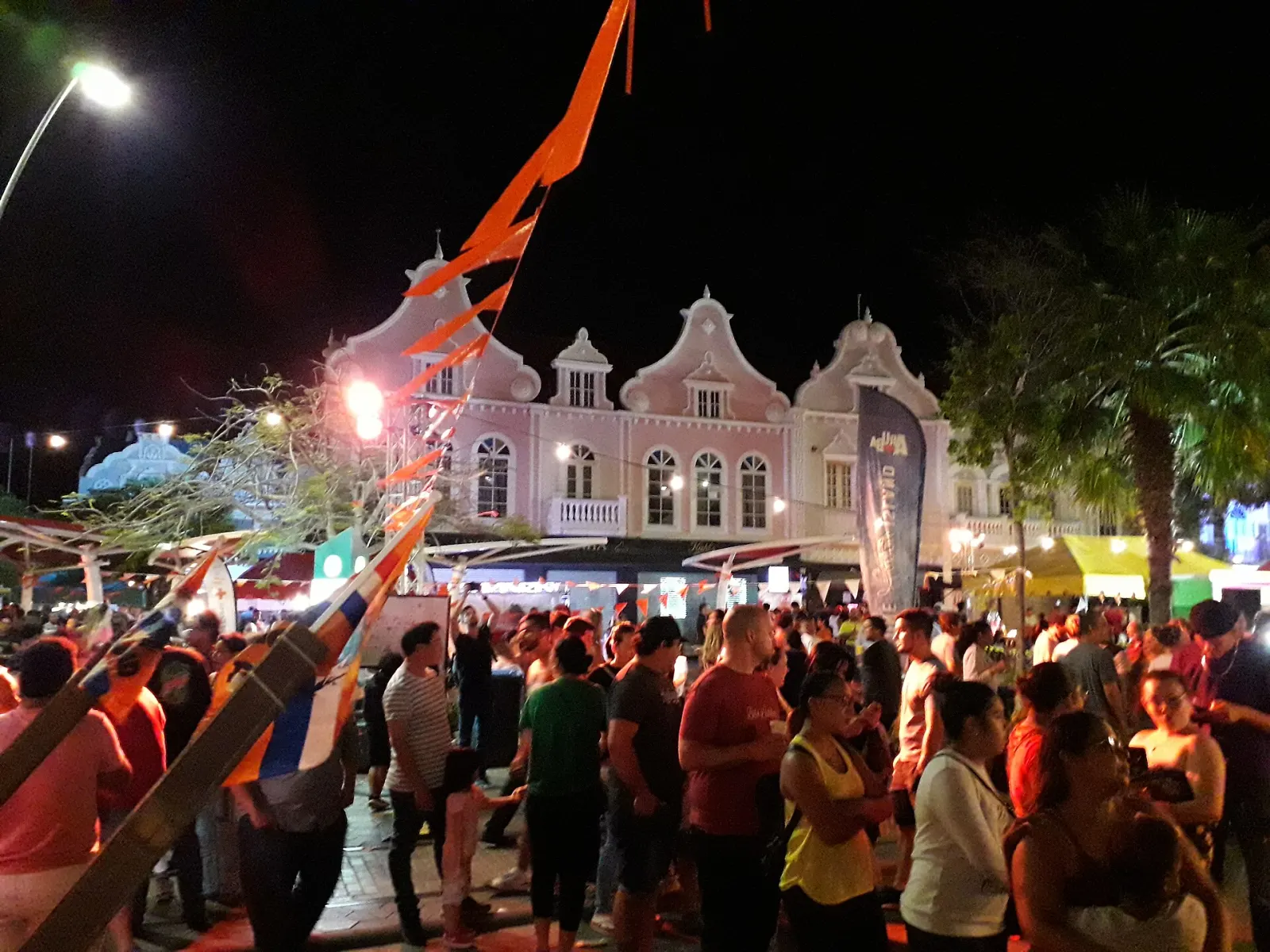
Yes, for half a day at least. The resort beaches of Eagle Beach and Palm Beach are 10–20 minutes away, so most people come in for the morning, visit the fort and the archaeology museum, and stay for lunch. Go early: the town is at its quietest before cruise passengers come ashore, and the sun is strongest from late morning — there is little shade on the waterfront. Several cultural events, including Carnival parades, use the city streets, so check the calendar before you go.
Is there a beach in Oranjestad?
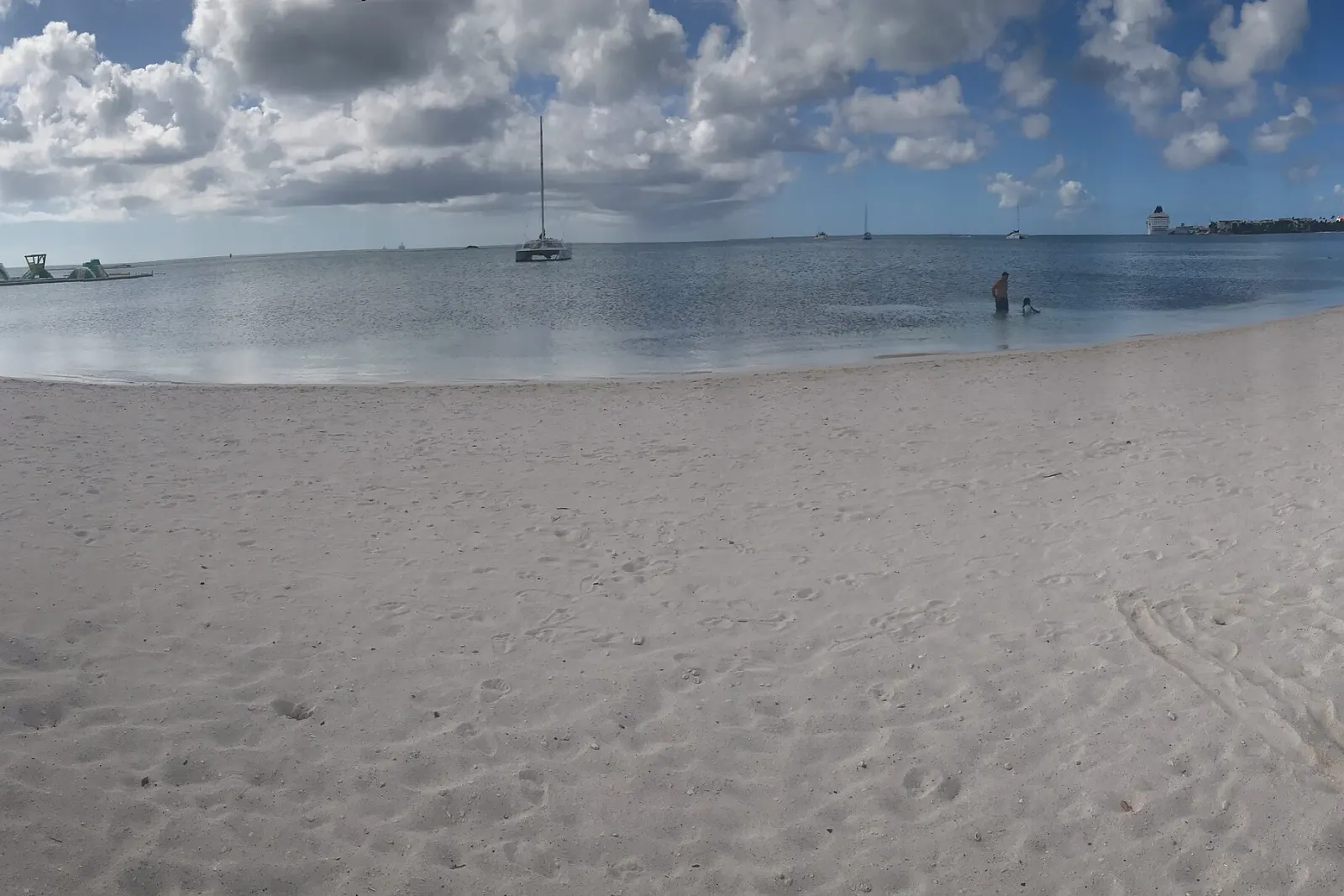
The closest is Surfside Beach, a short way along the coast from downtown, where you can watch planes come in overhead. A linear park and coastal path runs from the town towards the airport, popular for walking and cycling in the cooler hours.
What do people misjudge?
- Cruise days. When ships are in port the centre is busy around the terminal and the main shopping street; walk a few blocks inland for calmer streets.
- Opening hours. Museums keep office-style hours and some close on Sundays — confirm on the official site before planning around them.
- Distances. The city is compact and walkable, but the midday heat makes even 1 km feel long. Carry water and a hat.
If you want history first and beach second, Oranjestad is the logical base for a short stay: the main bus station, the cruise port and car rental desks are all here, and the island highlights drive is easy to start from town.
When is the best time to go?
For sightseeing, weekday mornings: museums are open, the light is softer and the streets are cooler. From early January to Shrove Tuesday the Carnival season brings parades and road closures — lively, but allow extra time for driving and parking.
Oranjestad
Beaches, sights and food in Oranjestad
Fort Zoutman & Willem III Tower
Aruba's oldest building, a fort completed in 1798 in Oranjestad, with the 1868 Willem III Tower; today home to the Historical Museum of Aruba.
National Archaeological Museum Aruba
Downtown Oranjestad museum on Amerindian Aruba, from 2500 BCE onwards, in the restored Ecury family complex. Open Monday–Friday 9:00–17:00.
Surfside Beach
Oranjestad's town beach, two minutes from the airport: shallow, almost flat water for families, beach bars and planes passing low overhead.
Wilhelmina
Downtown Oranjestad restaurant (est. 2015) with a tropical garden: seafood, Black Angus steaks and fresh pasta; dinner Tuesday to Sunday.
Events