
Oranjestad walking tour
A self-guided walk through Aruba's capital: Fort Zoutman and the Willem III Tower, Wilhelminastraat's restored façades, Main Street and the free downtown streetcar.
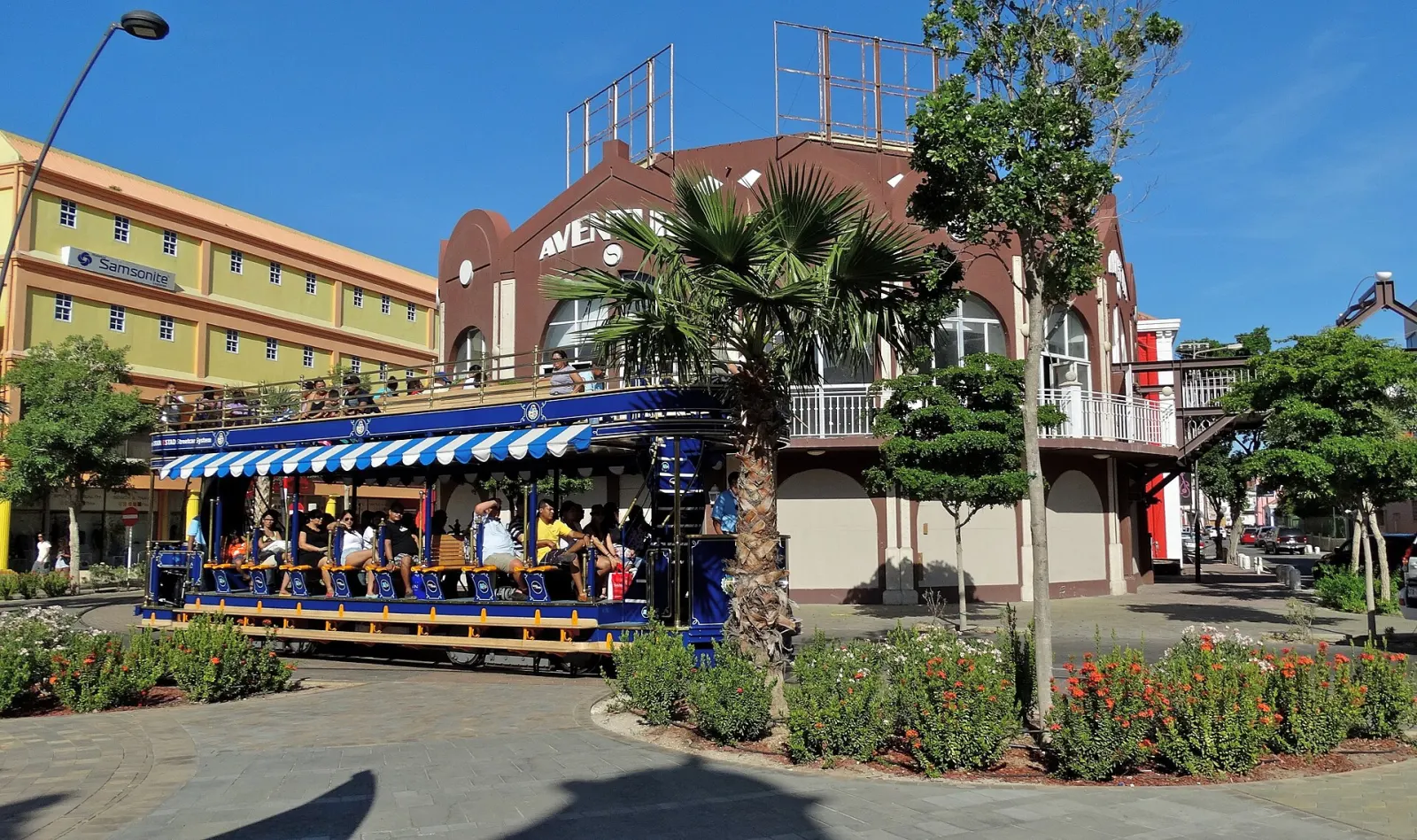
Oranjestad — "Playa" in Papiamento — is Aruba's capital and largest town, with about 28,700 inhabitants in 2020. Its compact centre, between the cruise terminal and Fort Zoutman, is easy to walk in two to three hours, and a free battery-and-hydrogen streetcar links the harbour with Main Street if your feet need a break.
What is the history behind the town?
The settlement grew around Fort Zoutman, completed in 1798 and the oldest structure on the island. In 1824 Governor Paulus Roelof Cantz'laar named the town Oranjestad, "Orange City", after King William I of the Netherlands. The Willem III Tower beside it was added in 1868, named after King William III. UNESCO lists Fort Zoutman as a Place of Memory of the Slave Trade Route in the Latin Caribbean.
What is a good route?
- Cruise terminal and harbour front – start where the streetcar loops, by the boulevard (Lloyd G. Smith Boulevard). The Renaissance Marketplace and Wilhelmina Park nearby both stand on reclaimed land.
- Wilhelmina Park – a small seafront park named after the Dutch queen.
- Fort Zoutman and the Willem III Tower – the fort houses the Historical Museum of Aruba, reopened here in 1983. The fort's courtyard has traditionally hosted the weekly Bon Bini Festival folklore evening, which was reported on pause in 2026 — check aruba.com or ask locally before planning around it.
- Wilhelminastraat – one of the streets where older buildings have been restored in bright colours, including the lime-green City Hall and the Protestant church.
- National Archaeological Museum Aruba – the island's pre-Columbian heritage; check its opening hours before you go.
- Main Street (Caya G.F. Betico Croes) – Aruba's main shopping street, pedestrianised for much of its length and served by the streetcar.
How does the downtown streetcar work?
The Oranjestad Streetcar opened on 22 December 2012 and runs on a 1.9 km single track between the cruise-port area and Main Street, operated by Arubus. It is free; you board right outside the cruise port's main gate. Its cars are self-powered by lithium batteries supplemented by hydrogen fuel cells, so there are no overhead wires. Days and hours change with the season (and with cruise-ship calls), so confirm at the information desk outside the cruise terminal before relying on it.
When should you go?
Morning, before the heat builds: average daily maximums in Oranjestad range from 30 °C in January to 33 °C in August–September (Departamento Meteorologico Aruba). Shops are busiest when cruise ships are in port. Museums keep their own hours — check them before you set out.
How do you get there?
From the Palm Beach and Eagle Beach hotels, Arubus line L10 runs to the central bus station in Oranjestad; a single trip costs AWG 4.50 (US$ 2.60) and a day pass AWG 26.25 (US$ 15) in 2026. Drivers can park at the edges of the centre and walk in. Combine the walk with a sunset sail or with the island highlights drive.
Where to go
Know before you go
- Check the streetcar first. It is free, but days and hours vary by season; ask at the information desk outside the cruise terminal.
- Avoid cruise peaks. Main Street and the harbour front are busiest when ships are in port; early mornings or ship-free days are quieter.
- Plan museum time. Fort Zoutman's Historical Museum and the National Archaeological Museum each deserve 45–60 minutes; check opening hours on the day.
FAQ
Is the Oranjestad streetcar free?
Yes. It runs in a loop between the cruise terminal and Main Street; days and hours change with the season, so confirm locally.
How long does a walking tour of Oranjestad take?
Two to three hours for the route from the harbour to Fort Zoutman, Wilhelminastraat and Main Street, longer if you visit the museums.
What is the oldest building in Aruba?
Fort Zoutman in Oranjestad, completed in 1798. The adjoining Willem III Tower dates from 1868.
More things to do
Island highlights drive
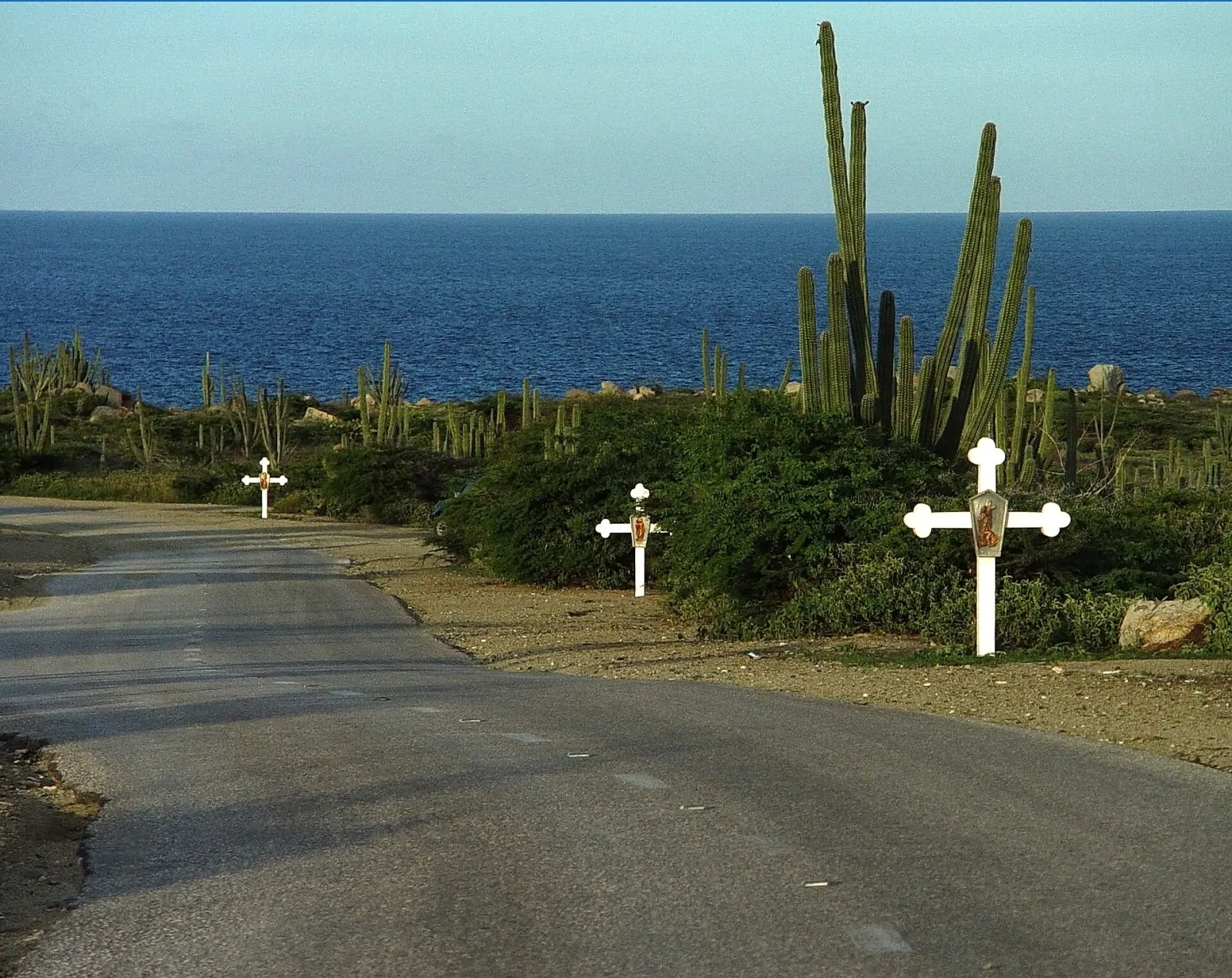
A self-drive day loop around Aruba: California Lighthouse, Alto Vista Chapel, the Bushiribana gold mill, Ayo and Casibari rocks, Hooiberg, Arikok and Baby Beach.
6–8 h
San Nicolas street art walk
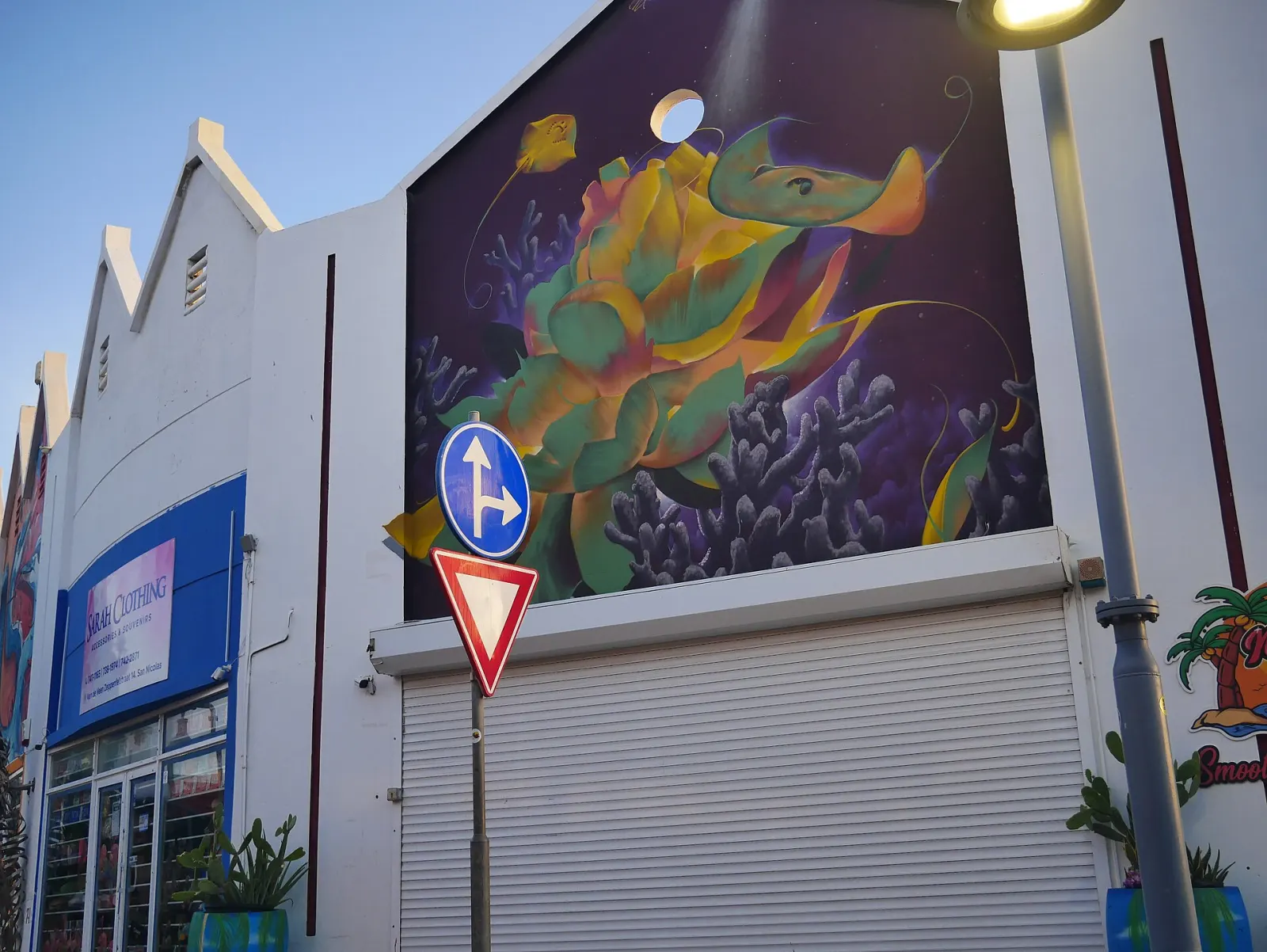
A self-guided walk past the murals of San Nicolas, Aruba's former refinery town, where the Aruba Art Fair has left dozens of large works on its walls since 2016.
1–2 h
Hiking in Arikok
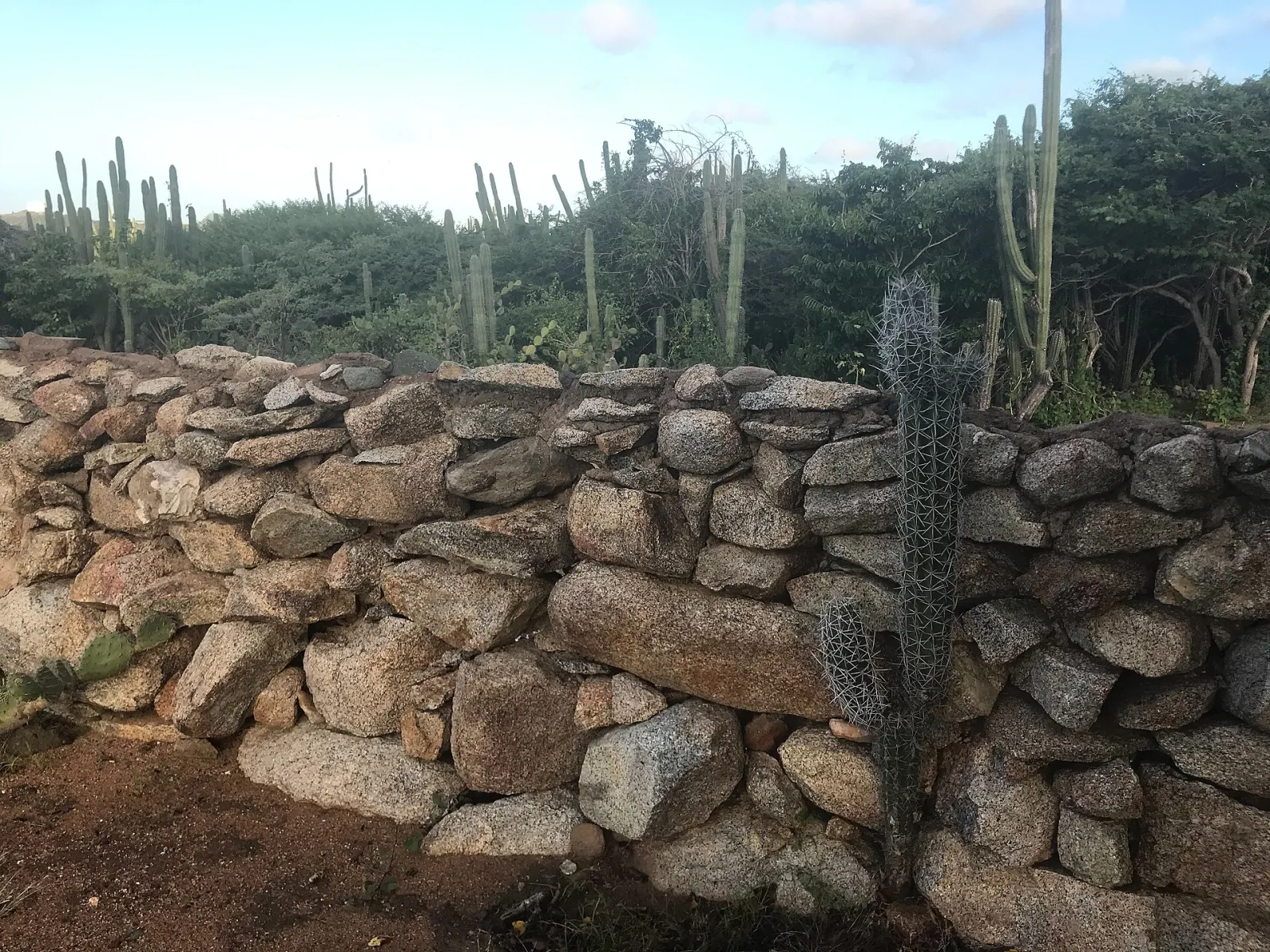
Trails through Arikok National Park, from the easy Cunucu Arikok loop to Jamanota, Aruba's 188 m high point, with ranger-led hikes, the park pass and heat advice.
1.5–3.5 h