
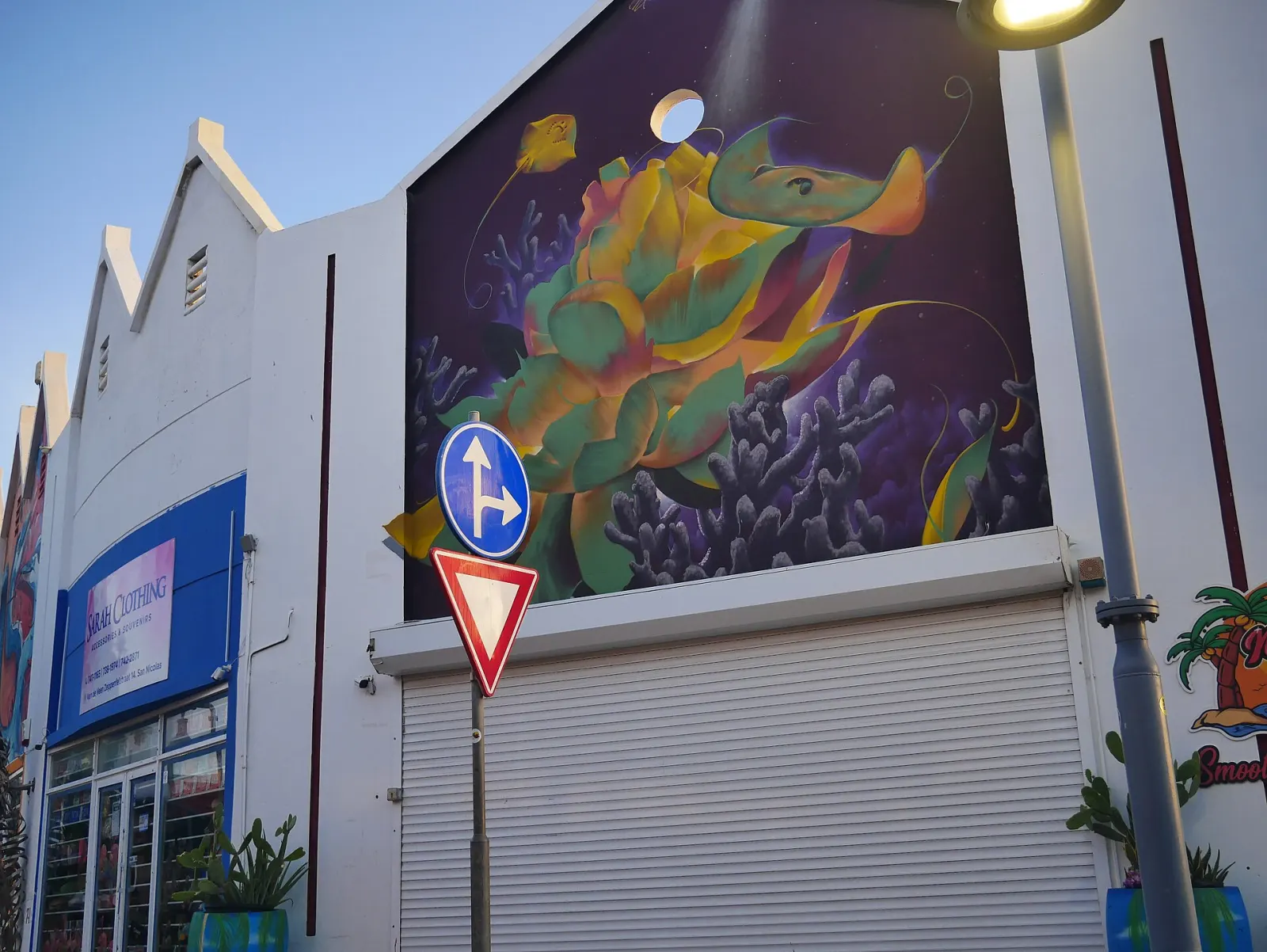
San Nicolas street art walk
A self-guided walk past the murals of San Nicolas, Aruba's former refinery town, where the Aruba Art Fair has left dozens of large works on its walls since 2016.
San Nicolas, about 19 km south-east of Oranjestad, was Aruba's refinery town: the Lago oil refinery opened there in 1924 and closed in 1985, leaving many buildings empty. Since the first Aruba Art Fair in September 2016, local and international artists have covered those walls with large murals — 44 by 2019, according to the Aruba Tourism Authority — turning the centre into an open-air gallery you can walk in an hour or two. For background on the works themselves, see San Nicolas murals.
How did the murals start?
The fair was created by ArtisA ("Art is Aruba"), an organisation founded in 2016 by Aruban artist Tito Bolivar after he saw street art in Bogotá. Each edition leaves new murals behind; the three-day event attracted about 10,000 visitors a year by 2019. The tourism authority reports that Forbes named San Nicolas the "Street Art Capital of the Caribbean". Find out more on the Aruba Art Fair page.
Which murals should you look for?
Works described by the tourism authority include:
- an iguana by Bordalo II (Portugal), assembled from recycled rubbish and scrap metal;
- a painted 3D "Pan" cornmeal box by Leon Keer (Netherlands), next to the old customs house;
- a dolphin by Bond Truluv (Germany), beside the "Daddy Cool" mural of Bobby Farrell of Boney M, one of San Nicolas's best-known names;
- building-high carnival-style faces by Guache (Colombia);
- trompe-l'œil pieces by Garrick Marchena (Curaçao), a rainbow lionfish and a prikichi, Aruba's national bird;
- a mural by local artist Vanessa Paulina, commissioned by the Ministry of Culture, combining African masks, Indigenous faces and a Spanish queen.
What is a good route?
Start on B. van de Veen Zeppenfeldstraat, the main street, where many of the largest murals face the road, then wander the side streets such as Crijnssenstraat. The ArtisA gallery is at Theaterstraat 20. Other stops worth adding: the Nicolaas Store, now a community museum, and the 1939 water tower, restored as a museum of industry. Guided mural walks are also offered locally if you want the stories behind each piece.
When should you go?
Morning light is best for photos on the street-facing walls, and the town is quieter before midday. Average daily maximums in Aruba range from 30 °C in January to 33 °C in August–September (Departamento Meteorologico Aruba); carry water, as shade is patchy. The first art fair was held in September; check the event page for current dates.
How do you get there?
By car, San Nicolas is about 30 minutes from Oranjestad. By bus, Arubus lines L1, L2 and L3A run from the Oranjestad bus station to San Nicolas (single fare AWG 4.50 / US$ 2.60 in 2026), and line L900 continues to Baby Beach. Combine the walk with a swim at Baby Beach or Rodgers Beach; Boca Grandi nearby is for watching kitesurfers, not swimming.
Where to go
Know before you go
- Start on the main street. B. van de Veen Zeppenfeldstraat has many of the largest murals; the side streets hold smaller surprises.
- Respect residents. Many murals are on homes and working businesses; photograph from the street and ask before including people.
- Add the beach. Bus L900 continues from San Nicolas to Baby Beach, so a morning of murals pairs easily with an afternoon swim.
FAQ
How many murals are there in San Nicolas?
The Aruba Tourism Authority counted 44 in 2019, and each Aruba Art Fair adds more, so the current number is higher.
Can you see the San Nicolas murals by bus?
Yes. Arubus lines L1, L2 and L3A run from Oranjestad to the bus station in San Nicolas, in the town itself.
When is the Aruba Art Fair?
The first edition was held in September 2016 and it has run as a three-day event since; check the organisers' announcements for the next dates.
More things to do
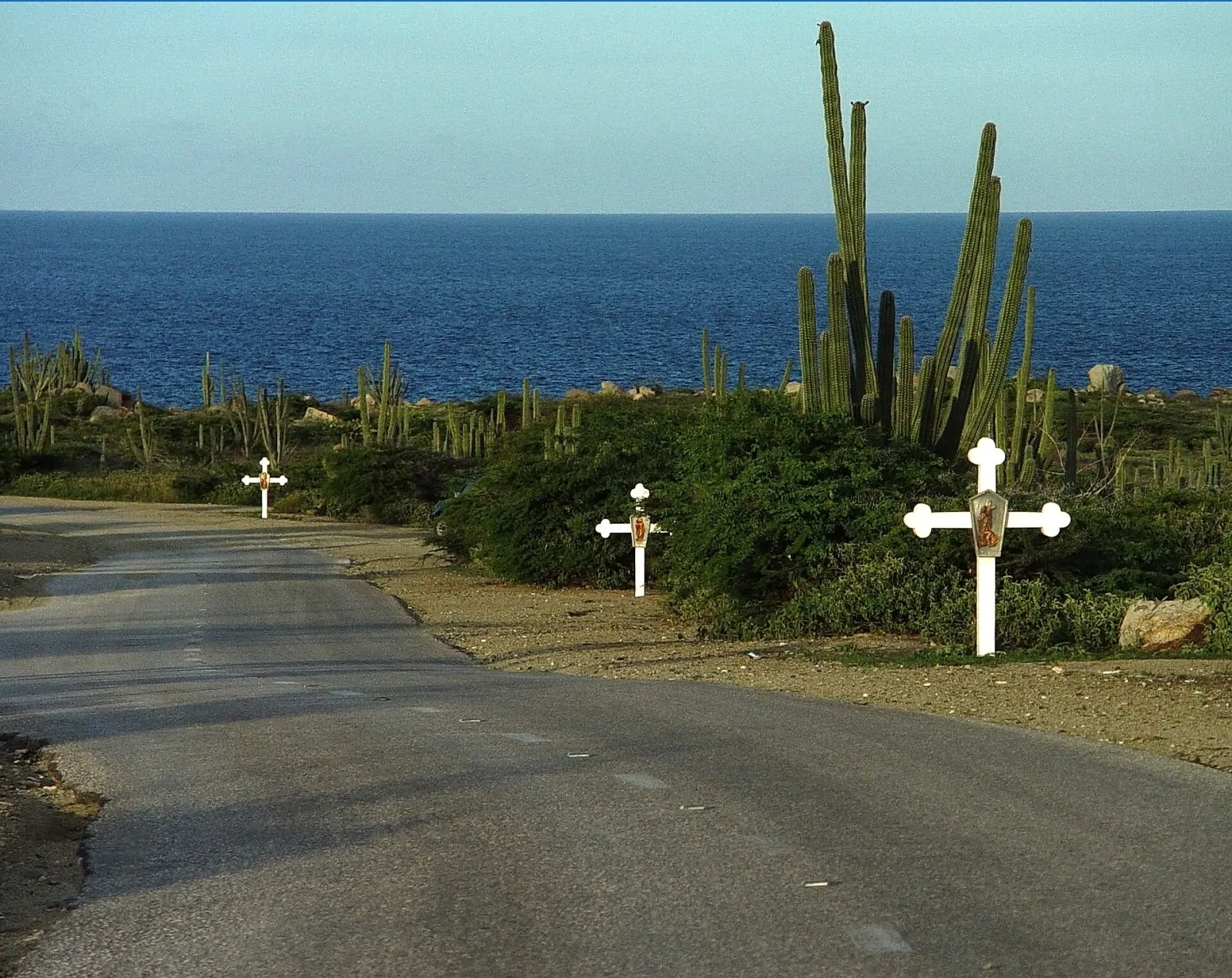
Island highlights drive
A self-drive day loop around Aruba: California Lighthouse, Alto Vista Chapel, the Bushiribana gold mill, Ayo and Casibari rocks, Hooiberg, Arikok and Baby Beach.
6–8 h
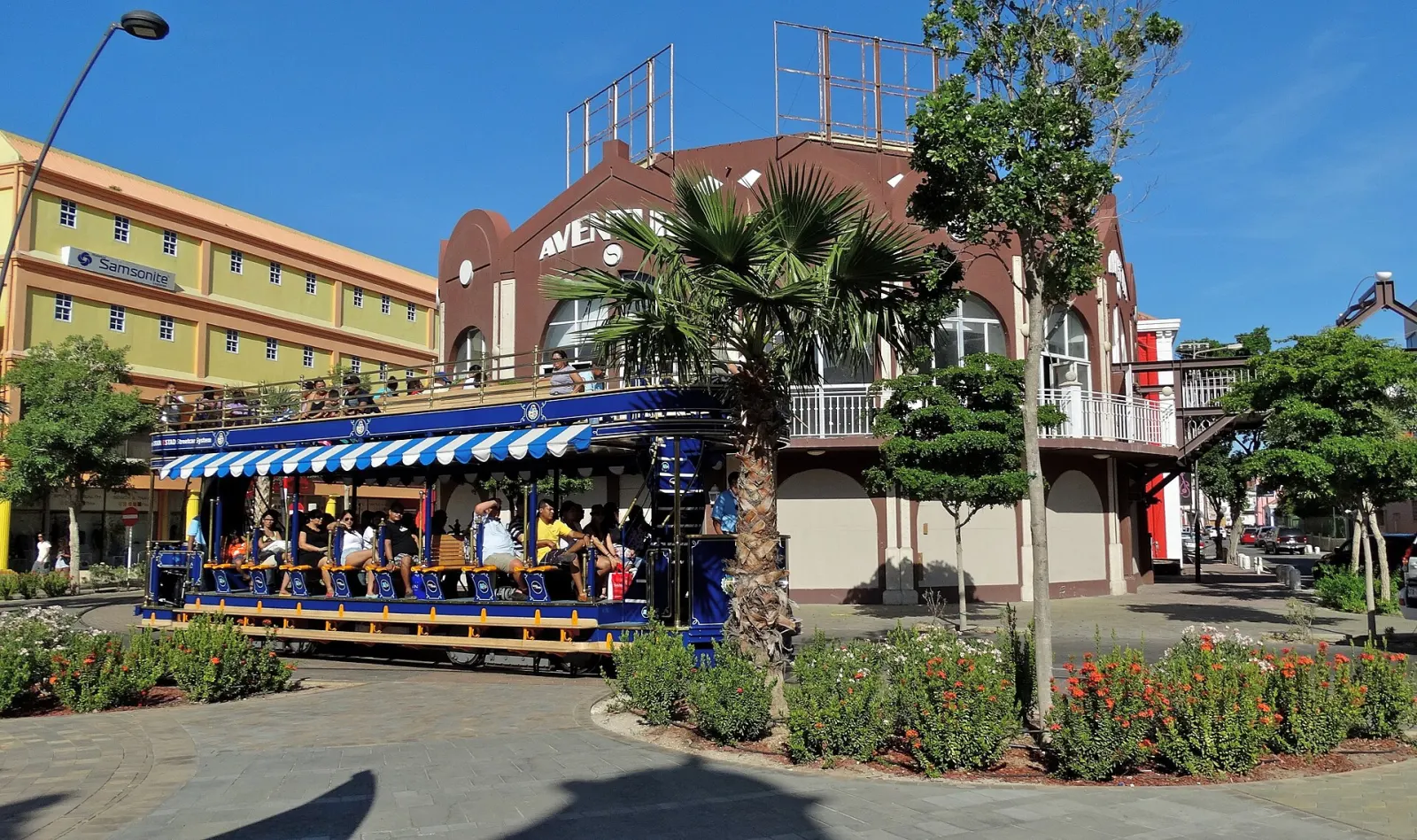
Oranjestad walking tour
A self-guided walk through Aruba's capital: Fort Zoutman and the Willem III Tower, Wilhelminastraat's restored façades, Main Street and the free downtown streetcar.
2–3 h
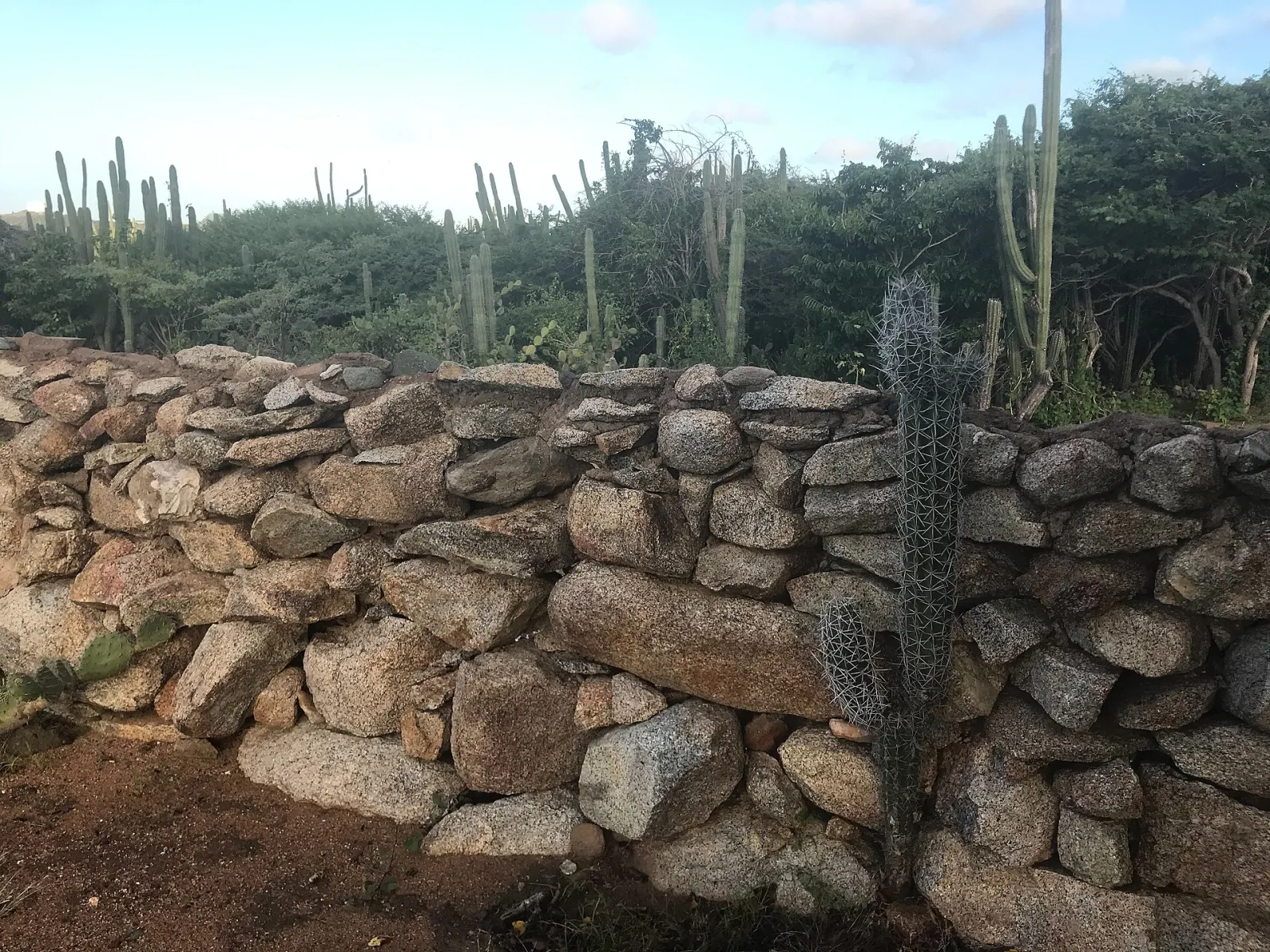
Hiking in Arikok
Trails through Arikok National Park, from the easy Cunucu Arikok loop to Jamanota, Aruba's 188 m high point, with ranger-led hikes, the park pass and heat advice.
1.5–3.5 h